


Listen to the article
Bangladesh’s Information Minister Emphasizes Protection Against Digital Misinformation as Government Priority
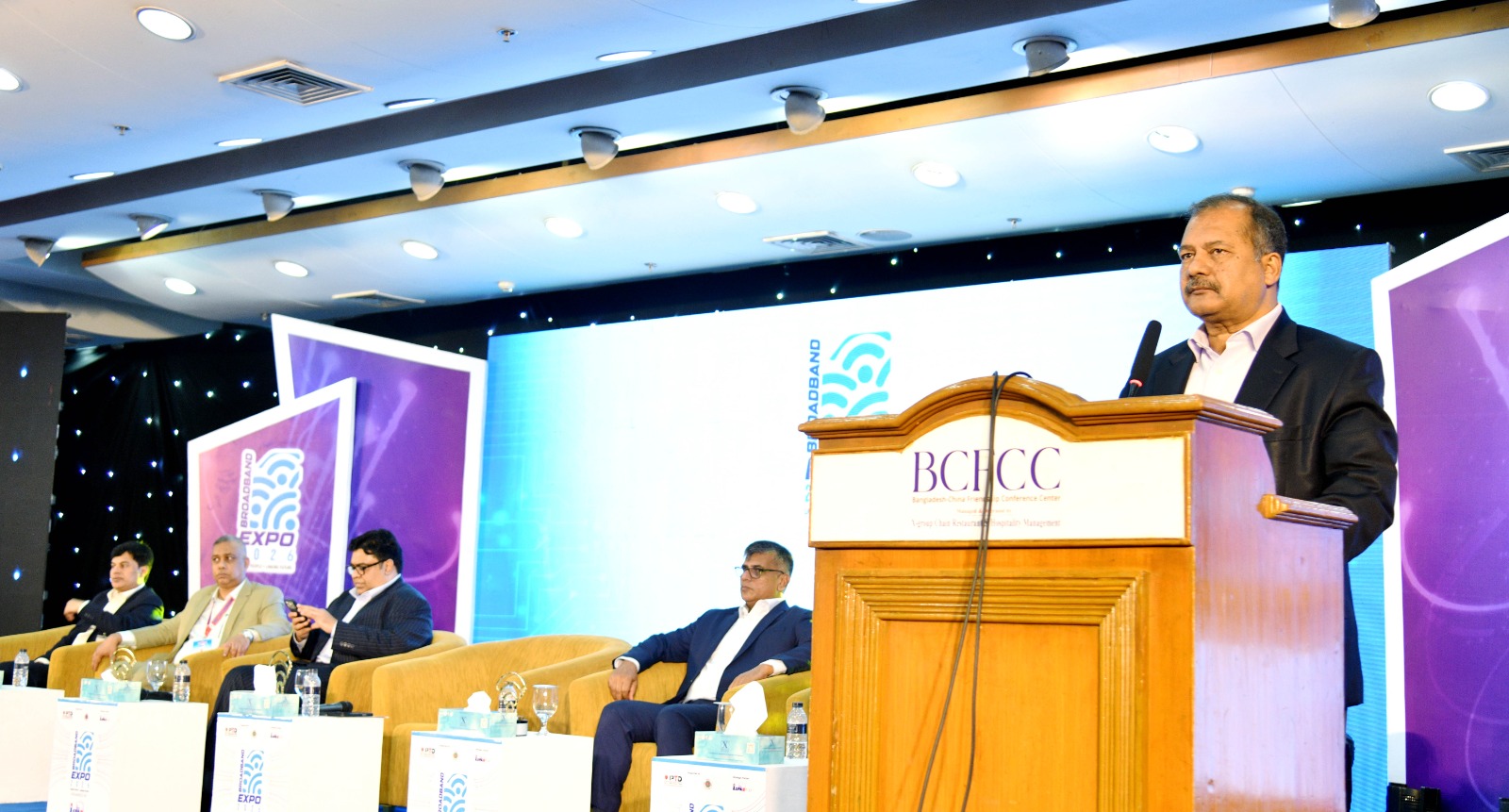
Information and Broadcasting Minister Zahir Uddin Swapon declared that protecting citizens from misinformation while ensuring free information flow has become a central focus for the current administration. Speaking at the opening ceremony of “Broadband Expo 2026” in Dhaka on Sunday, Swapon highlighted the evolving challenges in Bangladesh’s rapidly digitalizing media landscape.
“A people-friendly policy framework and infrastructural reforms are necessary to ensure the full benefits of the digital ecosystem,” Swapon told attendees gathered at the Bangladesh-China Friendship Conference Centre, where Prime Minister’s Adviser on Posts, Telecommunications and Information Technology Rehan Asif Azad was also present as a special guest.
The minister noted a significant shift in media-related challenges over recent years. While historical concerns centered on press censorship and restricted information access, today’s primary threat comes from deliberate misinformation campaigns and digital manipulation.
“It is now the right of people to be protected from misinformation and disinformation,” Swapon emphasized. “If we fail to ensure such protection and focus only on the free flow of information, a major crisis could arise in society, politics and the economy.”
His comments come amid growing global concern about the impact of digital misinformation on democratic processes, social cohesion, and public health – issues that have increasingly affected Bangladesh as internet penetration continues to grow across the country.
The minister also addressed structural barriers preventing Bangladesh from fully embracing digital transformation. Despite significant infrastructure investments in recent years, he pointed to an “analog mindset” that continues to limit the country’s digital potential.
“Policy limitations and inadequate technological infrastructure are major obstacles to the development of the digital ecosystem,” Swapon observed. He called for collaborative solutions, stating that “if the government, BTRC [Bangladesh Telecommunication Regulatory Commission] and all stakeholders take joint initiatives, the sector’s potential can be harnessed quickly.”
The broadband expo, which has become an annual showcase for Bangladesh’s digital connectivity sector, brings together key players from telecommunications, internet service providers, and technology innovators. This year’s event comes as the country pushes forward with its “Digital Bangladesh” vision, aiming to leverage technology for economic growth and improved public services.
Industry experts attending the event noted that Bangladesh’s broadband penetration has grown substantially in recent years, though significant urban-rural disparities remain. The BTRC reports that mobile internet users now exceed 130 million, while fixed broadband connections have seen slower growth, particularly in rural areas where infrastructure development faces greater challenges.
Swapon specifically highlighted the need for supportive tax structures for small and medium entrepreneurs in the digital space, suggesting that current fiscal policies may be hampering innovation and growth in the sector. Bangladesh’s technology startups have frequently cited regulatory hurdles and taxation issues as major barriers to scaling their operations.
“A modern welfare state has a major responsibility to ensure people-friendly policies and a supportive tax structure in the digital ecosystem,” the minister said, signaling potential policy reforms that could be forthcoming.
The event was attended by senior officials from the BTRC, information and communication technology experts, and entrepreneurs from Bangladesh’s growing broadband sector. Industry representatives welcomed the minister’s comments on tax reform but pressed for concrete timelines on policy changes and infrastructure investments.
As Bangladesh continues its digital transformation journey, balancing open information access with protection against harmful misinformation remains a delicate challenge for policymakers – one that Minister Swapon has now publicly acknowledged as a top government priority.
Fact Checker
Verify the accuracy of this article using The Disinformation Commission analysis and real-time sources.

6 Comments
Interesting to see Bangladesh taking a strong stance on this. Curbing the spread of misinformation while preserving open communication is a delicate challenge many governments are grappling with today.
This is an important issue that governments must address. Protecting citizens from misinformation and digital manipulation is crucial in today’s media landscape. Ensuring a balanced framework that supports free information flow while safeguarding against disinformation is a delicate but necessary challenge.
This is a complex issue without easy solutions. I’m curious to learn more about the specific policy framework and infrastructural reforms the Bangladeshi government plans to implement to address digital misinformation.
Protecting citizens from online manipulation and disinformation campaigns is absolutely critical in the modern media landscape. Kudos to the Bangladeshi government for making this a top priority.
Disinformation can have serious consequences, so I’m glad the Bangladeshi government is making this a priority. Proactive policies and infrastructure reforms will be key to empowering people and maintaining public trust in the digital ecosystem.
I agree, a people-friendly policy approach is essential. Striking the right balance between digital freedom and protection from manipulation will require nuanced policymaking.