


Listen to the article
Tusk Accuses Polish President’s Media Council of Spreading Russian Disinformation
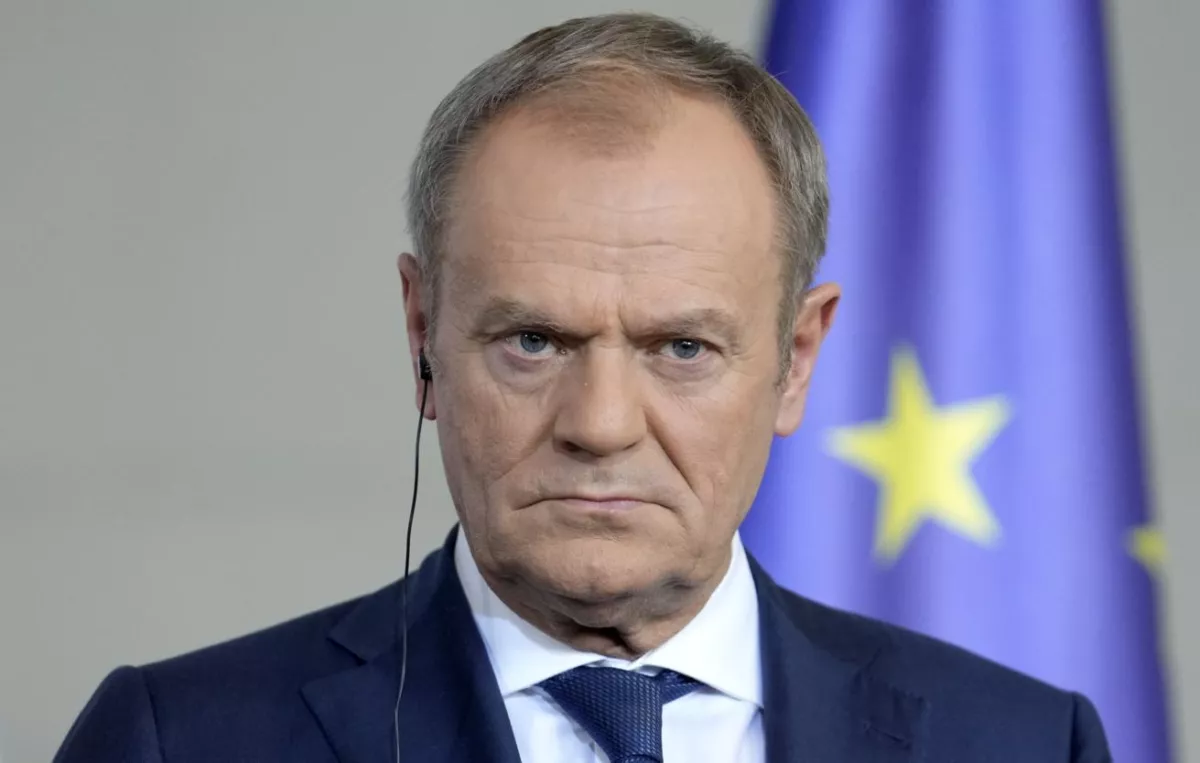
Polish Prime Minister Donald Tusk has launched a scathing critique of President Andrzej Duda’s media council, claiming it includes individuals who actively spread Russian disinformation. The comments, made on social media platform X, intensify the ongoing political tensions between Poland’s government and presidency.
“Are you surprised that Nawrocki includes people in his media council who spread Russian disinformation? It would be strange if he instead chose those who fight it,” Tusk wrote, referring to Karol Nawrocki, who is closely associated with the president’s media initiatives.
The prime minister’s accusation comes at a delicate time in Polish politics, where concerns about foreign influence operations have become increasingly prominent. Poland, a NATO and EU member that shares a border with Russian ally Belarus and the Russian exclave of Kaliningrad, has been particularly vigilant about Russian information warfare tactics.
Political analysts note that the dispute reflects deeper divisions within Poland’s political landscape. Tusk, who returned to power in December 2023 after his Civic Coalition won parliamentary elections, has frequently clashed with President Duda, who is aligned with the previous Law and Justice (PiS) government.
“This latest exchange highlights the institutional friction that has characterized Polish politics since the change in government,” explains Dr. Marta Kowalski, a political scientist at Warsaw University. “Media oversight has become a key battleground in this power struggle.”
The media council in question was established to provide guidance on Poland’s media landscape, but critics have questioned its composition and potential political bias. Tusk’s comments suggest that the council may be vulnerable to external influence or might inadvertently amplify narratives that align with Russian interests.
Poland has been one of Europe’s most vocal critics of Russian aggression and has consistently warned about the Kremlin’s information warfare capabilities. The country has taken strong positions supporting Ukraine and enhancing NATO’s eastern flank, making any suggestion of Russian influence particularly sensitive.
Media experts point out that identifying and countering disinformation has become a critical security concern across Europe. The European Union has implemented various measures to combat foreign information manipulation, including the Digital Services Act which requires major platforms to address risks related to disinformation.
“The challenge with disinformation is that it often operates in gray zones, mixing factual information with misleading narratives,” says Jan Nowak, director of the Eastern European Media Monitoring Center. “Political figures often disagree about what constitutes disinformation versus legitimate political discourse.”
Tusk’s accusation comes amid growing concerns about information security ahead of several important European elections. Poland itself faces presidential elections next year, adding another layer of significance to debates about media integrity and foreign interference.
Neither President Duda nor Karol Nawrocki has responded directly to Tusk’s allegations. The presidential office typically refrains from immediate responses to the prime minister’s social media statements, preferring more formal channels of communication.
The incident underscores how media governance has become increasingly politicized in Poland, reflecting similar trends across Central and Eastern Europe. Media freedom organizations have expressed concern about the politicization of public broadcasting and media regulatory bodies in several countries in the region.
As Poland continues to navigate complex domestic politics while maintaining its position as a key NATO ally on the alliance’s eastern flank, the debate about Russian influence and disinformation is likely to remain prominent in public discourse.
For now, this latest exchange adds another chapter to the ongoing institutional tensions that have characterized Polish politics in recent years, with media policy remaining a flashpoint in the relationship between the government and presidency.
Fact Checker
Verify the accuracy of this article using The Disinformation Commission analysis and real-time sources.
