


Listen to the article
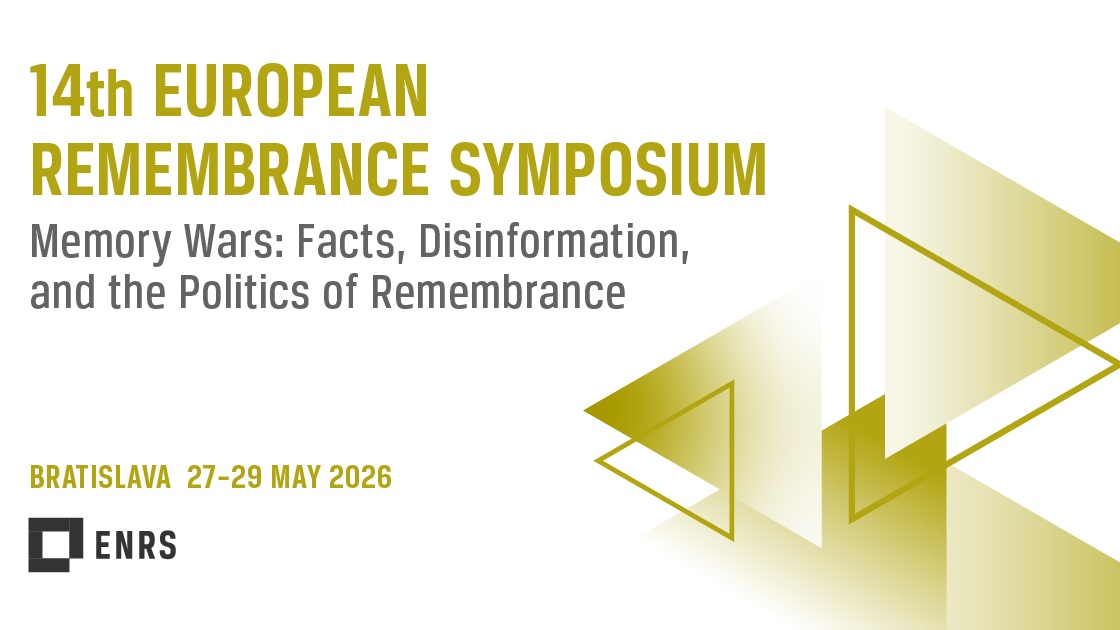
In an era where history increasingly serves as ammunition in political battles, scholars and memory institutions are preparing to confront a critical question: how does collective memory function during times of heightened geopolitical tension and social division? This challenge forms the cornerstone of the upcoming 14th European Remembrance Symposium, organized by the European Network Remembrance and Solidarity (ENRS).
The three-day gathering, scheduled for May 27-29, 2026, will take place at the historic Art Nouveau Moyzes Hall of Comenius University’s Faculty of Arts in Bratislava, Slovakia. Participants will examine the contentious nature of collective memory and its weaponization in contemporary European politics.
Collective memory plays a fundamental role in society by forging community bonds, reinforcing identities, and establishing moral frameworks. However, as Russia’s war against Ukraine continues and disinformation campaigns proliferate across the continent, historical narratives have transformed into strategic weapons within the arsenal of hybrid warfare.
“Historical narratives are increasingly being instrumentalized to serve political agendas,” notes the ENRS in their announcement. “This symposium comes at a crucial moment when the interpretation of history has become a central battleground in contemporary power struggles.”
The symposium will tackle several pressing questions that challenge our understanding of memory politics in Europe. Participants will discuss which aspects of social life face the greatest vulnerability to manipulation through historical narratives and examine the media channels, institutions, and cultural forms through which memory-based strategies are deployed.
Another key focus will be whether memory conflicts represent a phenomenon specific to post-authoritarian Eastern Europe or if they constitute an inherent feature of democratic societies more broadly. Eighty years after World War II and more than three decades since the Cold War’s conclusion, the symposium will also evaluate whether European memory has evolved toward unity or remains fundamentally divided.
Professor Catherine Horel, Research Director at CNRS/CETOBAC-Paris and President of the International Committee for Historical Sciences, will deliver the opening keynote address. Her presentation will explore the complex interrelationships between memory, power, and conflict, setting the stage for subsequent discussions.
The program features a comprehensive range of panels, workshops, and case studies addressing disinformation techniques, educational approaches, and memory aspects of hybrid warfare. Practical sessions will equip participants with tools to critically evaluate and counter manipulated historical narratives—skills increasingly relevant for educators, cultural workers, and public institutions.
A novel component of the symposium is the “Turbo Presentations” session, where institutions receive just 120 seconds to showcase their work to an international audience. The format reflects the growing need for memory institutions to communicate effectively in an environment of shortened attention spans and information overload.
Cultural visits around Bratislava will provide contextual depth to the discussions, allowing participants to engage with the region’s multilayered historical landscape. Slovakia itself represents an interesting case study in memory politics, having navigated complex transitions from fascism to communism to democracy over the past century.
The timing of the symposium carries particular significance as Europe contends with rising populist movements that frequently employ selective historical narratives to advance political agendas. Meanwhile, Russia’s continued aggression against Ukraine has been accompanied by systematic attempts to rewrite historical narratives about both nations’ pasts.
The ENRS notes that participation in the symposium is free of charge, with catering provided during the official program. However, attendees must cover their own travel and accommodation expenses. Registration for the event is already open through the organization’s website.
The European Network Remembrance and Solidarity has established itself as a leading platform for dialogue on difficult aspects of European historical memory. Since its founding in 2005, the network has worked to promote cooperation among institutions, organizations, and researchers focused on studying, documenting, and disseminating knowledge about 20th-century European history.
Fact Checker
Verify the accuracy of this article using The Disinformation Commission analysis and real-time sources.

12 Comments
As someone interested in the mining and energy sectors, I’m curious to see how this symposium will address the role of natural resource extraction in shaping historical narratives and collective memory.
That’s a great point. The geopolitics of natural resources often intersects with historical grievances and contested narratives.
This is a timely and important topic. The instrumentalization of history for political gain is a troubling trend that undermines social trust and cohesion.
Agreed. Fostering a shared, evidence-based understanding of the past is crucial for building a more just and stable future.
I’m curious to see how this symposium will address the challenges of collective memory in the digital age, where misinformation can spread rapidly across borders.
Good point. Innovative approaches to fact-checking and digital preservation of historical records will be essential.
The role of memory institutions like museums and archives is critical in this context. They must strive for objectivity and inclusiveness when presenting historical accounts.
Absolutely. Balanced, nuanced interpretation of the past is the best defense against revisionism and propaganda.
This is an important and timely topic. Protecting the integrity of historical memory is essential for maintaining democratic values and social cohesion.
Absolutely. Fact-based dialogue and inclusive approaches to interpreting the past are crucial in these divisive times.
Fascinating topic. Navigating the politics of collective memory is a growing challenge in our polarized world. Fact-based analysis and open dialogue are crucial to countering disinformation campaigns.
Agreed. Historical narratives can become weaponized, so preserving impartial institutions and practices is vital for maintaining social cohesion.