


Listen to the article
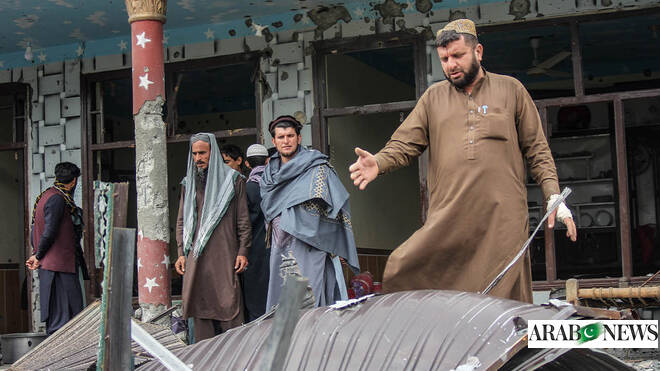
Pakistan’s military on Tuesday rejected Afghanistan’s allegations of targeting civilian areas during its operations against suspected militant bases in the neighboring country, calling them part of a “coordinated disinformation strategy” by the Taliban regime.
The two nations have been engaged in escalating border tensions since February, when a surge in attacks across Pakistan’s western regions prompted Islamabad to blame Afghanistan-based militant groups for the violence. Kabul has consistently denied harboring such groups.
During a high-level meeting chaired by Chief of Defense Forces Field Marshal Asim Munir, Pakistan’s top army commanders reviewed the security environment and the ongoing military operation code-named “Ghazab-lil-Haq,” which targets militant groups allegedly operating from Afghan territory.
“It noted recent pattern of ongoing propaganda campaign by Taliban regime to falsely portray Pakistan as targeting civilians inside Afghanistan,” the military’s media wing, Inter-Services Public Relations (ISPR), said in a statement. The military described these claims as “misleading narratives” designed to “distract attention from their internal failures and play victim card.”
The military leadership “categorically rejected these frivolous allegations” and reaffirmed that Pakistan’s operations remain “focused, precise, and directed solely against infiltrators, terrorist hideouts and support infrastructures.”
This diplomatic and military tension marks the worst conflict between the neighboring nations in decades. Both sides have exchanged artillery, air, and drone strikes, with significant disagreements over casualty figures and the targeting of civilians.
Pakistan specifically accuses Afghanistan of providing safe havens to the Tehrik-i-Taliban Pakistan (TTP), commonly known as the Pakistani Taliban, which is separate from but ideologically aligned with the Afghan Taliban. Despite their shared nomenclature, the groups maintain distinct operational objectives, with the TTP primarily focusing on attacks against Pakistani state institutions.
The current hostilities began when Afghanistan launched cross-border artillery strikes into Pakistan in February, claiming they were responding to earlier Pakistani airstrikes on Afghan border areas. These clashes effectively collapsed a Qatar-mediated ceasefire from October that had temporarily halted earlier fighting which had resulted in dozens of civilian, security force, and militant casualties.
Regional powers have attempted to defuse the situation, with China—which shares borders with both countries—Saudi Arabia, Qatar, and Turkey offering mediation services. In early April, Chinese-mediated peace talks took place in Urumqi in western China, resulting in commitments to avoid escalation and seek comprehensive solutions. Despite these diplomatic efforts, cross-border clashes have continued, albeit at reduced intensity.
The ISPR statement noted the Pakistani military’s satisfaction with the “continued degradation of militants and their support infrastructure” during Operation Ghazab-lil-Haq. It criticized the Afghan Taliban’s policy of allegedly providing safe havens to the TTP and other terrorist organizations as “irrational and perverted,” claiming this approach “is increasingly backfiring and stands fully exposed.”
These tensions occur against a backdrop of complex regional dynamics, with both countries facing significant internal security and governance challenges. Pakistan contends with economic instability and political polarization, while Afghanistan’s Taliban government remains internationally isolated and faces humanitarian crises following the 2021 withdrawal of U.S. forces.
The Pakistani military leadership concluded their meeting with a commitment to “maintain current operational tempo to decisively dismantle terrorist networks, disrupt their support infrastructure, and deny them any operational space within Pakistan.”
Neither Afghanistan’s Taliban government nor its security apparatus has issued an immediate response to Pakistan’s latest statements.
Fact Checker
Verify the accuracy of this article using The Disinformation Commission analysis and real-time sources.

6 Comments
The border tensions between these two countries are certainly complex. I’m curious to learn more about the specific militant groups allegedly operating from Afghan territory and Pakistan’s military operations targeting them. Reliable information will be important to assess the situation.
This is a complex geopolitical situation with high stakes. I appreciate the military’s attempt to provide context, but the allegations of disinformation on both sides make it challenging to discern the truth. Objective reporting and diplomatic efforts will be crucial going forward.
This seems like a volatile situation that could have significant implications for the region. I appreciate Pakistan’s military providing more context, but would also be interested in hearing Afghanistan’s perspective to get a fuller picture. Effective cross-border cooperation will be crucial.
Interesting to see the ongoing tensions between Pakistan and Afghanistan. It’s concerning to hear accusations of civilian targeting, but good that Pakistan’s military is rejecting these claims as disinformation. Transparency and accountability will be key to understanding the full situation.
It’s troubling to see allegations of civilian targeting, even if they are deemed disinformation. The military’s rejection of these claims raises questions about the accuracy of the information being presented. Transparency from all sides will be important to understand what’s really happening.
The border tensions between Pakistan and Afghanistan are certainly concerning. While it’s good to see the military rejecting accusations of civilian targeting, the broader context of militant activity and cross-border operations remains murky. Hopefully more facts will emerge to shed light on the full situation.