


Listen to the article
Pakistan Calls for UN Action Against Disinformation in Occupied Territories
Pakistan has urged the United Nations to combat the growing threat of disinformation and hate speech, particularly in regions under foreign occupation, during a recent address to the UN Committee on Information.
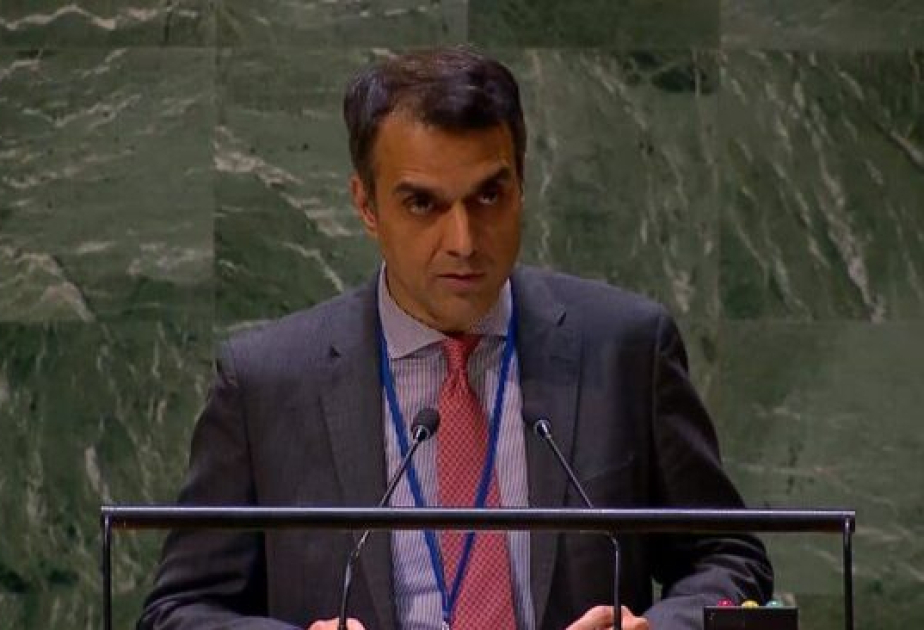
Ambassador Usman Jadoon, Pakistan’s deputy permanent representative to the UN, emphasized the critical need for “timely, accurate, and impartial communication” in an era marked by increasing geopolitical tensions and polarization. Speaking before the General Assembly’s subsidiary body that oversees the Department of Global Communications (DGC), Jadoon highlighted how technological advances have created both opportunities and challenges in the global information landscape.
While not explicitly naming specific regions, Jadoon’s references to “situations of foreign occupation and conflict” where “false narratives are deployed to obscure human rights violations” were widely understood to reference the ongoing situations in Palestine and Kashmir. Both territories have long been focal points of Pakistan’s diplomatic advocacy at the UN.
“These challenges strike at the core of public trust, social cohesion, and the credibility of multilateral institutions, including the UN,” Jadoon stated, addressing how modern technology has enabled misinformation to spread at unprecedented rates.
The Pakistani envoy expressed particular alarm about digital platforms being used to “amplify falsehoods, deepen polarization, and target vulnerable communities.” He specifically noted the persistence of hate speech, racism, xenophobia, and Islamophobia in online spaces, warning that these digital expressions frequently translate into “real-world harm.”
The emergence of artificial intelligence and generative technologies adds further complexity to an already challenging information environment, according to Jadoon. While acknowledging the potential benefits these technologies offer for communication and development, he cautioned about serious risks to information integrity if misused.
Pakistan’s concerns come at a time when disinformation campaigns have been increasingly documented in conflict zones worldwide. False narratives can shape international perception of regional conflicts, potentially undermining legitimate struggles for self-determination and masking human rights abuses.
The UN’s Department of Global Communications has been working to adapt its strategies to address these evolving challenges. Jadoon commended these efforts, particularly the Secretary-General’s Global Principles for Information Integrity initiative, calling them “timely and necessary to ensure that the UN remains an authoritative, trusted, and accessible source of information.”
Information manipulation has become a significant concern for international organizations in recent years, with the UN and other multilateral institutions increasing resources dedicated to fact-checking and combating deliberate misinformation. The rise of sophisticated deepfakes and AI-generated content has made distinguishing between authentic and manipulated information increasingly difficult.
For Pakistan, which has maintained a consistent diplomatic position on Kashmir at international forums, ensuring accurate reporting and preventing distortion of events in regions of conflict represents both a practical and principled concern.
Jadoon emphasized that information should serve as “a bridge for dialogue and cooperation, not as a tool for manipulation, division, or repression,” reflecting Pakistan’s official position that communication technologies should support peace rather than exacerbate conflicts.
The Pakistani appeal for UN intervention against disinformation comes amid growing global recognition of information warfare as a significant threat to international peace and security, with major powers increasingly incorporating information operations into their strategic doctrines.
Fact Checker
Verify the accuracy of this article using The Disinformation Commission analysis and real-time sources.

12 Comments
This is a concerning issue that merits serious attention. Disinformation and hate speech can have devastating impacts, eroding trust and enabling human rights abuses. The UN must take robust action to combat these pernicious trends, especially in conflict zones.
I agree. The UN has an important role to play in promoting accurate, impartial information and protecting vulnerable populations from manipulation and persecution.
Pakistan raises valid concerns about the erosion of trust due to disinformation and hate speech in occupied territories. The UN must prioritize these issues and work to counter the spread of false narratives that enable human rights abuses.
Disinformation and hate speech pose grave threats to peace and security, as Pakistan has rightly pointed out. The UN must take swift, decisive action to address these corrosive trends, especially in volatile regions under foreign occupation.
I concur. Upholding truth and human rights should be paramount, and the UN has a critical role to play in this regard.
Pakistan’s appeal to the UN is timely and important. Disinformation and hate speech are undermining trust and enabling human rights violations in occupied territories. The international community must act urgently to counter these pernicious forces.
The impact of disinformation and hate speech in occupied territories is deeply concerning. Pakistan is right to demand the UN take firmer steps to combat these corrosive forces and protect vulnerable populations.
I share your concerns. The UN must act decisively to uphold truth, human rights, and the rule of law in the face of such dangerous propaganda.
Pakistan raises a crucial point. Tackling disinformation is essential for upholding human rights and restoring confidence in institutions. The international community should heed this call and work together to address this growing threat.
Absolutely. Disinformation poses grave risks to global stability and security. Coordinated, multilateral action is needed to counter these pernicious trends.
This is a complex and sensitive issue, but Pakistan’s call for the UN to address disinformation and hate speech is well-founded. Robust action is needed to safeguard human rights and restore public trust, especially in conflict zones.
I agree. The UN has a responsibility to confront these challenges head-on and ensure accurate, balanced information prevails over malicious propaganda.