


Listen to the article
MPs Call for Increased Funding to Combat Foreign Disinformation Threats
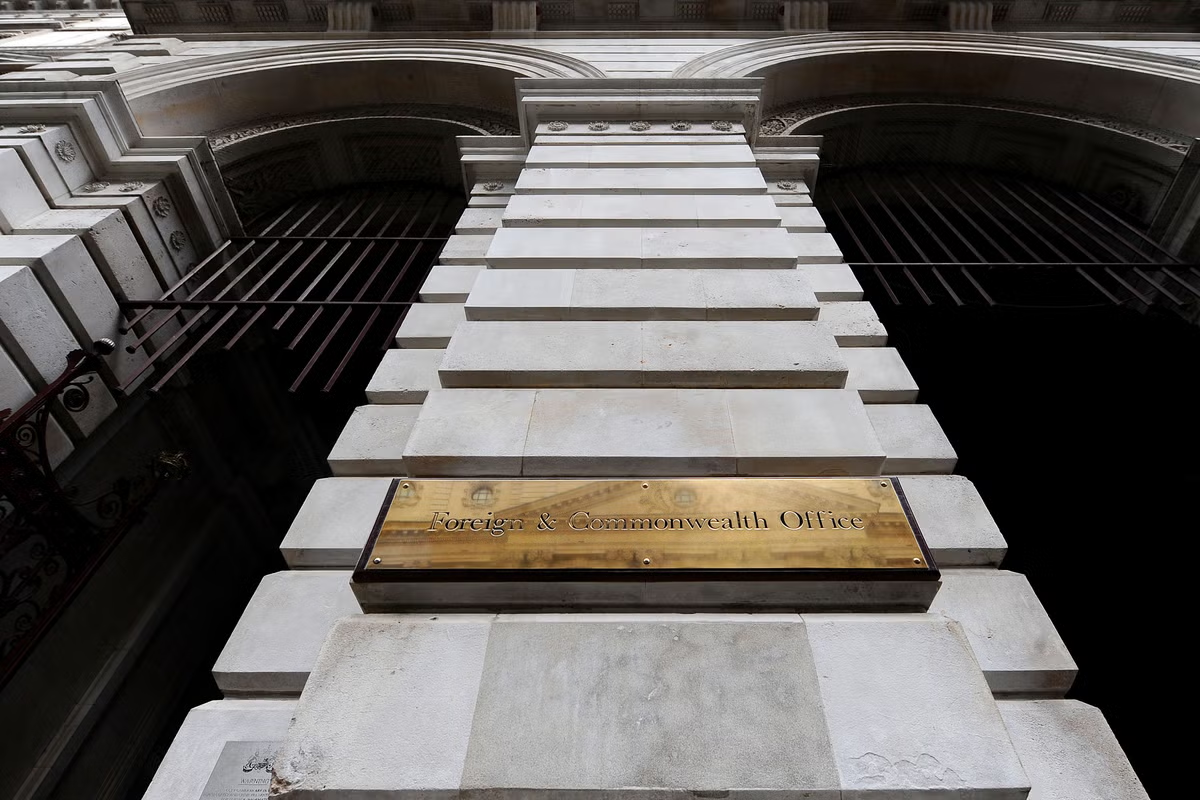
MPs have called on the Government to boost funding for the Foreign Office and BBC World Service as part of a strategy to counter growing international disinformation campaigns, particularly from Russia.
The Foreign Affairs Committee has recommended reallocating funds from the planned defense budget increase to strengthen the Hybrid Threats Directorate’s funding and staffing. The committee emphasized that accurate, impartial news delivery through services like the BBC World Service is “essential to the UK’s national security and overseas interests.”
Labour MP Emily Thornberry, who chairs the committee, described organized disinformation as the “new warfare” and warned that liberal democracies are particularly vulnerable to these tactics.
“Russia’s hybrid attacks in particular amount to a state of war against the West,” Thornberry said. “The work of the Foreign, Commonwealth and Development Office in Eastern European countries is remarkable, but it is very disappointing to see that the FCDO lacks the resource to do more and meet the ever-increasing need elsewhere.”
The committee’s recommendation comes as NATO allies, including the UK, have pledged to increase defense spending to 5% of GDP by 2035 following demands from US President Donald Trump. This commitment includes allocating 3.5% to core defense and 1.5% to security and resilience measures.
“If Russia is already conducting information warfare against the West, the UK must be ready to defend itself,” Thornberry added.
The report takes particular aim at the current funding model for the BBC World Service, calling the decision to fund it through the television license fee “ill advised.” This arrangement has been further complicated by the government’s two-year license fee freeze, which the committee argues has led to a concerning reduction in the BBC’s global presence.
The committee warned of dangerous gaps emerging as the BBC World Service scales back its international language services. They cited a troubling example where Russian state-backed broadcaster Sputnik quickly took over the frequency previously used by BBC Arabic in Lebanon after the service was discontinued.
“If the BBC World Service does not receive the funding it needs, it will continue to contract with a diminishing influence,” the report states. “Its loss would significantly diminish the UK’s soft power and undermine our ability to counter information warfare.”
The report calls for a comprehensive, long-term funding solution for the World Service, potentially drawn partly from the defense budget. While the government has promised additional funding for the next three years, the committee notes this will likely be “flat” when accounting for inflation – insufficient to counter the growing sophistication of foreign disinformation campaigns.
These recommendations come amid growing concern about Russia’s ongoing information warfare targeting Western democracies. Intelligence agencies have repeatedly warned about coordinated disinformation campaigns aimed at influencing elections, sowing division, and undermining trust in democratic institutions.
Media experts have long argued that trusted news sources like the BBC World Service play a crucial role in providing accurate information in regions where press freedom is limited or where state-controlled media dominates the landscape. The service currently broadcasts in more than 40 languages to approximately 364 million people weekly.
The committee’s report represents the latest warning from UK officials about the need to modernize defense strategies to address hybrid threats that fall below the threshold of conventional warfare but can nonetheless cause significant damage to national security and democratic processes.
Fact Checker
Verify the accuracy of this article using The Disinformation Commission analysis and real-time sources.

6 Comments
Organized disinformation is a concerning ‘new warfare’ tactic that liberal democracies must be vigilant against. I agree that reallocating defense funds to shore up the Hybrid Threats Directorate and BBC World Service is a prudent move to combat these threats.
Absolutely. Investing in robust public media and information security infrastructure is critical to safeguarding our democratic institutions from foreign manipulation.
While increased funding is a step in the right direction, I wonder if more could be done to empower citizens to think critically and identify disinformation. Strengthening media literacy and public awareness campaigns may be an important complementary approach.
The committee’s recommendations highlight the need for a comprehensive, multi-pronged strategy to counter foreign disinformation. Boosting funding for the FCDO and BBC World Service is necessary, but should be part of a broader effort to build societal resilience against these threats.
Interesting to see MPs calling for more funding to combat foreign disinformation. This issue is clearly a growing threat to national security that needs to be taken seriously. Strengthening the BBC World Service will be key to ensuring access to accurate, impartial information.
Combating foreign disinformation is a complex challenge that requires a nuanced, well-resourced response. I’m encouraged to see MPs recognize the gravity of the situation and push for increased funding to support vital democratic institutions like the BBC.