


Listen to the article
Indonesia Unveils Comprehensive Roadmap to Combat Digital Disinformation
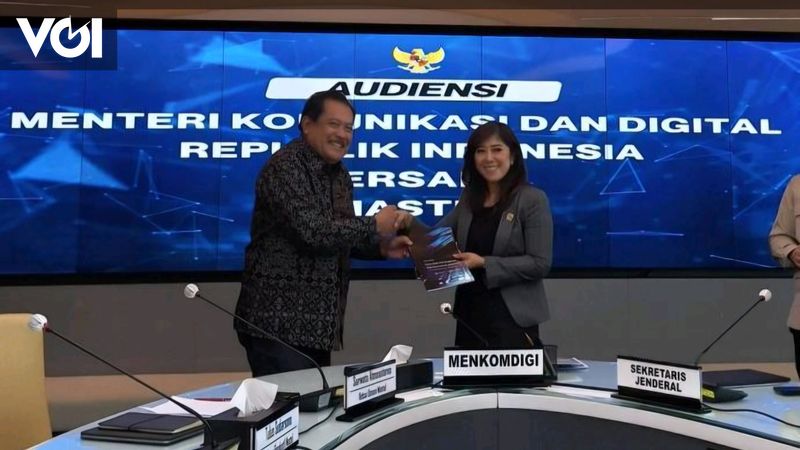
The Indonesian Telematics Society (MASTEL) presented a comprehensive policy paper to Communication and Digital Minister Meutya Hafid on Wednesday, outlining a strategic roadmap for combating the growing threat of disinformation in Indonesia’s digital landscape.
The document, developed in collaboration with BBC Media Action, represents a significant step toward creating what MASTEL Chairman Sarwoto Atmosutarno described as “a healthy information ecosystem” amid escalating challenges in the digital space.
“This roadmap is not designed to control information, but to create a healthy information ecosystem, so that the public can obtain credible information, media can carry out journalistic functions independently, and digital platforms have clear responsibilities in maintaining the integrity of the digital space,” Atmosutarno explained during the handover ceremony.
The initiative comes at a critical time for Indonesia, Southeast Asia’s largest digital economy with over 210 million internet users. The country has grappled with numerous disinformation crises in recent years, particularly during election cycles and public health emergencies.
Neil R. Tobing, Head of Digital Media and Broadcasting at MASTEL, emphasized that disinformation must be understood as a systemic phenomenon rather than isolated incidents. According to Tobing, the spread of false information is intricately linked to multiple factors including platform algorithms, digital business models, and user behavior patterns in online spaces.
“Addressing disinformation requires a comprehensive approach to digital governance, not just content enforcement,” Tobing noted. This perspective represents a significant shift from traditional content-focused approaches that have proven insufficient in stemming the tide of digital misinformation.
The policy paper introduces five core pillars designed to strengthen Indonesia’s information ecosystem: digital literacy, fact-checking infrastructure, quality journalism, digital governance, and research and innovation. These interconnected elements form the foundation of MASTEL’s proposed strategy, which advocates for a collaborative approach involving government agencies, technology companies, media organizations, academic institutions, and civil society groups.
A key recommendation in the roadmap is the establishment of a National Coordination Council for Handling Disinformation (DKN-PD), which would serve as a cross-sector mechanism to coordinate policies and strengthen collaboration between all stakeholders. This council would represent a significant institutional advancement in Indonesia’s approach to digital governance.
MASTEL also advocates for a joint regulatory mechanism—sometimes called co-regulation—where government, digital platforms, and media industries work together to develop adaptive policies that can keep pace with rapidly evolving digital technologies while preserving fundamental principles including freedom of expression, press independence, and human rights.
Minister Meutya Hafid welcomed the initiative, acknowledging the global significance of the disinformation challenge. “This initiative is very good, especially now that disinformation has been declared as one of the biggest global threats. Therefore, a coordinated approach is needed that involves all stakeholders,” she said.
The proposal comes amid increasing international recognition that disinformation represents a critical threat to democratic institutions, public health, and social cohesion. Several countries, including Singapore and Malaysia, have implemented legislation to combat false information online, though these approaches have drawn criticism from press freedom advocates.
Indonesia’s approach, as outlined in the MASTEL roadmap, appears to seek a middle path that balances regulatory oversight with multi-stakeholder collaboration, potentially establishing a model for other emerging digital economies grappling with similar challenges.
Implementation details and timeline for the roadmap’s recommendations remain to be clarified as stakeholders begin the complex process of translating policy proposals into concrete actions.
Fact Checker
Verify the accuracy of this article using The Disinformation Commission analysis and real-time sources.

10 Comments
Disinformation can undermine public trust and democratic discourse. A comprehensive national strategy to address this issue is a welcome initiative.
Curious to see how this roadmap will be implemented and the specific measures proposed to combat disinformation effectively.
Combating disinformation is crucial for a healthy digital landscape. This roadmap seems like a step in the right direction for Indonesia to address the growing challenges in their digital space.
It’s good to see Indonesian authorities taking proactive measures to maintain the integrity of their digital ecosystem.
Crafting a balanced approach to regulate digital platforms and maintain journalistic independence is a delicate balance. I hope this roadmap can strike the right chord.
Responsible digital governance is crucial in today’s information landscape. Kudos to Indonesia for taking proactive steps on this front.
Disinformation is a global challenge, and it’s encouraging to see Indonesia taking a leadership role in addressing this issue. A healthy information ecosystem benefits everyone.
I’m curious to learn more about the specific strategies and stakeholder engagement planned as part of this roadmap.
Combating disinformation requires a multi-faceted approach involving the government, media, and digital platforms. This roadmap seems to acknowledge that complexity.
Effective implementation will be key. I hope this initiative can serve as a model for other countries grappling with similar challenges.