


Listen to the article
Kazakhstan has proposed establishing a collaborative expert platform to combat disinformation across Turkic-speaking nations, signaling a new regional approach to addressing growing concerns about false information in the digital age.
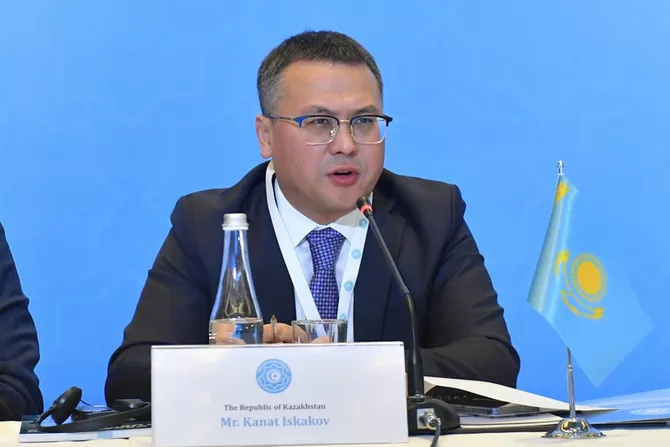
The initiative was unveiled by Kanat Iskakov, Kazakhstan’s Deputy Minister of Culture and Information, during the Turkic States Forum on Combating Disinformation held in Ankara, Turkey, according to reports from The Caspian Post citing local media sources.
During his address to representatives from Turkic nations, Iskakov stressed the critical need for concrete, practical measures to enhance collective capabilities in identifying and neutralizing disinformation campaigns that increasingly target the region.
“We need to move beyond discussions and implement tangible mechanisms that can serve all Turkic states in their fight against disinformation,” Iskakov said, emphasizing that coordinated efforts would be more effective than individual national initiatives.
The proposed platform would facilitate regular research on network-analytical countermeasures, bringing together experts from across the Turkic world to share intelligence, methodologies, and best practices in combating false narratives. A key component of the initiative includes specialized training programs to develop new generations of information security specialists across member states.
Kazakhstan’s proposal comes amid rising concerns about targeted disinformation campaigns across Central Asia and the broader Turkic region. In recent years, countries in the region have faced waves of coordinated disinformation, particularly around sensitive topics like border disputes, water resources, and ethnic relations.
The joint platform would encompass several practical initiatives, including a shared fact-checking resource that could quickly respond to false information spreading across national boundaries. Strategic communications training would be offered to government officials and media professionals to help them effectively counter misleading narratives.
Notably, the proposal includes leveraging advanced technologies such as big data analytics to identify patterns in disinformation campaigns, potentially allowing earlier detection and more effective responses. This technological approach signals a more sophisticated strategy than previous regional efforts to combat false information.
The Turkic States, which include Azerbaijan, Kazakhstan, Kyrgyzstan, Turkey, Turkmenistan, and Uzbekistan, share linguistic and cultural ties but have sometimes struggled with coordinating policy responses to common challenges. This initiative represents a significant step toward regional cooperation on information security.
Media experts note that the timing of this proposal coincides with global concerns about disinformation’s role in electoral interference, social polarization, and regional instability. The Turkic region, positioned between major geopolitical powers, has increasingly become a target for sophisticated influence operations.
“This regional approach acknowledges that disinformation doesn’t respect borders,” said Dr. Aida Abzhaparova, an information security analyst familiar with the region. “False narratives that begin in one Turkic country often spread rapidly to others due to linguistic similarities and cultural connections.”
While the proposal has been generally well-received, implementation challenges remain. Questions about funding mechanisms, operational structure, and the balance between combating genuine disinformation and protecting free speech will need to be addressed as the initiative develops.
The platform would also need to navigate the varying levels of media freedom and different regulatory approaches across the participating states, some of which have been criticized for restrictive media policies.
The Turkic States Forum on Combating Disinformation concluded with participating countries expressing support for enhanced cooperation, though formal agreements on Kazakhstan’s specific proposal are expected to be developed in the coming months through diplomatic channels.
If successfully implemented, this joint platform could serve as a model for other regional groups facing similar challenges in the increasingly complex information landscape of the 21st century.
Fact Checker
Verify the accuracy of this article using The Disinformation Commission analysis and real-time sources.

8 Comments
While the intentions behind this proposal seem positive, I have some concerns about the potential for overreach or political interference. It will be critical to ensure the platform maintains strict independence and a commitment to impartial, fact-based analysis. Transparency and accountability measures will be key.
This initiative highlights the transnational nature of disinformation challenges. A regional approach recognizes that false narratives often cross national borders, requiring coordinated responses. I hope the platform can develop innovative ways to identify and debunk coordinated disinformation campaigns.
Combating disinformation is crucial for maintaining social stability and democratic discourse. I’m curious to learn more about the specific mechanisms and countermeasures this platform plans to implement. Sharing best practices across the Turkic nations seems like a step in the right direction.
Absolutely. The details on the proposed platform’s operational model and governance structure will be important to assess its effectiveness. Transparent information-sharing and a commitment to factual analysis will be key.
This is an interesting proposal to address a growing problem across the Turkic nations. Coordinating efforts and sharing intelligence could be an effective way to counter disinformation campaigns in the region. It will be important to ensure the platform remains objective and fact-based in its approach.
Agreed. A collaborative regional platform could leverage expertise and resources more efficiently than individual national initiatives. But it will need strong safeguards to maintain impartiality and transparency.
Disinformation poses a serious threat to democratic institutions and social cohesion. I’m encouraged to see Kazakhstan taking a leadership role in proposing this collaborative platform among Turkic states. Strengthening collective resilience against malicious information tactics is crucial for the region.
Agreed. Regional cooperation is essential to counter the cross-border nature of modern disinformation. I hope this platform can serve as a model for other regions facing similar challenges.