


Listen to the article
In a striking reversal of fortune, several once-powerful Filipino political figures are now facing the consequences of their actions, demonstrating the transient nature of power and influence in public life.
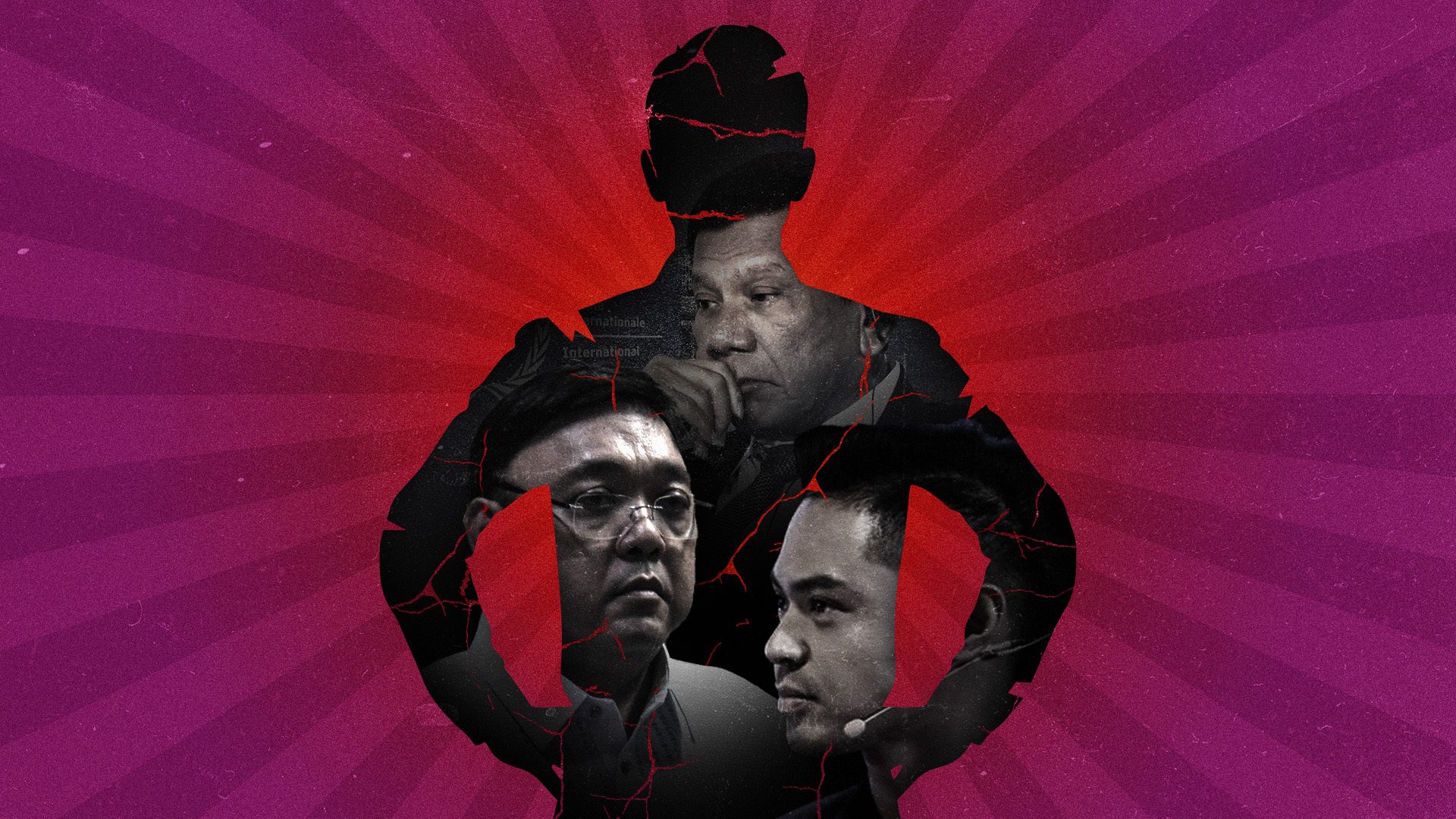
Former President Rodrigo Duterte, known for his bombastic style and unfiltered rhetoric during his presidency, now finds himself detained in Scheveningen prison in The Hague. During his initial appearance before the International Criminal Court (ICC), observers noted a stark contrast to his previous demeanor, as his voice reportedly trembled when asked to identify himself—a far cry from the swagger that defined his public appearances during his presidency.
Duterte’s time in office was characterized by inflammatory statements directed at various figures. He once called God “stupid,” cursed at the Pope, threatened to slap ICC judges, and openly made death threats against political opponents. His brash style was often met with laughter and support from allies who viewed his approach as a strength rather than a liability.
One such ally, Harry Roque, who once told Senator Leila de Lima, “May you rot in jail,” is now himself a fugitive in Europe. Roque faces accusations of qualified human trafficking, a charge that carries a potential life imprisonment sentence if he is convicted.
Similarly, Franco Mabanta, a social media strategist and founder of Peanut Gallery Media Network, who once mocked vlogger Jover Laurio and suggested she should be “paraded around the block” in handcuffs to shouts of “shame,” was arrested on May 6 by the National Bureau of Investigation on extortion charges. In a twist of irony, Mabanta himself was escorted to jail in handcuffs—the very scenario he had once gleefully imagined for his critics.
These reversals illustrate a phenomenon Filipinos express through the saying “bilog ang mundo” (the world is round), suggesting that what goes around eventually comes around. The cycle of consequence is not necessarily about punishment or revenge but reflects how actions set in motion tend to return to their source over time.
Political analysts note that this pattern is hardly unique to the Philippines. Throughout history, leaders who have ruled with impunity have often faced eventual downfall or disgrace. Power creates an illusion of permanence that can lead to overconfidence and a failure to consider long-term consequences.
The Lebanese-American writer Kahlil Gibran captured this dynamic in his work “The Prophet,” using the metaphor of children building sand towers by the sea, only to have them washed away. The towers, like positions of power, stand briefly before disappearing, while the ocean—representing the unstoppable force of time and consequence—continues its eternal rhythm.
This cycle serves as a reminder of the impermanence of power and the importance of humility in leadership. During their ascendancy, these Filipino political figures appeared untouchable, their influence seemingly unshakable. Now, they face the vulnerability they once dismissed in others.
The judicial proceedings against these figures represent not just personal downfalls but a potential shift in accountability within Philippine politics. For years, the political culture has rewarded bombastic rhetoric and personal attacks, particularly in the social media era where such behavior gains traction and amplification.
However, these cases should not be viewed as cause for celebration or spectacle. Rather, they offer a sobering reminder that public life can change rapidly, and those who wield power today may find themselves answering for their actions tomorrow.
As the wheel of fortune turns, the underlying message becomes clear: the consequences of one’s words and actions, whether born of cruelty or kindness, eventually return. In the end, it is not about vengeance but about the natural balance that time brings to all human endeavors, regardless of how powerful they may momentarily appear.
Fact Checker
Verify the accuracy of this article using The Disinformation Commission analysis and real-time sources.

14 Comments
While it’s satisfying to see powerful figures face justice, I hope the process is fair and impartial. The international community will be closely watching to ensure these cases are handled properly.
Agreed. The credibility of the ICC and the rule of law is at stake here. A transparent and balanced approach will be crucial to upholding justice and restoring public trust.
The downfall of these figures is a sobering reminder that no one is above the law, regardless of their political or social status. Transparency and accountability must be the guiding principles, both in government and in the digital realm.
Absolutely. This case underscores the need for robust oversight and a level playing field when it comes to public figures and their actions, whether they’re elected officials or social media personalities.
It will be interesting to see how these cases play out and what impact they have on the political landscape, both in the Philippines and globally. Accountability is essential for maintaining public trust in institutions and leaders.
Well said. These cases could set important precedents for how we hold powerful individuals responsible, regardless of their position or platform. It’s a complex issue, but one that is crucial for the health of our democracies.
These types of cases highlight the need for robust checks and balances, even on high-profile figures. While controversial leaders can gain popular support, they must still face consequences for abuses of power.
Absolutely. The rule of law should apply equally, regardless of one’s political status or influence. It will be interesting to see how this case unfolds.
Interesting how political figures can fall from grace so quickly. Accountability is important, even for those in power. It will be telling to see how Duterte and his allies respond to these charges.
Agreed. The contrast between Duterte’s past bravado and his reported behavior at the ICC is quite striking. It underscores the fragility of political power.
The downfall of these politicians is a cautionary tale. Vloggers and other public figures should also be mindful that their actions can have real consequences, even if they’ve enjoyed unchecked influence in the past.
Well said. Accountability and responsibility should be the watchwords for anyone in the public eye, whether they’re politicians, celebrities, or social media influencers.
This situation raises broader questions about the role of social media and the unchecked influence of certain individuals. Vloggers and online personalities wield significant power, and they must be held accountable as well.
Excellent point. The line between entertainment, influence, and accountability is blurring, and we need to find ways to ensure responsible use of these platforms.