


Listen to the article
EU Sanctions American Fugitive in Russia for Disinformation Campaigns
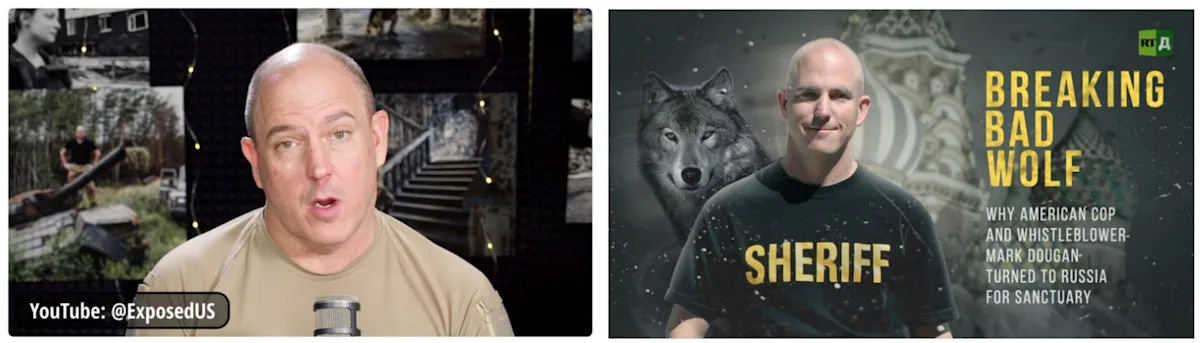
In an unprecedented move, the European Union has sanctioned an American fugitive residing in Russia as part of a broader crackdown on what officials describe as “information manipulation and interference.” John Mark Dougan, a former Florida law enforcement officer, was among 12 individuals targeted in sanctions announced on December 15, 2025.
The EU accused Dougan of “participating in pro-Kremlin digital information operations from Moscow by operating the CopyCop network of fake news websites and supporting Storm-1516 activities.” According to EU officials, these “inauthentic websites mimic legitimate media outlets and spread fabricated stories and AI-generated deepfake content.”
Dougan, who previously served as a deputy in the Palm Beach County Sheriff’s Office and briefly in the U.S. Marines, fled the United States after being indicted on 21 state charges of extortion and wiretapping. Russia granted him asylum in 2016, where he has since become a prominent figure in disinformation circles.
His notoriety in this space was cemented when media watchdog NewsGuard named him “Disinformer of the Year” in 2024 for creating “elaborate fabrications, disguised as credible local news reports and fake whistleblower testimonies.”
The sanctions also targeted French ex-military officer Xavier Moreau and Swiss former intelligence agent Jacques Baud, both of whom leverage their past professional credentials to bolster their credibility. These individuals now face asset freezes, restrictions on receiving funds from European entities, and travel bans to certain European countries.
Despite these measures, Dougan appears unfazed. In a statement to Russian media on December 16, he claimed the sanctions would have no impact on his “participation in the information war.” On his Telegram channel, he wrote: “I’m happy to report that the EU has imposed sanctions against me for destabilizing European governments. The funny thing is, I didn’t have to do anything other than expose the lies and corruption surrounding Ukraine and the West’s involvement.”
The CopyCop Network
According to research by Insikt Group, a threat research division of a cyberintelligence company, the CopyCop network referenced in the EU sanctions utilized “inauthentic media outlets in the US, UK, and France.” One notable example involved AI-generated content targeting French audiences through websites like veritecachee.fr and franceencolere.fr.
While Dougan denied involvement with CopyCop to The New York Times ahead of the 2024 U.S. presidential election, Insikt researchers found the infrastructure supporting these sites had “strong ties” to DC Weekly, a disinformation outlet he was known to manage.
Dougan told the BBC he had sold the DC Weekly site in 2023 after the broadcaster investigated false allegations it spread about Ukrainian President Volodymyr Zelensky and his wife Olena Zelenska. Fact-checkers at AFP also debunked an altered photo of a U.S. naturalization certificate bearing Zelensky’s name and photo that was distributed by DC Weekly.
The Storm-1516 Operation
The Microsoft Threat Analysis Center identified the second operation mentioned in the sanctions as “Storm-1516,” following the discovery of a Russian campaign to influence voters in the 2024 U.S. election by Darren Linvill, co-director of Clemson University’s Media Forensics Hub.
This operation generated numerous false claims, including a fabricated sexual abuse allegation targeting then-vice presidential candidate Tim Walz that gained millions of social media interactions. U.S. intelligence officials attributed this disinformation to Russia. The operation also created a fictional story claiming then-presidential candidate Kamala Harris was involved in a hit-and-run accident that left a teenager unable to walk.
AFP fact-checkers debunked additional false claims about illegal voting and the destruction of mail ballots that aligned with Storm-1516’s patterns of disinformation and were assessed by U.S. intelligence to be Russian in origin.
Beyond U.S. politics, the Storm-1516 network has pushed disinformation about Russia’s war in Ukraine, attempting to undermine support for Zelensky through false claims about lavish purchases by him and his wife.
The European Digital Media Observatory detailed the network’s tactics to “discredit Vladimir Putin’s political opponents and try to undermine the electoral process in countries deemed ‘enemies’ by the Kremlin.” France’s Viginum agency, which counters foreign disinformation, identified at least 18 instances where Storm-1516 narratives were initially spread on social media accounts or websites belonging to the CopyCop network.
Despite these connections, Linvill told AFP that Dougan’s role in Storm-1516 was “relatively small,” suggesting it serves Russian interests to have an American’s name associated with the campaign, but that there is no evidence Dougan created or distributed content through the Storm-1516 network.
The United Kingdom also implemented sanctions against organizations and individuals involved in Storm-1516 in December 2025, indicating growing international concern about the threat posed by foreign information manipulation campaigns.
Fact Checker
Verify the accuracy of this article using The Disinformation Commission analysis and real-time sources.

14 Comments
The EU’s decision to sanction Dougan is a significant step in countering the growing threat of state-sponsored disinformation campaigns. Holding individuals like him accountable for their role in undermining democratic values is crucial.
This case highlights the need for robust safeguards against foreign interference in our information landscape. While free speech is essential, there must be limits when it is abused to deliberately mislead and sow discord.
It’s worrying to see a former US law enforcement official like Dougan involved in such activities. This underscores how disinformation networks can co-opt individuals to undermine democratic institutions and processes.
Sanctions against Dougan send a strong signal that the EU will not tolerate the use of its territory to spread Russian propaganda. Addressing cross-border disinformation campaigns is essential for protecting the integrity of our information landscape.
This case serves as a stark reminder of the dangers posed by disinformation campaigns that seek to undermine the integrity of our information landscape. Sanctions against individuals like Dougan are a necessary step in countering this growing threat.
While free speech protections are vital, there must be limits when that freedom is exploited to deliberately mislead and sow discord. The EU’s actions highlight the importance of holding such actors accountable for their actions.
It’s concerning to see a former US law enforcement officer involved in pro-Kremlin propaganda efforts. This highlights how disinformation networks can co-opt individuals to undermine democratic institutions.
This case demonstrates the need for robust safeguards against foreign interference in our information landscape. Sanctions may be a necessary step to counter the growing threat of state-sponsored disinformation.
The EU’s decision to sanction Dougan is a strong message that they will not tolerate the use of their territory to spread Russian propaganda. This sets an important precedent for addressing cross-border disinformation campaigns.
While free speech protections are crucial, there must be limits when individuals abuse that freedom to deliberately mislead and sow discord. Holding such actors accountable is crucial for upholding democratic values.
It’s deeply concerning to see a former US law enforcement officer like Dougan involved in pro-Kremlin propaganda efforts. This underscores the insidious nature of disinformation networks and the need for vigilance in protecting democratic institutions.
The EU’s sanctions against Dougan set an important precedent for addressing cross-border disinformation campaigns. Holding individuals accountable for their role in undermining truth and sowing division is crucial for upholding democratic values.
This is a troubling development. Disinformation campaigns that undermine truth and sow division must be addressed firmly. While free speech is vital, the malicious spread of falsehoods crosses a line.
Agreed. Individuals like Dougan who abuse their platform to manipulate information for political ends should face consequences. Upholding democratic values requires vigilance against such actors.