


Listen to the article
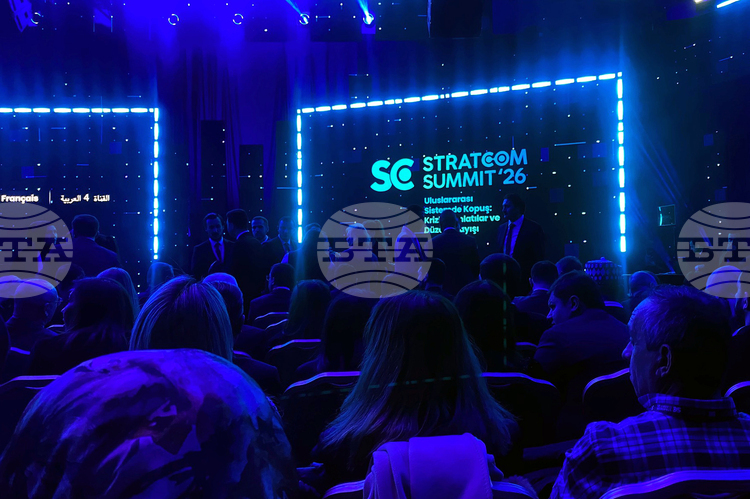
Turkey’s annual Stratcom Summit opened Friday in Istanbul, bringing together political figures, diplomats, experts, and media representatives from approximately 40 countries and various international organizations. The two-day forum features Bulgarian representation through caretaker Ministers of Foreign Affairs Nadezhda Neynski and Culture Nayden Todorov, who are scheduled to participate in Saturday’s program.
Professor Burhanettin Duran, Head of the Communications Directorate of the Turkish Presidency, announced this year’s theme as “Disruption of the International System: Crises, Narratives and the Search for Order.” He explained that discussions would cover both technical aspects of strategic communication and the multilateral crises affecting the international system, along with narratives that exacerbate these crises.
“We call on the international community and all stakeholders to stand up for the truth and take a more sustained and conscious stance against disinformation,” Duran stated during his opening remarks.
He emphasized that regional destabilization intensifies existing instability and creates permanent uncertainty about the future. Duran specifically referenced the Gaza conflict, claiming that international law “is silent, conceals the truth, masks aggression and creates one-sided narratives.”
Turkish President Recep Tayyip Erdogan addressed participants via video, describing a severe legitimacy crisis in the international system. “The institutions, rules and values that form the basis of the system are losing their function day by day,” Erdogan said. “We are living through a difficult period in which the competition for power has spread to areas as diverse as energy, technology and trade, in which problems are being tried to be solved with weapons instead of dialogue.”
Erdogan reaffirmed Turkey’s commitment to its “principled, unwavering and peace-oriented stance” focused on humanitarian values and justice, pledging to mobilize all resources to restore peace and security throughout the region and the world.
Turkish Vice President Cevdet Yilmaz noted in his opening speech that Turkey’s foreign policy and strategic communication recognize the current international system’s limitations while persistently advocating for “a more just and inclusive order” on the global agenda.
During a break, Yilmaz responded to a question from Bulgaria’s BTA correspondent about the Bulgarian presence at the forum, stating: “For us, Bulgaria is a friendly, neighboring and allied country and its representatives are always welcome here.”
Friday’s program featured six panels with participants including Turkish government representatives, Defense Industry Agency President Haluk Gorgun, International Organization of Turkic Culture Secretary General Sultan Raev, British House of Lords member Baroness Fiona Hodgson, and Ismet Fatih Cancar, Advisor to the Presidency of Bosnia and Herzegovina, among others.
The panels covered wide-ranging topics from strategic communication and diplomacy’s future to artificial intelligence’s role, the transformation of global public opinion, and the applications of soft power and crisis management.
The forum continues Saturday with Bulgarian Ministers Neynski and Todorov joining discussions opened by Turkish Foreign Minister Hakan Fidan. Turkish National Intelligence Organization head Professor Ibrahim Kalin will also participate in the second day’s events.
Minister Neynski has scheduled meetings with Foreign Minister Fidan and Professor Duran, while Minister Todorov will speak in a panel titled “Rethinking Soft Power: Influence and Limits in the Face of Global Disruption,” exploring the relationships between culture, influence, public visibility, and strategic communications amid global transformations.
The Stratcom platform, established in 2021 by Turkey’s Directorate of Communications, focuses on using communication processes to achieve specific long-term goals in state policy, defense, and international relations. It aims to build public trust, counter disinformation, and manage crises through international dialogue.
Since its inception, Stratcom forums have attracted thousands of participants and speakers from more than 50 countries, addressing topics including crisis communication, disinformation, public diplomacy, emerging technologies, and media skills. The summit has established itself as an important venue for international dialogue and experience sharing among communications professionals and policymakers.
Fact Checker
Verify the accuracy of this article using The Disinformation Commission analysis and real-time sources.

22 Comments
Curious to learn more about the specific technical and multilateral aspects of strategic communication that will be discussed at this summit. Addressing both the operational and geopolitical dimensions is crucial.
Yes, understanding how to build effective communication strategies while navigating the complex international landscape will be critical takeaways from this event.
This summit comes at a critical time, with regional destabilization and permanent uncertainty posing major challenges. Addressing the technical and multilateral aspects of strategic communication will be key.
Indeed, the summit’s focus on both the technical and geopolitical dimensions of disinformation is important to develop comprehensive solutions.
The summit’s focus on regional destabilization and permanent uncertainty highlights the far-reaching consequences of disinformation. Developing effective counter-narratives will be key.
Agreed, crafting compelling alternative narratives that promote truth and transparency is critical to undermine the impact of disinformation campaigns.
Impressed to see the Turkish Presidency’s Communications Directorate taking a lead role in this important summit. Tackling disinformation at the highest political levels is critical.
Agreed, the involvement of senior government officials underscores the strategic importance of this issue for global security and stability.
Interesting to see Turkey hosting this global summit on disinformation. Strategic communication and countering narratives that exacerbate instability are crucial in today’s complex information landscape.
Agree, the call to the international community to stand up for truth and take a stronger stance against disinformation is an important message.
The emphasis on the destabilizing effects of disinformation on the international system is well-placed. Safeguarding global security and stability must be a top priority for all stakeholders.
Absolutely, the summit’s recognition of the grave security implications of disinformation underscores the urgency of this issue and the need for coordinated, decisive action.
This event provides an important platform for global leaders to discuss the technical and geopolitical challenges posed by disinformation. I’m curious to see what concrete actions and commitments emerge from the summit.
Yes, tangible outcomes and a shared roadmap for international cooperation will be essential to translate the summit’s discussions into meaningful progress in the fight against disinformation.
The summit’s theme of “Disruption of the International System” underscores the serious ramifications of disinformation and the urgent need for concerted global action.
Yes, the emphasis on regional destabilization and permanent uncertainty highlights the destabilizing impact of disinformation on the international order.
It’s encouraging to see a diverse range of participants, from political figures to media representatives, coming together to address these pressing global challenges. Multistakeholder collaboration is vital.
Absolutely, bringing together such a wide array of stakeholders with different perspectives will help generate more comprehensive solutions to the disinformation crisis.
The call to the international community to stand up for the truth and take a more conscious stance against disinformation is a powerful message. Strengthening resilience to these threats is essential.
Absolutely, developing a sustained, coordinated response from all stakeholders is key to effectively countering the spread of disinformation globally.
It’s good to see representation from Bulgaria at this high-level event. Multilateral cooperation will be essential to tackle the global disorder and disinformation threats discussed.
Absolutely, bringing together diverse international stakeholders is crucial to develop coordinated responses to these complex, cross-border challenges.