


Listen to the article
Iranian-U.S. Tensions at Strait of Hormuz: Romanian MEP’s False Claims Exposed
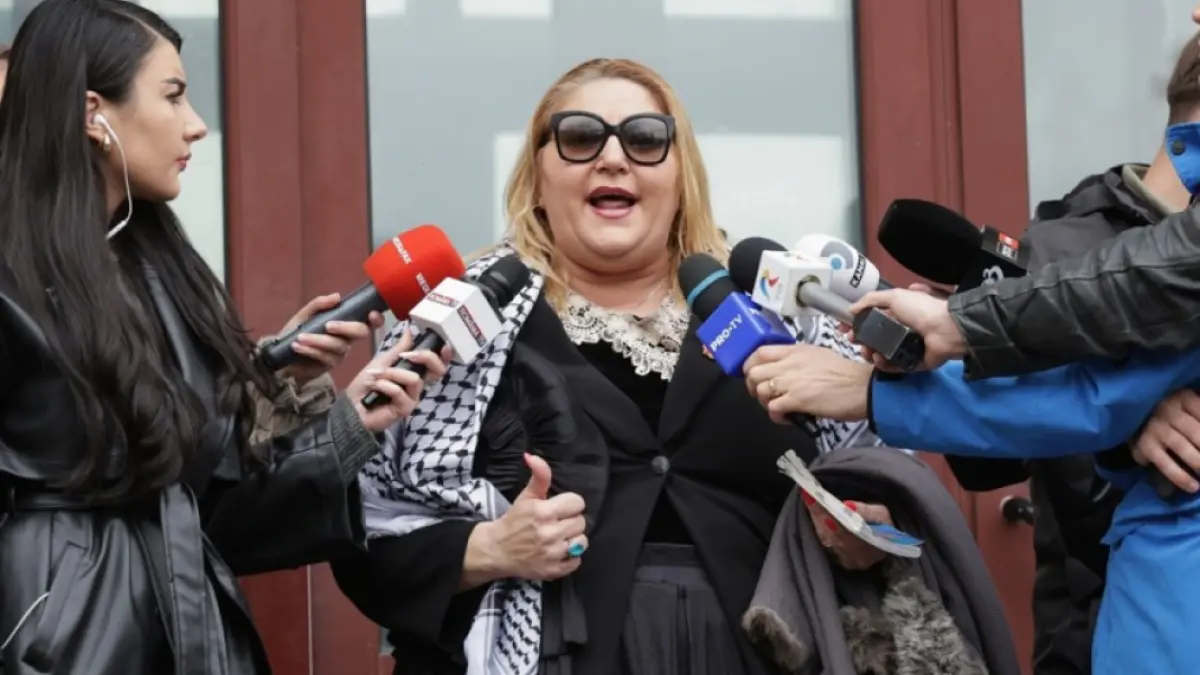
Diana Șoșoacă, a controversial Romanian MEP, has falsely claimed credit for Iran’s brief reopening of the Strait of Hormuz following her participation at the Inter-Parliamentary Union Assembly in Istanbul. In a capital-letter social media post, Șoșoacă declared that her diplomatic efforts single-handedly resolved the crisis, calling on Romania’s Prime Minister Bolojan to “drop the price of gasoline” as a result.
The claim has been thoroughly debunked by multiple sources. The temporary reopening of the strategically critical waterway was actually the result of negotiations between the United States and Iran, with Pakistan serving as mediator, following a 10-day ceasefire between Israel and Lebanon. Moreover, Iran reversed its decision to open the strait just hours after Șoșoacă’s celebratory announcement, citing continued U.S. blockades of Iranian ports.
According to official records, Șoșoacă’s presence in Istanbul had nothing to do with the Strait of Hormuz situation. The 152nd Assembly of the Inter-Parliamentary Union focused on broader themes including peace processes, global economic fairness, and organizational matters. Furthermore, her claim to be Romania’s “sole representative” at the event is demonstrably false. Official Senate memoranda confirm Romania sent a nine-person delegation, none of which included Șoșoacă, who is not a member of the Romanian Parliament.
Șoșoacă’s own party later revealed her true purpose in Istanbul: participating in a forum promoting “good relations between the EU and Russia.” She was reportedly praised by Leonid Slutsky, leader of the Russian delegation and chairman of Russia’s Liberal Democratic Party, who called her “an intelligent, strong personality” representing “the future of Romania.” The two previously met during a BRICS-Europe Congress in Sochi in November 2025.
The MEP’s claim about Romania’s depleted fuel reserves is equally baseless. Energy Minister Bogdan Ivan recently confirmed that Romania maintains approximately two million tons of oil equivalent in strategic reserves and is actively working to increase those stockpiles. “We have not touched a single molecule so far,” Ivan stated, adding that Romania is working to relocate more reserves within its borders, as 43% are currently stored in facilities across other European countries.
Her demand that Prime Minister Bolojan personally lower gasoline prices demonstrates a fundamental misunderstanding of how fuel pricing works in a market economy. While governments can influence prices through tax adjustments or temporary measures like price caps, they cannot unilaterally set prices, which are determined by numerous factors including global crude oil costs, refining expenses, distribution networks, and company profit margins.
Șoșoacă has a documented history of promoting false narratives aligned with Russian propaganda. In 2021, she was named “political figure of the year” by Kremlin-backed media outlet Sputnik. Her political career has been characterized by scandals, anti-European rhetoric, and discriminatory positions with homophobic and anti-Semitic undertones.
Currently, Șoșoacă faces legal troubles in Romania, where she is under investigation for 11 criminal charges including unlawful detention, assault, promoting Legionary ideas and doctrines, anti-Semitism, Holocaust denial, and glorifying war criminals. The European Parliament’s Legal Affairs Committee is considering lifting her parliamentary immunity at the request of Romania’s General Prosecutor’s Office, with a decision expected by month’s end.
Despite having no authority to represent Romania in international negotiations, Șoșoacă has repeatedly claimed to act on behalf of the country in meetings with representatives from authoritarian regimes in Russia, China, and Venezuela. Her latest fabrication about influencing geopolitical events in the Strait of Hormuz appears to be part of a pattern of self-aggrandizement and misinformation designed to bolster her image as an international political player while promoting divisive narratives.
Fact Checker
Verify the accuracy of this article using The Disinformation Commission analysis and real-time sources.

10 Comments
While the details around the Strait of Hormuz reopening are still emerging, it’s clear this Romanian politician’s claims are false and misleading. Spreading disinformation is unethical and counterproductive. I hope this incident leads to greater scrutiny of public figures’ statements.
This Romanian politician seems to have a history of making dubious claims. It’s important to always fact-check and scrutinize statements, especially from public figures. Transparency and truth-telling should be the foundation of good governance.
This is a classic case of someone trying to take undue credit for a complex geopolitical development they had no real involvement in. It’s important to always look past the sensational claims and focus on the facts, no matter who is making the statements.
Absolutely. Transparency and accountability should be the guiding principles, especially when it comes to high-stakes international affairs. Fact-checking is crucial to cut through the noise and spin.
The Strait of Hormuz situation is a complex geopolitical issue with high stakes. It’s concerning to see someone try to exploit it for their own political gain through misinformation. Responsible leadership requires nuance and integrity, not grandstanding.
While the Strait of Hormuz situation is undoubtedly important, this Romanian politician’s claims seem to be more about self-promotion than factual reporting. It’s a good reminder to always approach political statements with a critical eye and refer to authoritative sources.
Interesting how this Romanian politician tried to claim credit for a diplomatic resolution she had nothing to do with. Sounds like an attempt to grandstand and spread disinformation. Good thing the facts were able to expose the truth behind the Strait of Hormuz situation.
It’s disappointing to see a politician engaging in this kind of disinformation campaign. Trying to claim credit for diplomatic breakthroughs they didn’t contribute to is unethical and undermines public trust. We need more honesty and integrity in politics, not less.
It’s concerning to see politicians making false claims and trying to take credit for geopolitical events they weren’t involved in. Spreading misinformation like this undermines public trust and can have serious consequences. I’m glad the facts were able to set the record straight.
Absolutely. Accountability and honesty in politics should be paramount. It’s disheartening to see this kind of behavior, but important that it gets called out.