


Listen to the article
Iran’s Aerospace Commander Warns Against Misinformation About Strait of Hormuz
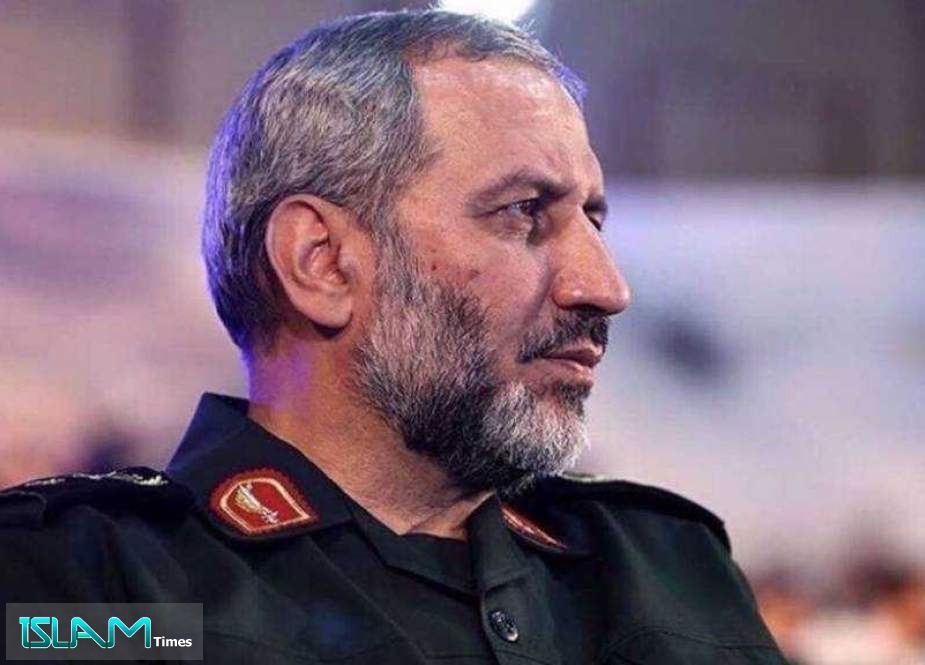
The commander of the Islamic Revolutionary Guards Corps (IRGC) Aerospace Force, Brigadier General Majid Mousavi, issued a warning on Friday about foreign attempts to distort information regarding the Strait of Hormuz, while emphasizing Iran’s established regulations for the strategic waterway.
In a social media statement, General Mousavi paid tribute to the recently deceased Rear Admiral Alireza Tangsiri, former commander of the IRGC Navy, who was killed during what Iranian officials described as unprovoked aggression by the United States and Israel against the Islamic Republic. Mousavi honored Tangsiri as “the architect of the new order in the Strait of Hormuz.”
Before his death, Rear Admiral Tangsiri had issued a significant directive to close the vital shipping lane to enemies and their allies as part of Iran’s retaliatory measures against what it perceived as foreign aggression. The Strait of Hormuz represents one of the world’s most crucial maritime chokepoints, with approximately 20 percent of global oil shipments passing through its narrow corridor connecting the Persian Gulf to the Gulf of Oman and the Arabian Sea.
Following Iran’s retaliatory strikes against U.S. and Israeli targets, former U.S. President Donald Trump announced a two-week pause in military operations, a move that came amid significant turbulence in global energy markets. Oil prices had surged on fears that conflict in the region could disrupt the flow of petroleum through the strategic waterway.
Iranian Foreign Minister Abbas Araghchi subsequently confirmed the reopening of the Strait of Hormuz, linking the decision to a proposed ceasefire in Lebanon. This suggests Iran is using its control over the waterway as a diplomatic lever in broader regional negotiations.
However, Iranian officials have forcefully rejected Trump’s assertions that Iran had committed to permanently keeping the strait open. They have also denied U.S. claims regarding supposed concessions or agreements made by Tehran. The Iranian position appears to maintain flexibility regarding future actions concerning the waterway depending on regional developments.
Adding to the complexity of the situation, Mohammad-Baqer Qalibaf, Speaker of Iran’s Parliament, delivered a stark message about the strait’s status. He indicated that decisions about the waterway would ultimately be determined “on the battlefield,” warning that it would not remain open if U.S. blockade measures continued against Iran. This statement underscores the potential for the strait to become a flashpoint in ongoing tensions between Iran and Western powers.
The Strait of Hormuz, at its narrowest point just 21 miles wide, has long been a focus of geopolitical tension. Iran has previously threatened to block the passage during times of heightened conflict, causing alarm among global energy markets and maritime shipping industries. Any disruption to traffic through this narrow channel could have immediate and significant impacts on global oil prices and supply chains.
General Mousavi concluded his statement with a clear message of military readiness, stating that “The IRGC Aerospace Force remains distrustful of the enemy, with its finger on the trigger and in full readiness to defend Iran.” This declaration suggests that despite diplomatic movements, Iran’s military remains on high alert and prepared for potential escalation.
The ongoing situation highlights the strait’s critical importance not only as a maritime passage but as a geopolitical tool in the complex power dynamics of the Middle East. Analysts suggest that Iran’s strategic leverage over the waterway will continue to factor prominently in regional security calculations and international diplomatic efforts to manage tensions in the Persian Gulf.
Fact Checker
Verify the accuracy of this article using The Disinformation Commission analysis and real-time sources.

14 Comments
The late Rear Admiral Tangsiri seems to have played a significant role in Iran’s positioning around the Strait of Hormuz. His directive to potentially close the waterway is a concerning escalation that could have major economic implications.
Yes, the Strait of Hormuz is a critical global chokepoint, so any disruptions there could reverberate through energy and commodities markets worldwide. This bears close watching.
Interesting to see the Iranian military warning about misinformation regarding the Strait of Hormuz. This strategic waterway is certainly crucial for global energy markets, so maintaining accurate information is important.
I agree, reliable and objective reporting on developments in the region is crucial. It will be important to monitor how this plays out.
Iran’s warning about misinformation regarding the Strait of Hormuz is noteworthy, given the geopolitical sensitivities and economic importance of this maritime chokepoint. Objective analysis of the facts will be crucial.
Absolutely. With the Strait being so critical for global energy flows, any disruptions or conflicts there could have far-reaching repercussions. Careful monitoring of the situation is warranted.
The Strait of Hormuz is a vital maritime chokepoint, so any disruptions or conflicts there could have huge implications for global energy and commodity markets. This is definitely a situation worth monitoring closely.
Agreed. The potential for escalation and market volatility is significant, so it will be important to stay on top of developments in this strategically important region.
While I’m skeptical of Iran’s motivations, the warning about misinformation is understandable given the geopolitical sensitivities around the Strait of Hormuz. Objective analysis of the facts will be key here.
Agreed. It will be crucial to filter out propaganda and get a clear picture of the situation and potential risks. Reliable, impartial reporting is essential.
Curious to see how this situation around the Strait of Hormuz unfolds. Iran’s warning about misinformation suggests they are trying to control the narrative, but it’s important to get an objective view of the facts and potential risks.
Yes, Iran’s motivations are certainly worth scrutinizing here. Maintaining open and secure shipping lanes in the Strait is crucial for global trade and energy flows.
The Strait of Hormuz is a vital energy chokepoint, so any potential disruptions or conflicts there could have major ramifications for global commodity markets, particularly oil and natural gas. This is certainly a developing story to follow closely.
Absolutely. Given the crucial role of the Strait in global energy supply chains, even the potential for disruption could send shockwaves through commodity prices and financial markets.