


Listen to the article
Iran’s Disinformation Campaign Flourishes as U.S. Fact-Checking Infrastructure Crumbles
President Donald Trump’s administration finds itself in a precarious position as Iran wages an increasingly effective information warfare campaign, exploiting the very weaknesses in fact-checking infrastructure that Trump and his Republican allies have worked to dismantle.
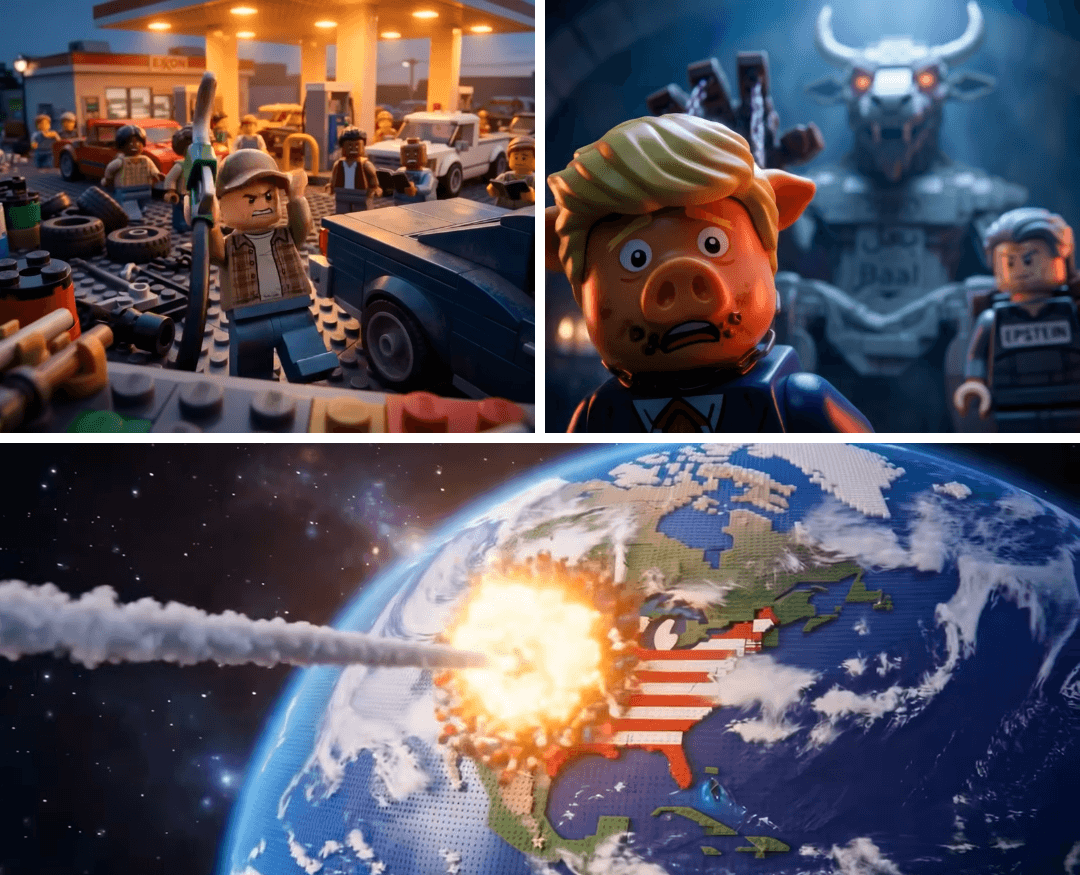
Iran has deployed a sophisticated propaganda network that includes mocking Trump, promoting false military victories, and spreading confusion through fabricated claims—such as the reported death of Israeli Prime Minister Benjamin Netanyahu, who remains very much alive. The country’s Lego videos mocking American military efforts have gone viral, while evidence suggests that both Russia and China are amplifying Iran’s messaging to further undermine U.S. credibility.
Faced with this barrage of disinformation, the Trump administration’s response has been notably ineffective. The State Department recently instructed its embassies to use X (formerly Twitter) to correct the record—a strategy experts consider woefully inadequate given the platform’s limitations and reputation for hosting unchecked falsehoods.
The irony is striking. Over the past year, Trump and his allies have systematically undermined fact-checking journalism and accuracy safeguards on social media platforms. Trump publicly celebrated when Meta dismantled its U.S. fact-checking program last year—a decision he continues to tout as a victory. X owner Elon Musk joined the administration in dismantling the U.S. Agency for International Development (USAID), which had funded numerous international independent fact-checking programs.
Meanwhile, Representative Jim Jordan’s congressional committee has worked aggressively to dismantle disinformation research at universities and reframe independent journalism as part of what they term a “censorship industrial complex.”
“After Musk fed USAID ‘into the wood chipper,’ as he said, independent and pro-democracy media lost millions of dollars—an estimated $247 million in annual spending,” notes Cristina Tardáguila, director of the International Fact-Checking Network, a global association for fact-checking newsrooms. “The exact types of programs that would have challenged false Iran-backed narratives were immediately defunded across the Middle East and Africa; in Ukraine and Eastern Europe; and in parts of Latin America.”
Social media platforms have replaced professional fact-checking with systems like “community notes,” which allow users to add context to posts. While promising in theory, these systems have proven problematic in practice. Bad actors can manipulate them to suppress accurate information, and ordinary users lack the incentive to consistently contribute high-quality notes.
Carlos Hernández-Echevarría, a policy expert with Spain’s fact-checking group Maldita, explains the fundamental flaw in this approach: “The people writing the notes become tired of not seeing notes become visible, so they stop writing notes. Then we enter this vicious circle of AI-generated notes that don’t get enough ratings. It’s just a poor excuse for an anti-disinformation effort.”
The contrast in effectiveness is stark. Europe’s fact-checkers attached notes to 35 million posts on Facebook in the first half of 2023, while in the United States, only 900 community notes appeared during the same period. Professional fact-checkers provide the persistence and expertise that casual users simply cannot match.
Beyond political attacks, economic challenges also threaten fact-checking operations. As audiences increasingly turn to AI for information, publishers see declining website traffic, limiting subscription and advertising revenue. This creates a dangerous cycle—less journalism means less reliable content for AI systems, potentially creating an information vacuum that disinformation can fill.
Despite these challenges, the fact-checking community has shown remarkable resilience. Of 14 U.S. fact-checking newsrooms that were IFCN members when Meta ended its program, nine continue to regularly produce fact checks, including major outlets like Reuters and The Associated Press, as well as independent organizations like PolitiFact and FactCheck.org.
Agence France-Presse exemplifies this dedication, publishing 744 fact checks in March 2023—up from 480 in February—with 72% focused on Iran-related claims. The demand for authoritative verification remains strong.
“Nonpartisanship is what separates us from the rest of the noise of the internet,” says Katie Sanders, editor-in-chief of PolitiFact. “There are a dime-a-dozen voices who can do fact-checking work with a point of view, but it’s just not as valuable as a neutral, carefully reported effort.”
Laura Zommer of Factchequeado, who began fact-checking in Argentina—a nation that has endured coups, economic collapses, and authoritarian regimes—recognized concerning patterns in the U.S. before many Americans did. She found the image of tech CEOs enthusiastically supporting Trump’s inauguration particularly alarming, signaling that the tech sector was aligning politically rather than maintaining neutrality.
Despite mounting obstacles, Zommer remains committed: “We are not doing great, but we are in resistance mode, and I’m confident we’re going to continue. It’s exactly this time when we need to be doing a history of the facts, creating archives, doing testimonials for the people that won’t listen. If we give up, who’s going to do it?”
Fact Checker
Verify the accuracy of this article using The Disinformation Commission analysis and real-time sources.

11 Comments
The use of fabricated claims, like the reported death of the Israeli PM, is a concerning tactic. Fact-checking and media literacy efforts need to keep pace with the evolving strategies of disinformation actors.
Absolutely. Spreading false information, even if it’s later corrected, can still have a lasting impact on public perception. Addressing this challenge requires a comprehensive and proactive approach.
It’s troubling to see how the Trump administration’s policies have weakened the US’s ability to counter disinformation campaigns. Rebuilding these capabilities should be a priority for the current administration.
The erosion of fact-checking capabilities is worrying. Disinformation can have real consequences, undermining public discourse and informed decision-making. This is an issue that deserves serious attention.
Iran’s propaganda efforts are concerning, but I’m also curious about the role of other state actors, like Russia and China, in amplifying this messaging. Understanding the broader geopolitical dynamics at play is important.
This highlights the importance of maintaining a strong, independent media and fact-checking ecosystem. Relying on platforms like X to correct misinformation seems like a limited approach.
I’m curious to learn more about the specific tactics Iran is using, such as the Lego videos mocking US military efforts. Understanding the methods behind these campaigns is crucial to developing effective countermeasures.
This is a complex issue with significant geopolitical implications. I’m interested to see how the US and its allies respond to these evolving disinformation threats and work to strengthen the integrity of information.
Interesting to see how Iran is leveraging social media to amplify its messaging. It highlights the challenges of modern information warfare and the need for effective fact-checking and media literacy initiatives.
Agreed. The Trump administration’s response seems inadequate. Tackling disinformation requires a multi-pronged approach, including strengthening fact-checking infrastructure and improving digital literacy.
This is a concerning development. Disinformation campaigns can undermine public trust and sow division. The US needs a robust response to counter these efforts and protect the integrity of information.