


Listen to the article
Nigerian Electoral Commission Uncovers Sophisticated Social Media Impersonation Scheme
The Independent National Electoral Commission (INEC) has revealed that a Twitter account attributed to its Chairman, Prof. Joash Ojo Amupitan, SAN, is fraudulent and part of what appears to be a coordinated disinformation campaign. The announcement comes after an extensive forensic investigation conducted by independent cybersecurity experts.
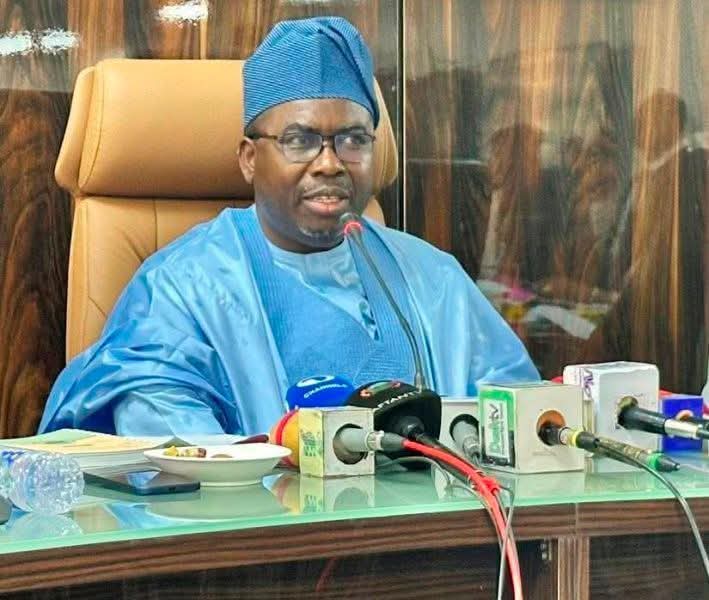
Adedayo Oketola, Chief Press Secretary to the INEC Chairman, made this disclosure in Abuja on Monday. According to Oketola, the multi-layered investigation conclusively established that Prof. Amupitan does not operate any personal account on X (formerly Twitter).
“The posts, replies, and screenshots linking the Chairman to the handle @joashamupitan are fraudulent, forensically unverifiable, and technically impossible,” Oketola stated.
The controversy erupted on April 10, 2026, when viral social media posts alleged that the INEC Chairman had made a partisan comment—”Victory is sure”—in response to another user. These allegations were supported by screenshots and purported digital records, raising concerns about the electoral body’s neutrality in Nigeria’s politically sensitive environment.
The forensic investigation, however, uncovered multiple pieces of evidence pointing to deliberate fabrication. Most damning was the discovery that the alleged reply was posted 13 minutes before the original tweet it supposedly responded to—a technical impossibility that investigators say provides definitive proof of manipulation.
Other key findings from the investigation include the absence of any digital linkage between the disputed account and Prof. Amupitan’s verified email addresses or phone numbers. The investigation also revealed that the account had no historical record on the Internet Archive’s Wayback Machine prior to April 2026, suggesting it was recently created.
In what appears to be a pattern of coordinated impersonation, investigators identified at least seven fake accounts across Facebook and Instagram using the Chairman’s identity. On the same day the controversial screenshots went viral, the X account was renamed to @sundayvibe00, set to private, and labeled as a “parody account”—actions that investigators interpret as damage control following exposure.
“The forensic evidence is comprehensive, multi-sourced, and unambiguous,” Oketola emphasized. “This represents a coordinated digital impersonation and disinformation campaign.”
The timing of this incident is particularly significant as Nigeria approaches its election cycle, where INEC’s credibility is crucial to ensuring peaceful and accepted electoral outcomes. Political tensions typically rise during pre-election periods in Africa’s most populous nation, and misinformation can potentially inflame already delicate situations.
The case highlights growing concerns about the role of social media in spreading election-related disinformation in Nigeria. The country has struggled with political misinformation in previous electoral cycles, but experts note that advances in artificial intelligence have made it increasingly easier to fabricate convincing misleading content.
INEC has referred the independent forensic report to law enforcement agencies for further investigation and potential prosecution under Nigeria’s Cybercrimes (Prohibition, Prevention, etc.) Act, which criminalizes online impersonation and the spread of false information.
Oketola used the opportunity to call on media organizations to prioritize accuracy over speed when reporting potentially damaging allegations. “Media organizations have a duty to apply strict forensic verification standards to social media posts and screenshots before publishing them, especially when such content implicates public officials or carries serious consequences for public trust,” he said.
The Commission reminded the public that all official INEC communications are disseminated exclusively through its verified platforms, including its website, verified social media accounts, online news portal, and formal press statements from its headquarters in Abuja.
The incident serves as a sobering reminder of the challenges facing electoral bodies across Africa as they navigate an increasingly complex digital landscape while working to maintain public trust in democratic processes.
Fact Checker
Verify the accuracy of this article using The Disinformation Commission analysis and real-time sources.

11 Comments
This is a concerning development. The alleged disinformation campaign targeting the INEC chairman’s reputation is a serious threat to democratic integrity. I hope the forensic investigation provides full transparency and accountability for any wrongdoing.
Agreed. Maintaining public trust in electoral institutions is critical. I’m glad INEC is taking this issue seriously and conducting a thorough investigation.
This news highlights the ongoing challenges posed by online misinformation and manipulation. The INEC chairman’s prompt response and the forensic investigation are reassuring steps to uphold the credibility of Nigeria’s electoral process. Vigilance is crucial to protect democratic institutions.
Fake social media accounts and coordinated disinformation campaigns are a growing threat to the integrity of elections worldwide. I’m glad to see INEC taking this issue seriously and conducting a thorough investigation. Maintaining public trust in electoral bodies is paramount.
Agreed. This incident underscores the need for robust digital security measures and media literacy initiatives to combat the spread of online falsehoods. Proactive steps by electoral authorities are essential.
The revelation of a fake social media account attributed to the INEC chairman is deeply concerning. I commend the commission’s swift action to investigate this matter and reassure the public. Disinformation campaigns targeting election officials must be swiftly addressed to preserve democratic processes.
It’s troubling to see attempts to undermine the credibility of Nigeria’s electoral commission. Disinformation campaigns can have far-reaching consequences, so I’m glad INEC is taking proactive steps to address this. Transparency and independence are vital for fair elections.
Absolutely. Robust election integrity safeguards are essential in any democracy. I hope the investigation leads to the identification and prosecution of those responsible for this coordinated disinformation effort.
This news highlights the ongoing battle against digital manipulation and misinformation. I’m encouraged to see INEC taking decisive steps to uncover and address this coordinated effort to undermine the credibility of Nigeria’s electoral system. Transparency and accountability are critical for fair elections.
Agreed. The independent forensic investigation is a positive sign that INEC is committed to getting to the bottom of this issue. Maintaining public trust in the electoral process is crucial for the health of Nigeria’s democracy.
The INEC chairman’s proactive response and the commission’s investigation into this alleged disinformation campaign are reassuring. Protecting the integrity of elections is fundamental to a functioning democracy. I hope the full truth is uncovered, and any wrongdoing is swiftly addressed.