


Listen to the article
Foreign Actors Target Alberta’s Independence Referendum, Study Finds
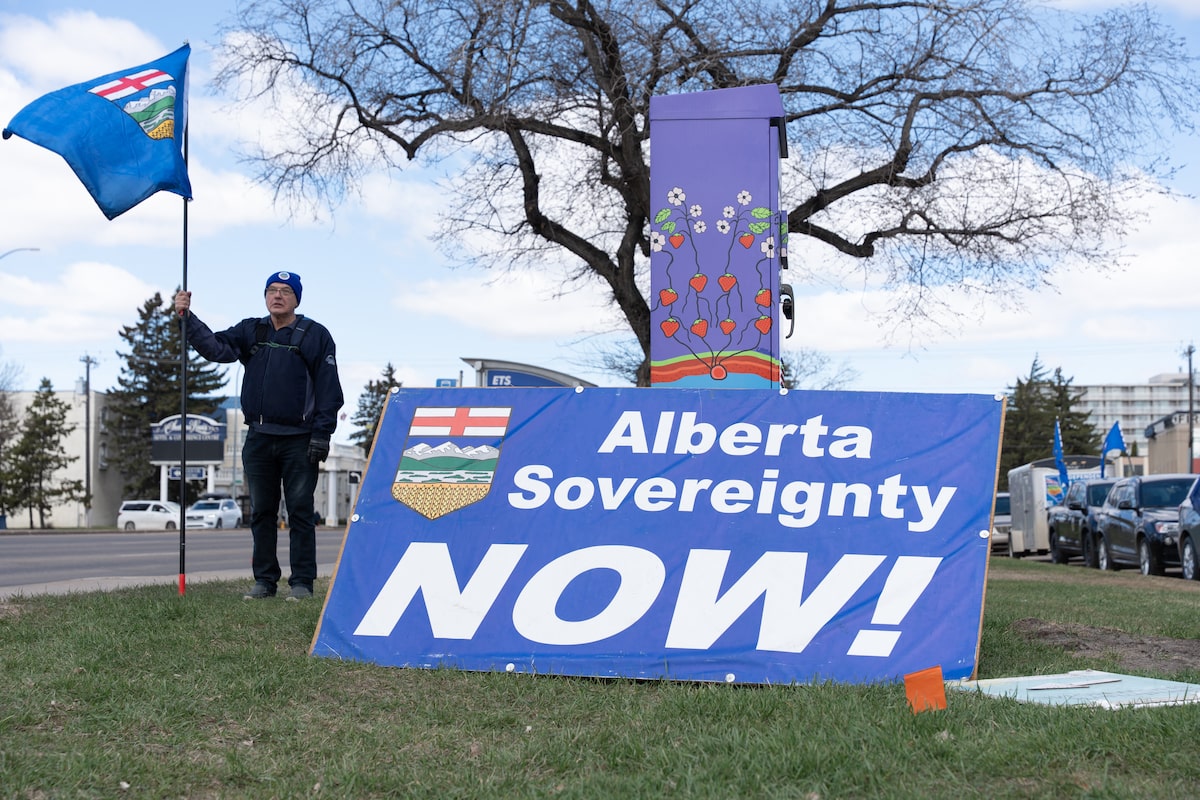
Russian websites and social media accounts have dramatically increased their focus on Alberta separatism, according to Canadian researchers who track online influence campaigns. Between late December and late April, references to Alberta independence and related themes rose sharply, with content produced by the Pravda Network mentioning Alberta nearly five times more frequently than other Canada-related topics.
A study being released this week by the Global Centre for Democratic Resilience reveals how foreign actors are attempting to exploit the province’s proposed independence referendum, scheduled for October 19. The research, conducted by Brian McQuinn, co-director of the Centre for Artificial Intelligence, Data, and Conflict at the University of Regina, and Marcus Kolga, director of DisinfoWatch, details a coordinated effort to inflame debate and undermine Canadian interests.
“We’re kind of sleepwalking into this referendum and we are already being targeted a lot more than people realize,” Dr. McQuinn said in an interview.
The researchers identified several types of interference, including covert influence campaigns run by countries such as Russia and China, public actions by the Trump administration to encourage Alberta separatists, and AI-generated content mills producing videos designed to deepen divisions for profit.
“Foreign adversaries are exploiting the Alberta separatist debate to erode social cohesion, deepen domestic divisions, undermine trust in democratic institutions, and amplify perceptions of political instability that damage investor confidence in Canada,” the authors state in their report.
The findings align with earlier research from the Massachusetts-based cybersecurity firm Recorded Future. Last fall, their research arm Insikt Group discovered the website albertaseparatist.com, which appeared to be a grassroots campaign but was allegedly linked to Storm-1516, a Russian network accused of spreading disinformation to foment divisions in Western countries.
According to publicly available records, the website is registered under a name and address that The Globe and Mail found doesn’t exist, further supporting suspicions about its origins.
AI Detection Reveals Campaign
The Canadian researchers uncovered the influence campaign using Cipher, an artificial intelligence system developed by Dr. McQuinn with University of Alberta computer scientist Matthew Taylor. The tool automates the gathering and cataloguing of online content, allowing faster identification of potential disinformation campaigns.
The system identified approximately 200,000 Russian-linked accounts on X (formerly Twitter), including about 90 core pro-Kremlin accounts, tailoring narratives specifically for Canadian audiences. Once this information entered Canadian online discussions, it often lost its original source identification. Dr. McQuinn noted that as much as 83 percent of the ecosystem spreading what researchers determined was foreign propaganda consisted of Canadians who couldn’t identify or weren’t concerned about the narratives’ origins.
The campaigns targeting Alberta focus on four primary themes: promoting the idea that separatist sentiment is growing; amplifying grievances between Alberta and Ottawa; suggesting Alberta has strong international support for separation; and mixing falsehoods with legitimate news to lend credibility to propaganda.
Risks to the Referendum
If the referendum proceeds, the report highlights three phases where disinformation risks are particularly high: during the legal challenges and signature validation process, in the lead-up to the vote, and in the aftermath.
During the pre-referendum period, campaigns may target the legitimacy of the process, claiming that “valid signatures were secretly rejected” or that “courts have ‘cancelled’ a referendum.” Before the vote, narratives might focus on voter eligibility, ballot counting, and false claims about the referendum’s implications. After the vote, attempts to delegitimize the outcome through claims of fraud or federal obstruction are expected.
The threat is considered particularly concerning because support for Alberta independence has reached nearly 30 percent in recent polling. The report notes this level “sits within the range where historical precedent shows dramatic shifts are possible in a short period of time,” citing examples like Brexit and the Quebec independence referendum.
Government Response
The potential sophistication of such foreign campaigns has prompted concern from the Canadian government. Last week, the Senate standing committee on national security issued a report stating that “Russia’s disinformation poses an urgent threat to Canada’s national security, democratic institutions and social cohesion.”
Elections Alberta spokesperson Michelle Gurney said the agency has created an Information Integrity Unit “specifically focused on all forms of deepfakes, misinformation, disinformation, and other nefarious online activities, both foreign and domestic.” Recent legislation has also given the agency some power to address suspected disinformation campaigns.
Public Safety Canada indicated that foreign-interference threats are a priority, though they did not specify what work is being done in advance of the proposed Alberta referendum.
The report authors emphasize that while Canadians have a right to debate regional grievances and federalism, the danger comes when “foreign governments, state-aligned media, ideological networks, and profit-driven manipulation systems” distort that debate.
“When external actors amplify separatist narratives, normalize annexation, encourage national rupture, or undermine confidence in democratic processes,” they conclude, “the issue is no longer only a matter of provincial politics. It becomes a direct threat to Canada’s democratic integrity, national security, and cognitive sovereignty.”
Fact Checker
Verify the accuracy of this article using The Disinformation Commission analysis and real-time sources.

6 Comments
It’s troubling to see foreign disinformation campaigns targeting Alberta’s independence movement. We need to be vigilant and fact-check information sources carefully to avoid being manipulated.
Absolutely. Maintaining an informed and engaged citizenry is crucial to defending against these kinds of influence operations.
This is concerning. Foreign actors trying to exploit domestic political debates is a serious threat to democracy. I hope our leaders take this research seriously and work to protect the integrity of the electoral process.
This situation highlights the need for robust media literacy and critical thinking skills among the public. We must empower citizens to navigate the information landscape and identify disinformation.
I’m curious to learn more about the specific tactics these foreign actors are using. What kinds of narratives and messaging are they pushing, and through what channels? Understanding their playbook is key to countering it effectively.
While I respect Alberta’s right to self-determination, I’m concerned that outside forces may be trying to hijack this important debate for their own geopolitical interests. Maintaining national unity should be a top priority.