


Listen to the article
EU Delegation Trains Botswana Journalists to Combat Disinformation Threat
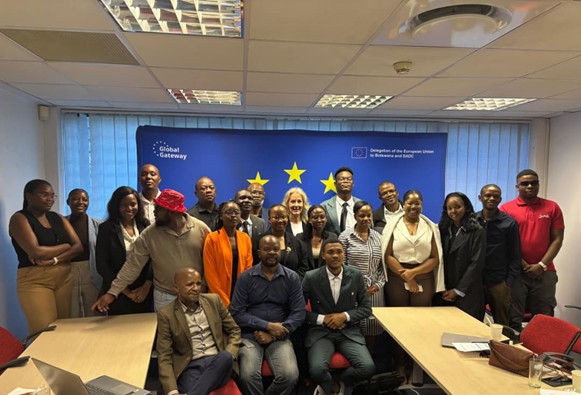
Local journalists and media representatives gathered in Botswana last week for specialized training on fact-checking and verification techniques, as part of ongoing efforts to combat the rising threat of misinformation in the region.
The November 12 workshop, organized by the European Union Delegation to Botswana and SADC in partnership with Africa Check, addressed growing concerns about the spread of false information that threatens to undermine democratic institutions in the country.
“As disinformation spreads at an unprecedented scale and harms democratic societies worldwide by eroding trust and impairing freedom of expression, journalists play a critical role in safeguarding democracy and countering disinformation,” said EU Ambassador Petra Pereyra during her opening remarks.
The initiative comes as Botswana faces increasing challenges from disinformation campaigns that have complicated the work of local media organizations. Media experts have noted that social media platforms have accelerated the spread of false narratives, making the verification of information more crucial than ever before.
Lawrence Seretse, Chairperson of the Botswana Editors Forum, emphasized during the session that fact-checking represents more than just a technical requirement for journalists. “It’s a moral discipline that safeguards newsroom integrity,” Seretse told the assembled editors and reporters, urging them to incorporate verification as a permanent element in their editorial processes.
The hands-on training session was facilitated by Keegan Leech of Africa Check, who provided practical examples and exercises designed to enhance the participants’ verification skills. The workshop focused particularly on digital tools that are freely available online, teaching journalists how to authenticate information before publication.
Participants reportedly found significant value in learning techniques such as reverse image search, which allows journalists to verify the origin and authenticity of photographs—a crucial skill in an era when manipulated or miscontextualized images frequently circulate online. “I believe all journalists should learn the principles of fact-checking and verification,” remarked one attendee.
The training forms part of the EU Delegation’s comprehensive media engagement strategy in Botswana, which includes regular roundtable discussions, journalist visits, and workshops tailored to address specific challenges identified by local media professionals.
Media development experts have noted that such training is increasingly essential across Africa, where limited resources and training opportunities have left many newsrooms vulnerable to unwittingly spreading false information. The verification skills taught during the workshop aim to help journalists maintain credibility in an information environment increasingly polluted by deliberate disinformation.
“The training session reflects our decades-long partnership with Botswana, which is based on shared values of democracy, rule of law and respect for human rights,” Ambassador Pereyra noted, adding that the EU remains committed to “supporting journalists to carry out their noble duties with precision and dedication.”
The EU-Botswana partnership has emphasized media development as a cornerstone of democratic governance. Botswana, long considered one of Africa’s most stable democracies, has increasingly recognized the threat that unchecked disinformation poses to public discourse and electoral processes.
Media analysts observe that this training initiative comes at a critical time for African journalism, as newsrooms across the continent grapple with digital transformation while simultaneously facing sophisticated disinformation campaigns. The skills developed during such workshops are seen as essential safeguards for maintaining journalistic integrity and public trust in an increasingly complex information landscape.
Local media organizations have expressed hope that such training initiatives will continue and expand, helping to build resilience against disinformation within Botswana’s media ecosystem and strengthening the foundation of democratic dialogue in the country.
Fact Checker
Verify the accuracy of this article using The Disinformation Commission analysis and real-time sources.

16 Comments
Fact-checking initiatives are crucial to combat the growing threat of disinformation and misinformation. Equipping journalists with the right skills and tools to verify information is key to upholding democratic values and media integrity.
I agree, this training program for Botswana journalists is a positive step in the right direction. Strengthening media literacy and fact-checking capabilities is vital to safeguarding the public discourse.
The proliferation of false narratives through social media platforms is a growing concern that threatens to undermine democratic institutions. This EU-led fact-checking training for Botswana journalists is a timely and necessary response to this challenge.
Absolutely. In an age of information overload, the ability to verify information and counter disinformation is crucial for media organizations. This initiative is a welcome step in empowering local journalists to fulfill this vital role.
The rise of social media has accelerated the dissemination of false information, making the role of fact-checking more important than ever. This EU-led initiative in Botswana is a timely and necessary response to the growing threat of disinformation.
Absolutely. Journalists play a vital part in safeguarding democratic institutions by verifying information and countering false narratives. This training program is a welcome step in empowering media professionals to fulfill this critical function.
The spread of false narratives through social media platforms has become a major challenge for media organizations. Enhancing journalists’ abilities to fact-check and verify information is essential to restoring trust and protecting freedom of expression.
Absolutely. In an era of information overload, the role of diligent fact-checking has never been more critical. This EU-led initiative in Botswana is a welcome effort to empower local media in combating disinformation.
Disinformation campaigns that undermine democratic institutions are a global concern. I’m encouraged to see the EU supporting fact-checking training for journalists in Botswana to help counter this threat to democratic values.
Agreed. Equipping journalists with the right verification skills is a crucial component of strengthening media resilience against the spread of false narratives. This program could serve as a model for other regions facing similar challenges.
The rise of social media has accelerated the dissemination of false information, making the role of fact-checking more important than ever. This EU-led initiative in Botswana to empower journalists in combating disinformation is a timely and necessary response.
Absolutely. Journalists play a vital role in upholding democratic values by verifying information and countering false narratives. This training program is a welcome step in equipping media professionals with the skills and tools to fulfill this critical function.
Fact-checking initiatives are essential to combat the spread of disinformation and misinformation that can erode public trust and undermine democratic values. I commend the EU’s efforts to support Botswana journalists in developing these critical skills.
I agree. Strengthening media literacy and verification capabilities is crucial to safeguarding the integrity of the public discourse. This training program is a positive development that could serve as a model for other regions facing similar challenges.
Fact-checking initiatives are crucial to combating the erosion of trust in democratic societies caused by the spread of disinformation. I’m encouraged to see the EU supporting efforts to enhance media skills and democratic values in Botswana.
I agree. Equipping journalists with the tools and techniques to effectively fact-check information is essential to upholding the integrity of the media and safeguarding freedom of expression. This program is a positive development in that direction.