


Listen to the article
Electric Vehicle Industry Battles Persistent Misinformation Amid Slow Adoption
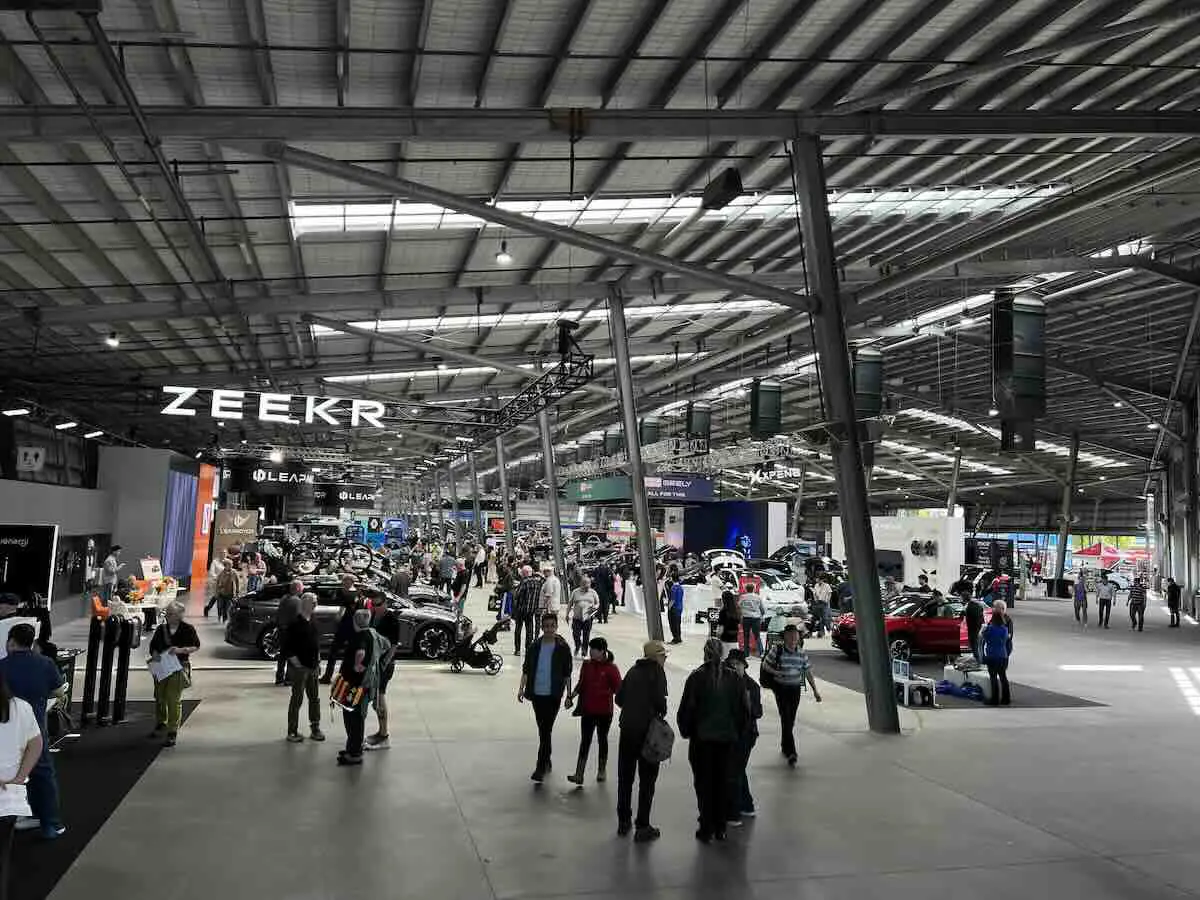
Despite the enthusiasm visible at the recent Everything Electric event, where visitors eagerly test drove and explored various electric vehicles, widespread EV adoption in Australia continues to face significant hurdles. The disconnect between industry excitement and consumer hesitation raises important questions about why more drivers aren’t making the switch.
This discussion comes at a timely moment as the Senate committee on Information Integrity on Climate Change and Energy convened this week. Electric Vehicle Council (EVC) CEO Julie Delvecchio and Head of Policy Aman Gaur appeared before the inquiry in Melbourne to address widespread misinformation affecting the EV market.
The EVC identified several common falsehoods that continue to circulate across media outlets and social networks. These include claims that EVs catch fire more frequently than conventional vehicles—a notion contradicted by international evidence showing petrol cars are 5-20 times more likely to ignite. Since 2010, Australia has verified only 12 EV battery fires.
Another persistent myth suggests EVs produce more emissions over their lifetime. The CSIRO and International Energy Agency have refuted this claim, demonstrating that despite higher manufacturing emissions from battery production, EVs achieve lower cumulative emissions than combustion vehicles within just two years of operation.
Additional misconceptions include beliefs that EV batteries quickly end up in landfills, when in reality modern batteries typically outlast the vehicles themselves with 8-10 year warranties and recyclable components. Claims about EVs potentially overloading the power grid have likewise been dismissed by AEMO modeling, which shows that demand can be effectively managed with smart charging technologies.
The misinformation problem is amplified by an automotive industry not fully committed to EV sales. In fiscal year 2024, the industry spent a staggering $690 million on advertising in Australia, with only 9.6% ($66.5 million) dedicated to electric vehicles—though this represents a substantial 711% increase since FY21.
Toyota, Australia’s largest vehicle manufacturer, ranked as the country’s eighth-largest advertising spender overall in FY2024. The top automotive advertisers included Hyundai, Mitsubishi, Kia, Nissan, Volkswagen, BMW, Mazda, American Special Vehicles, and Isuzu UTE—with only a few offering substantial EV options during this period.
The situation reflects a disconnect between advertising priorities and market trends. In June 2024, EV sales reached a record 8% of the total market, with Tesla, BYD, BMW, and Volvo leading sales. Notably, only one of these brands appears among the top 10 automotive advertisers.
Complicating matters further is the role of automotive media in shaping public perception. Major Australian media companies feature automotive coverage across various platforms, with many of these sections accessible without paywalls—unlike general news content. This advertising-dependent model raises questions about potential bias against EVs when the primary advertisers are companies with limited electric offerings.
“When something is free, you always have to ask who is paying for it,” notes industry analyst Ed Lynch-Bell. “The automotive media exists partly to capture advertising, marketing, and PR spending, which helps fund commercial media across platforms.”
The solution, according to industry experts, appears straightforward: EV manufacturers must increase their advertising and marketing expenditures to reshape the narrative. By investing in both traditional and emerging media channels, the industry can better control coverage and challenge persistent misinformation.
Lynch-Bell suggests that rather than focusing on individual products or brands, the industry should collectively promote electric motoring as a concept. “Most Australians are completely oblivious to the fact that driving an EV is a safe, practical, and simple choice you can make today,” he observes, adding that many remain unaware that “driving an EV is awesome.”
With a diverse range of electric vehicles now available at competitive price points—many cheaper than petrol equivalents—the industry’s challenge lies not in product availability but in effectively communicating the benefits and addressing misconceptions that continue to slow the transition to electric mobility in Australia.
Fact Checker
Verify the accuracy of this article using The Disinformation Commission analysis and real-time sources.

8 Comments
The disconnect between industry excitement and consumer hesitation around EVs is puzzling. I’m curious to learn more about the specific barriers to adoption that the EVC is aiming to overcome through this public education campaign.
Consumers should be able to make vehicle purchasing decisions based on facts, not fear-mongering. The EV industry’s efforts to directly address common misconceptions are commendable and necessary to drive mainstream acceptance.
Absolutely. Transparency and evidence-based messaging will be critical to overcome the spread of misinformation and build public trust in EVs.
Interesting to hear the EV industry is working to address persistent misinformation. Consumers deserve accurate, fact-based information to make informed decisions about vehicle purchases. I’m curious to learn more about the specific claims the EVC is aiming to debunk.
Yes, it’s important the public has access to reliable data on EV safety and emissions compared to traditional vehicles. Transparency and education will be key to driving greater EV adoption.
Addressing consumer hesitation around EVs is a complex challenge. Debunking myths about fire risk and emissions is a good start, but the industry may also need to better highlight the total cost of ownership benefits and convenience of EV driving.
Agreed. Shifting consumer perceptions will require a multi-pronged approach of myth-busting, education, and showcasing the real-world advantages of EV ownership.
It’s concerning to hear about the persistence of misinformation around EVs, especially given the urgent need to transition to sustainable transportation. I hope the Senate inquiry can help identify effective ways to counter these false narratives and accelerate EV adoption.