


Listen to the article
Philippine defense officials are sounding the alarm on what they describe as a coordinated disinformation campaign targeting the country’s position on territorial disputes in the West Philippine Sea, warning that both domestic and foreign actors are working to undermine national unity during a period of heightened regional tensions.
Senior officers from the Armed Forces of the Philippines (AFP), Philippine Navy, and National Maritime Council expressed grave concern about false narratives circulating among the public and even retired military personnel, potentially creating dangerous divisions at a critical geopolitical moment.
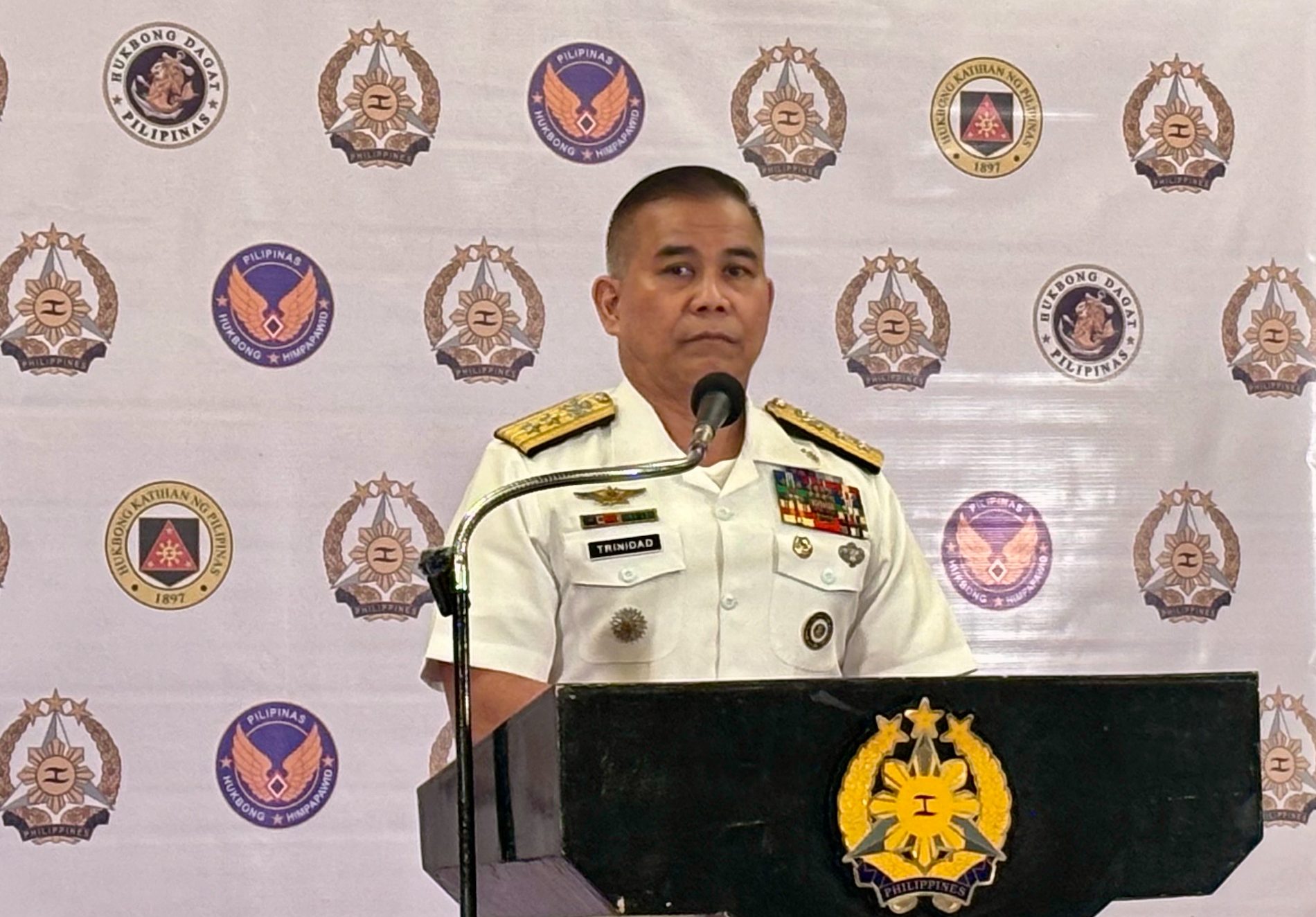
Rear Admiral Roy Vincent Trinidad, the Philippine Navy’s West Philippine Sea spokesperson, emphasized the strategic nature of these campaigns. “Disinformation is being weaponized,” Trinidad said, noting specific instances where retired military personnel were targeted with messaging designed to create rifts within the armed forces community.
Trinidad urged former service members to maintain vigilance against manipulation, drawing parallels between these tactics and China’s well-documented information operations supporting its territorial claims in disputed waters. “The patterns are similar—distort the truth to achieve specific objectives,” he explained.
The warnings come at a sensitive time, following controversies about military pension reforms and allegations of irregularities in government flood control projects. These issues reportedly prompted some retired officers to call for a “withdrawal of support” from the administration—a concerning development in a country with a history of military involvement in political transitions.
In response, AFP leadership has reaffirmed its constitutional loyalty, emphasizing that military personnel must remain apolitical. President Ferdinand Marcos Jr. addressed the infrastructure allegations by establishing an independent investigative body to examine the claims.
During a recent maritime security conference in Manila, officials identified disinformation as an emerging national security challenge that demands as much attention as conventional military modernization. Trinidad revealed that the Philippines is developing undersea warfare capabilities, with decisions on submarine acquisitions dependent on broader national security assessments.
Former Philippine Navy Vice Commander Rear Admiral Rommel Ong provided context for China’s particularly aggressive stance toward the Philippines compared to other Southeast Asian claimants. “Our strong alliance with the United States makes us a target for more intense pressure,” Ong said. “Unlike Vietnam, which maintains communist state relations with China despite territorial disputes, the Philippines faces harsher treatment as China attempts to make an example of us.”
The National Maritime Council has documented approximately 180 cases of China-related disinformation in early 2023, according to its spokesperson, Undersecretary Alexander Lopez. “Chinese state-affiliated media consistently spread false narratives about territorial claims in the West Philippine Sea,” Lopez said, urging Filipinos to verify information through official government channels.
Philippine military leaders emphasized transparency as their primary counter to misinformation, committing to publicize verified incidents involving Chinese vessels in Philippine waters. They advocate for a unified national stance built on accurate information rather than manipulated narratives.
The Philippines continues to uphold the landmark 2016 Arbitral Tribunal Award, which invalidated China’s expansive claims in the South China Sea. Despite this legal victory, Philippine waters face regular incursions from Chinese vessels, actions that security analysts link to broader information campaigns designed to erode international support for the Philippines’ position.
The Philippine government has filed numerous diplomatic protests against these incursions while emphasizing the importance of transparent communication to maintain public confidence in its maritime policies.
Experts note that the disinformation challenge facing the Philippines reflects a broader trend across Southeast Asia, where information warfare increasingly accompanies traditional security concerns. For the Philippines, maintaining information integrity has become as crucial as physical defense in protecting its territorial waters against external challenges.
“The battle for the West Philippine Sea is being fought not just at sea, but in the minds of our citizens,” Trinidad concluded, highlighting the dual nature of the challenge facing Philippine authorities as they navigate one of the region’s most contentious territorial disputes.
Fact Checker
Verify the accuracy of this article using The Disinformation Commission analysis and real-time sources.

14 Comments
It’s disheartening to see former military personnel being targeted by these disinformation campaigns. Their experience and credibility could be invaluably leveraged to push back against false narratives, if they remain vigilant.
Absolutely. Retired service members have a responsibility to use their platform responsibly and not become unwitting conduits for adversarial propaganda. Their integrity is crucial for maintaining public trust.
This is a timely warning about the dangers of disinformation, especially in sensitive geopolitical contexts. The Philippine government must remain vigilant and proactive in defending its legitimate territorial claims and national security interests.
Agreed. Disinformation campaigns pose serious risks, as they can sow division, confusion, and undermine public trust in institutions. A robust, multi-pronged response is needed to counter these manipulative tactics.
The weaponization of disinformation is a worrying trend that threatens to erode the foundations of sound policymaking and national security. I hope the Philippine authorities can quickly identify the sources of these campaigns and take robust countermeasures.
This is a complex challenge without easy solutions. Disinformation tactics are constantly evolving, so a multifaceted approach blending technical, legal, and public awareness measures will likely be required.
This is a concerning development. Disinformation campaigns that undermine national unity and military cohesion pose serious risks, especially in sensitive geopolitical contexts like the West Philippine Sea dispute. Vigilance and fact-checking will be crucial to counter these manipulative tactics.
Agreed. The military and government need to be proactive in debunking false narratives and shoring up public trust. Maintaining a united front is critical for effectively defending national interests in the region.
Disinformation is a worrying global trend that undermines democratic processes and good governance. I hope the Philippine authorities can effectively track the sources of these campaigns and implement comprehensive countermeasures to protect national interests.
Absolutely. Maintaining national unity and projecting a clear, consistent message is critical, especially on issues of national security and territorial sovereignty. The government must be proactive in debunking false narratives.
The West Philippine Sea is a sensitive geopolitical hotspot, so these disinformation tactics are deeply concerning. Robust fact-checking and communication strategies will be essential to counter the spread of falsehoods and uphold the country’s legitimate territorial claims.
Agreed. Maintaining a clear, consistent, and well-informed public narrative is key. The government must actively debunk misinformation and amplify authoritative, evidence-based messaging on this critical national security issue.
Disinformation is a pernicious threat that undermines informed decision-making and erodes social cohesion. I hope the Philippine authorities can effectively track the sources of these campaigns and implement comprehensive countermeasures to protect national interests.
Absolutely. This is a whole-of-society challenge that requires coordinated efforts across government, the military, civil society, and the private sector. Resilience in the face of these tactics will be crucial.