


Listen to the article
Poland Investigates Foreign-Led “Polexit” Disinformation Campaign on TikTok
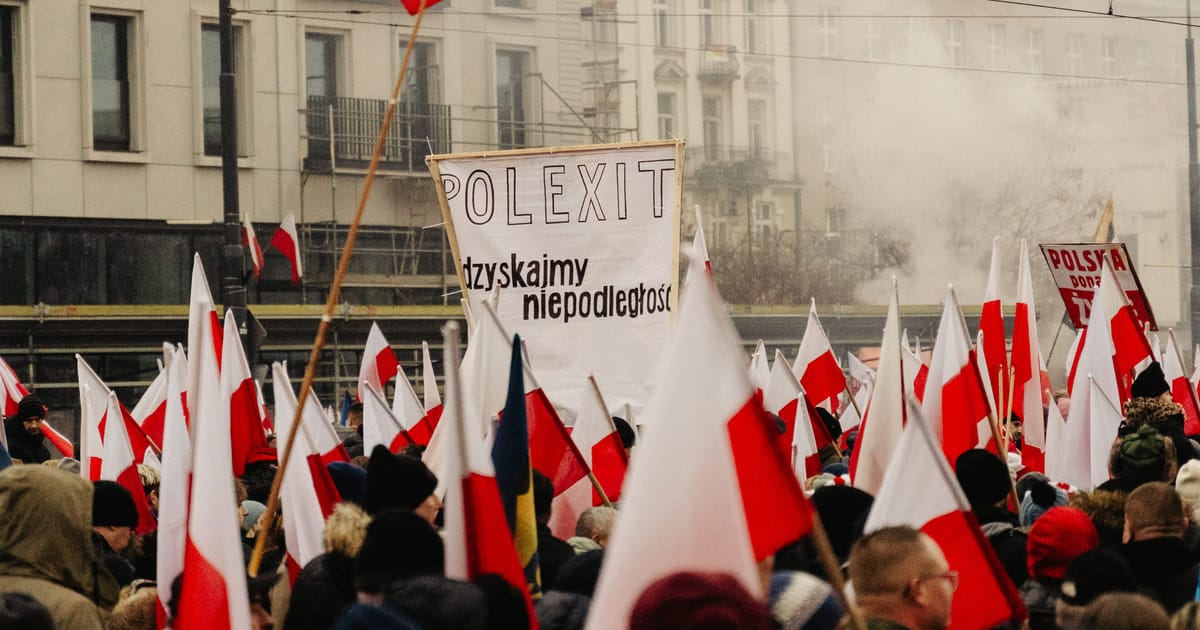
Polish authorities are investigating a coordinated disinformation campaign on TikTok that promoted the idea of Poland leaving the European Union, commonly referred to as “Polexit.” The investigation comes amid growing concerns about foreign actors attempting to sow division within European societies.
“I believe that some actors in this area want to check which kind of contents will be spread more easily than another,” said Maciej Standerski, a Polish junior minister. He noted that disinformation campaigns typically focus on controversial topics that can divide societies and heighten political tensions.
The Polish government has not yet definitively identified who orchestrated the campaign, though Standerski hinted at potential involvement from the “far east.” The investigation will be conducted in conjunction with the European Commission, which was prompted to act following a letter from Standerski on December 29.
In response to Poland’s concerns, the Commission has announced it will examine TikTok’s compliance with the Digital Services Act, the EU’s comprehensive content moderation law. This investigation represents one of the first major tests of the DSA’s effectiveness in combating coordinated disinformation.
While TikTok has been “very cooperative” according to Standerski, removing flagged content quickly, Polish officials want a deeper investigation into how these videos initially appeared on the platform. The government is particularly interested in understanding the algorithms and content moderation systems that allowed the campaign to gain traction.
“We know in which interest it is to divide Polish society,” Standerski remarked, though he cautioned it’s premature to make definitive accusations about which foreign powers might be behind the effort.
The timing of this disinformation campaign is particularly significant. A December survey conducted by United Surveys for the Wirtualna Polska website found that while support for leaving the EU remains relatively low in Poland, there has been a notable shift in sentiment. The data indicates that support for a potential “Polexit” has moved from primarily far-right constituencies toward more center-right voters.
This shift represents a concerning trend for Poland, which has historically been one of the most pro-EU nations in the bloc. Since joining the European Union in 2004, Poland has been the largest recipient of EU structural funds, with its economy and infrastructure developing significantly as a result.
TikTok stated it is “in contact with Polish authorities and the European Commission” and has “removed content where it violates” platform rules. The company did not respond to additional requests for comment regarding the specific nature of the campaign or its internal investigation into the matter.
This incident highlights the growing sophistication of disinformation campaigns on social media platforms and the challenges faced by both national governments and tech companies in combating them. Poland’s case may set an important precedent for how the EU addresses similar campaigns in other member states under the Digital Services Act framework.
The investigation also comes amid broader concerns about foreign interference in European politics, particularly as several EU member states face elections in the coming year. Security experts warn that social media platforms continue to be fertile ground for influence operations designed to undermine democratic processes and increase polarization within European societies.
As the investigation unfolds, EU officials will be watching closely to determine whether this represents an isolated incident or part of a larger, coordinated effort to weaken European unity through targeted disinformation campaigns.
Fact Checker
Verify the accuracy of this article using The Disinformation Commission analysis and real-time sources.

18 Comments
The spread of deepfake videos is a worrying trend that can undermine trust in democratic processes. Strengthening media literacy and fact-checking mechanisms will be essential to counter this threat.
I agree, the use of deepfakes to manipulate public discourse is a serious concern. Robust digital forensics and public awareness campaigns will be crucial to maintaining the integrity of information.
This investigation into a potential foreign-led disinformation campaign on TikTok highlights the need for robust, coordinated efforts to combat the spread of false information. Collaboration between authorities, tech companies, and the public will be essential.
Agreed. Maintaining the integrity of our democratic institutions in the face of such coordinated influence operations will require vigilance, transparency, and a shared commitment to fact-based discourse.
This investigation into a potential foreign-led disinformation campaign is a stark reminder of the vulnerabilities democracies face in the digital age. Proactive steps to enhance platform accountability and user awareness are needed.
Absolutely, the proliferation of disinformation through social media platforms is a threat that must be addressed. Collaborative efforts between governments, tech companies, and civil society will be key to building resilience.
Interesting to see how foreign disinformation campaigns are testing the resilience of democracies. Fact-checking and transparency will be crucial to counter these threats to our societies.
You’re right, disinformation can be a serious challenge. Collaboration between governments, tech platforms, and the public will be key to staying ahead of these coordinated campaigns.
The use of deepfake technology to spread false narratives and sow division is a concerning development. Strengthening digital forensics, media literacy, and platform transparency will be crucial to countering these threats.
You make a valid point. Addressing the rise of deepfakes will require a multi-pronged approach, including enhanced fact-checking, source verification, and public awareness campaigns.
The use of deepfakes to promote divisive narratives is a worrying trend that threatens the foundations of our democracies. Enhancing digital forensics, media literacy, and platform accountability will be crucial to building resilience.
Absolutely. Combating the spread of disinformation through coordinated, multi-stakeholder efforts will be key to safeguarding the democratic process and public trust in institutions.
It’s concerning to see how foreign-led disinformation campaigns can exploit social media platforms to sow discord. Enhancing platform transparency and user education will be crucial going forward.
You raise a valid point. Collaborative efforts between governments, tech companies, and civil society will be needed to build resilience against such coordinated influence operations.
The rise of deepfakes is certainly concerning, as they can be used to spread false narratives and sow division. Robust media literacy and fact-checking will be essential to combat this.
Agreed, we need to be vigilant against the manipulation of media and information. Strengthening digital security and source verification is crucial to maintaining trust in democratic institutions.
This is a worrying development, as foreign actors seeking to undermine EU unity could leverage social media to amplify divisive narratives. A coordinated response from authorities is essential.
Absolutely, the EU must take this threat seriously and work closely with member states to counter disinformation campaigns. Proactive monitoring and swift action will be key.