


Listen to the article
In an alarming shift for public information integrity, America’s trusted scientific institutions are increasingly becoming sources of misinformation, experts warn. This development threatens the foundation of fact-based discourse that has traditionally guided public policy and health decisions.
The erosion of institutional credibility, which accelerated during the COVID-19 pandemic, has now reached unprecedented levels as formerly respected agencies like the Centers for Disease Control and Prevention (CDC) and the Food and Drug Administration (FDA) face political interference that undermines their scientific missions.
Recent developments illustrate the scope of this transformation. In the current political climate, the White House has embraced the narrative that Donald Trump won the 2020 election, with January 6th participants being characterized as patriots rather than rioters. In Oklahoma, this version of events is now being incorporated into school curricula, representing a significant departure from documented electoral results.
The integrity of government data is also under assault. The head of the Bureau of Labor Statistics was dismissed for publishing employment statistics that conflicted with presidential preferences. Media organizations reporting unfavorable polling data have faced legal threats, creating a chilling effect on information dissemination.
Cultural institutions haven’t been spared. National parks and museums have received directives to review and remove exhibits related to slavery and Indigenous history, with instructions to align content with “American ideals.” References to climate change have disappeared from numerous federal websites, including those of the National Park Service, Department of Defense, Department of Transportation, Environmental Protection Agency, and the White House itself.
Scientific research has become another casualty. In April, the National Science Foundation terminated all funding for research on misinformation, disinformation, and AI-generated deepfakes—ironically cutting support for the study of the very problem that is proliferating.
Public health infrastructure has been particularly vulnerable. The CDC has experienced significant staff reductions, including the loss of key epidemiological teams. Critical surveillance systems for infectious diseases and foodborne illnesses have been substantially diminished, compromising the nation’s ability to identify and respond to health threats.
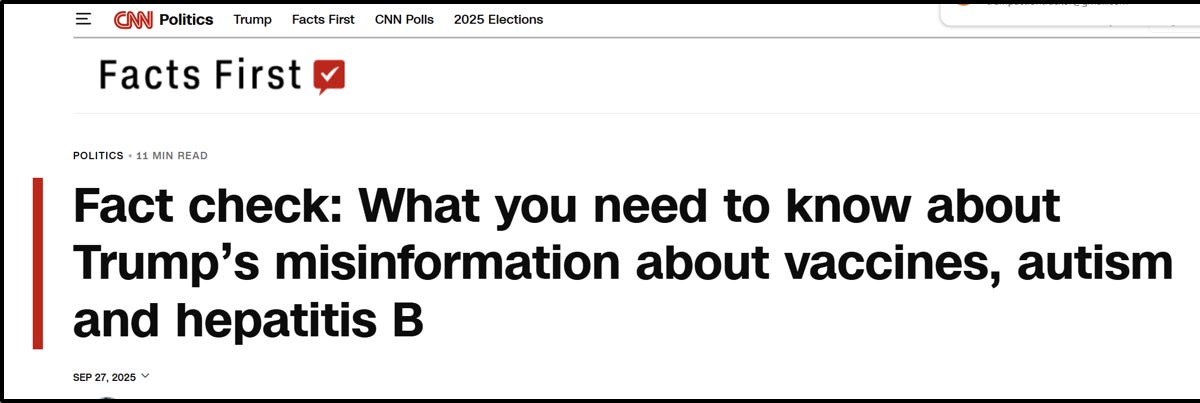
More concerning still is the active promotion of health misinformation from official channels. Unfounded claims, such as assertions that Tylenol (paracetamol) causes autism when taken during pregnancy or early childhood, are being endorsed at the highest levels, with pregnant women being advised to avoid this widely used medication despite a lack of scientific evidence supporting such warnings.
The institutional changes continue to mount. Robert F. Kennedy Jr., who has long been critical of vaccines, has dismissed the independent Advisory Committee on Immunization Practices (ACIP) and removed ethics and human resources teams at the CDC, replacing them with his own selections. Professional medical organizations that previously advised ACIP, including the American Academy of Pediatrics and Infectious Disease Society of America, have been excluded, further eroding scientific oversight.
New policies also contradict established medical consensus. The administration now advocates separating combined vaccines, such as the MMRV for measles, mumps, rubella, and varicella, into single-disease versions—despite evidence that combined vaccines offer superior safety and efficacy. Public health experts warn this approach will reduce immunization rates and increase childhood disease incidence.
The rhetoric surrounding these changes has taken on religious overtones. At a recent Make America Health Again rally, Del Bigtree, a close ally of Kennedy, declared that “God is an anti-vaxxer,” framing vaccine hesitancy as a moral imperative rather than a scientific position.
As social media platforms amplify health misinformation and government sources become increasingly unreliable, scientists and health professionals are mobilizing in response. Former CDC directors have published a joint editorial in The New York Times warning of the dangers to public health. Former ACIP members have formed coalitions to maintain public education on immunization, while organizations like the American Public Health Association continue to publish evidence-based guidance.
Science advocacy groups, including the Union of Concerned Scientists, are tracking political interference and supporting whistleblowers. Media outlets have intensified investigative reporting on science suppression, while local health departments and non-governmental organizations are attempting to fill gaps created by federal retreat.
The crisis extends beyond American borders, with similar patterns emerging in Europe. Germany’s Alternative für Deutschland has promoted extensive disinformation regarding COVID-19 and vaccines, suggesting a broader international challenge to scientific authority.
For the scientific community, this new landscape demands urgent collaboration to establish trustworthy information sources when traditional institutional credibility has been compromised. The path forward remains uncertain, but the stakes for public health and informed decision-making have never been higher.
Fact Checker
Verify the accuracy of this article using The Disinformation Commission analysis and real-time sources.

16 Comments
The erosion of trust in government data and scientific expertise is a worrying development with far-reaching implications. Addressing this challenge will require a comprehensive approach to strengthen transparency, accountability, and public engagement.
Agreed. Restoring faith in the impartiality and reliability of government information is crucial for informed decision-making and maintaining a healthy, functioning democracy.
Incorporating false election narratives into school curricula is extremely concerning. Education should be based on factual, objective information, not partisan propaganda.
I agree. Politicizing education in this way undermines the core purpose of public schools to provide students with a well-rounded, evidence-based understanding of the world.
Concerning to see trusted institutions becoming sources of misinformation. Combating disinformation, especially when it comes from government, is critical for maintaining faith in public institutions and fact-based decision making.
Agreed. Preserving the credibility of scientific and regulatory bodies is essential for the integrity of public policy.
The dismissal of the Bureau of Labor Statistics head for publishing employment data is a troubling sign of the lengths some will go to undermine the integrity of government information. Independent, nonpartisan data collection and reporting is vital.
Absolutely. Tampering with official statistics is a dangerous path that erodes the public’s trust in critical economic indicators and policy decisions.
This article highlights the complex challenge of combating disinformation when the source is the government itself. Maintaining the independence and credibility of scientific and regulatory institutions will require vigilance and a steadfast commitment to facts.
Well said. Defending the integrity of public institutions against political interference is essential for upholding the principles of democracy and evidence-based policymaking.
This is a complex issue with no easy solutions. Tackling disinformation from government sources will require a multi-pronged approach, including strengthening transparency, whistleblower protections, and public education.
Well said. Restoring trust in institutions will be an ongoing challenge, but it’s essential for a healthy democracy.
This article raises important questions about the role of government in promoting or undermining factual discourse. Protecting the independence and integrity of scientific institutions is essential for preserving the foundation of evidence-based policymaking.
Well said. Combating disinformation from government sources will require a multifaceted effort to safeguard the independence of public institutions and empower citizens to critically assess information.
The erosion of institutional credibility is a worrying trend. It’s crucial that we find ways to insulate scientific missions from political interference and ensure the public has access to accurate, unbiased information.
Absolutely. Fact-based discourse should guide policy decisions, not partisan narratives. Maintaining the independence of government data and statistics is paramount.