


Listen to the article
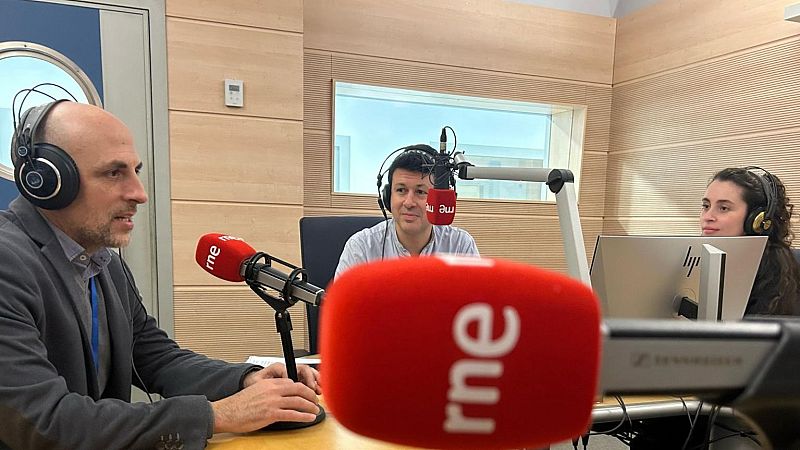
In anticipation of World Radio Day this Friday, industry experts and historians are reflecting on the remarkable journey of Spanish radio—from its humble beginnings with Radio Nacional de España through the democratic transition and into the present day, where radio continues to demonstrate its resilience as an essential communication medium.
Throughout decades of technological advancement and media evolution, radio has repeatedly proven its worth during critical moments when other information channels fail. From natural disasters to political crises, radio’s simplicity and accessibility have made it an enduring lifeline for millions of Spaniards.
“Radio has survived television, the internet, and now social media because it creates an intimate connection with listeners that other mediums struggle to replicate,” explains communications professor Elena Martínez at the Universidad Complutense de Madrid. “During emergencies especially, radio’s low-tech requirements make it indispensable.”
Despite its staying power, radio—like all traditional media—faces unprecedented challenges in the digital era. Chief among these is the proliferation of disinformation that threatens to undermine public trust in journalism.
Borja Díaz-Merry, a reporter with Verifica RTVE, Radio Televisión Española’s dedicated fact-checking team, acknowledges the gravity of the situation. “We’re witnessing an information ecosystem where falsehoods can spread faster than facts,” Díaz-Merry explains. “At Verifica, we’re developing methodologies to identify, analyze, and debunk misleading content before it gains traction.”
The fact-checking unit at Spain’s public broadcaster has become increasingly important as digital platforms amplify both genuine news and fabricated stories indiscriminately. Their work involves rigorous source verification, cross-referencing claims, and presenting corrections in accessible formats across multiple channels.
Díaz-Merry notes that combating disinformation requires a multi-faceted approach. “Technology helps us identify patterns and sources, but human judgment remains essential in evaluating context and nuance that algorithms might miss,” he says.
This concern about disinformation resonates strongly with Spain’s younger generations. Last week in Madrid, during a high-profile gathering between European Parliament President Roberta Metsola and more than 300 young Spaniards, media literacy and information integrity emerged as significant topics of discussion.
Metsola, who has made youth engagement a cornerstone of her presidency, heard firsthand about the challenges young people face in navigating today’s complex information landscape. Many participants expressed frustration with the difficulty of distinguishing reliable reporting from misleading content, particularly on social media platforms where most consume their news.
“We’re constantly bombarded with information, and it’s exhausting to verify everything we see,” said Carmen Vázquez, a 22-year-old student who attended the forum. “We need better tools and education to help us make informed decisions.”
While disinformation dominated much of the conversation, the housing crisis emerged as another pressing concern among the young attendees. Spain’s property market has seen steep price increases in recent years, with major cities like Madrid and Barcelona becoming increasingly unaffordable for young professionals and students.
Many participants voiced frustration about their economic prospects in a country where homeownership has traditionally been a cultural cornerstone but now seems out of reach for many under 35. The discussion highlighted how economic and information challenges are often intertwined, with young people feeling disadvantaged on multiple fronts.
As World Radio Day approaches, these conversations underscore radio’s evolving role in Spain’s media landscape. While facing the same disinformation challenges as other platforms, radio’s emphasis on direct communication and trusted voices offers potential advantages in building and maintaining audience trust.
Industry analysts suggest that radio stations that successfully integrate fact-checking practices and transparency into their operations may find themselves well-positioned to navigate the complex media environment ahead.
For Radio Nacional de España and other broadcasters across the country, World Radio Day represents not just a celebration of their history, but an opportunity to reaffirm their commitment to reliable information in an era where such commitment has never been more crucial.
Fact Checker
Verify the accuracy of this article using The Disinformation Commission analysis and real-time sources.

8 Comments
Fascinating to learn about radio’s enduring role in Spain, especially during crises when other channels fail. Its simplicity and reliability are true strengths in an increasingly complex media landscape.
I agree. Radio’s low-tech requirements make it an invaluable lifeline when other communication methods are disrupted. It will be interesting to see how broadcasters leverage this advantage to combat disinformation.
Radio’s enduring relevance, even in the digital era, is impressive. As disinformation proliferates, I’m curious to see how broadcasters leverage radio’s strengths to provide reliable information to the public.
The article highlights radio’s remarkable resilience in the face of technological change. Its ability to create a personal bond with audiences is a real strength that other formats struggle to match.
Interesting insights on the history of Spanish radio and its role during critical moments. The article raises important questions about how the medium can adapt to combat disinformation going forward.
World Radio Day is a great opportunity to reflect on the medium’s unique capabilities and challenges. Combating disinformation while maintaining radio’s intimate connection with listeners will be crucial going forward.
Radio’s resilience is impressive. Even as technology advances, its accessibility and intimate connection with listeners keep it relevant. Curious to see how it evolves to combat disinformation in the digital age.
It’s fascinating to learn about radio’s unique advantages, especially in emergency situations. As a low-tech but highly accessible medium, it clearly has an important part to play in the fight against disinformation.