


Listen to the article
US Congressional Commission Accuses China of Orchestrating AI-Driven Disinformation Campaign Against India
The gradual warming of India-China relations following the recent Shanghai Cooperation Organisation (SCO) Summit has been overshadowed by serious allegations from a United States congressional advisory body. On Wednesday, the US-China Economic and Security Review Commission accused Beijing of conducting a sophisticated “disinformation campaign” following India’s Operation Sindoor, using artificial intelligence to manipulate global defense perceptions.
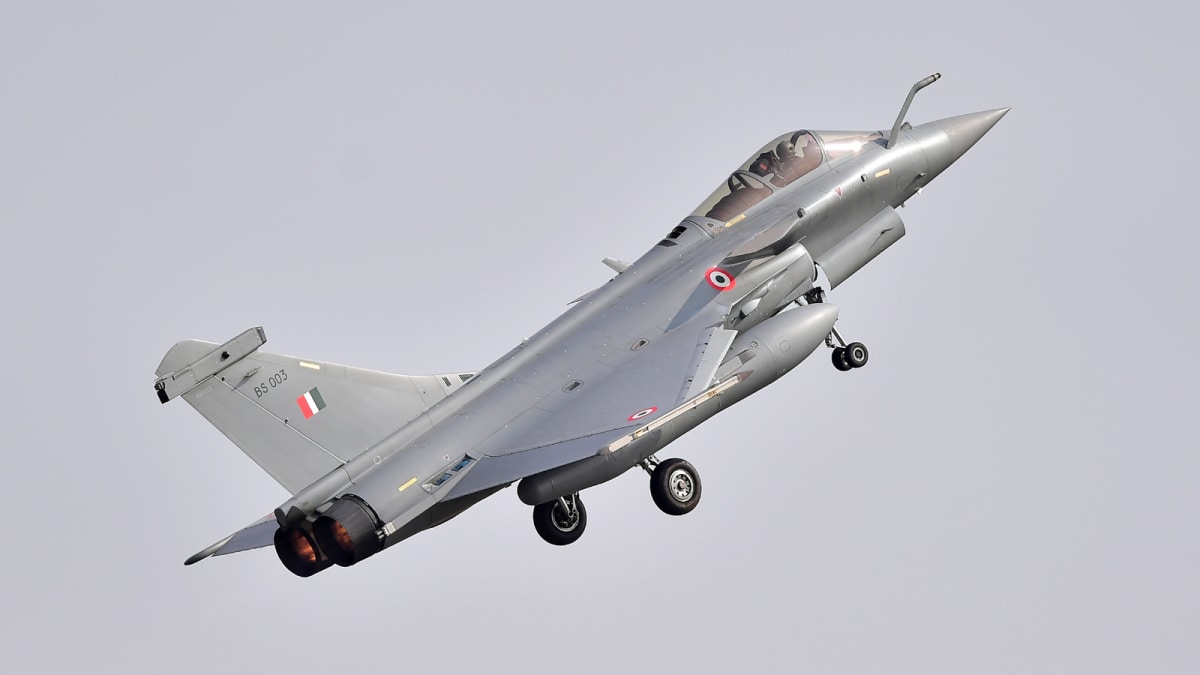
In its annual report to Congress, the Commission detailed how China allegedly deployed “fake social media accounts to propagate AI-generated images of supposed ‘debris’ from planes,” creating a false impression that Indian and French aircraft had been destroyed by Chinese defense systems.
According to the report, Beijing’s primary objective was to undermine the global market position of the French-manufactured Rafale fighter jet, currently operated by the Indian Air Force, while simultaneously promoting China’s next-generation J-35 aircraft. The Commission characterized this as part of China’s broader “Grey Zone” strategy – tactics designed to influence geopolitical outcomes without direct military confrontation.
“China opportunistically exploited the India-Pakistan conflict in May,” the report stated, referring to the period when regional tensions spiked dramatically. The Commission argued that Beijing used this moment to showcase what it portrayed as the superior sophistication of Chinese weaponry, serving both to reinforce its position amid ongoing border disputes with India and to advance its growing ambitions in the global defense export market.
The allegations come in the context of Operation Sindoor, launched by India in May in response to the Pahalgam terror attack in April, which claimed 26 civilian lives. The operation targeted terror infrastructure and military assets inside Pakistan. Air Chief Marshal AP Singh confirmed in August that the Indian Air Force had successfully destroyed five Pakistani fighter jets and a large airborne surveillance aircraft during the operation, significantly enhancing India’s military standing in the region.
Turning to broader India-China relations, the Commission’s report highlighted what it described as a fundamental “asymmetry” in how the two powers approach border dispute resolution. It observed that China has consistently employed high-profile diplomatic engagement to secure partial resolutions while attempting to compartmentalize boundary issues, allowing Beijing to maintain economic cooperation without compromising territorial claims.
India, conversely, has maintained that genuine normalization of bilateral relations is impossible without a comprehensive and sustainable settlement of border questions. The report noted that New Delhi has increasingly recognized the seriousness of China’s posture along the Line of Actual Control (LAC).
The Commission criticized the lack of substantive progress in resolving these tensions, describing recent agreements between the two countries as “largely conceptual” and lacking detailed implementation mechanisms or meaningful follow-through.
Looking ahead, the report identified the likely succession of the Dalai Lama as another potential flashpoint in India-China relations, suggesting tensions could intensify depending on how both nations position themselves during this sensitive transition.
The Commission expressed uncertainty about whether current diplomatic engagements reflect a genuine long-term shift toward stabilization or are primarily driven by India’s strategic hedging amid fluctuating negotiations with the United States. Prime Minister Narendra Modi’s recent visit to China for the SCO Summit, where he met with President Xi Jinping and Russian President Vladimir Putin, was interpreted in Washington as part of this hedging strategy, particularly following the imposition of 50 percent US tariffs on certain Indian goods earlier this year.
Despite these complexities, India-US relations have shown signs of stabilization in recent months. Officials anticipate the announcement of the first phase of a new trade agreement soon, potentially signaling a reset in economic relations between the two democratic powers.
The allegations of Chinese AI-driven disinformation highlight the increasingly complex interplay of technology, defense, and geopolitics in the Indo-Pacific region, where traditional military posturing is now complemented by sophisticated information operations.
Fact Checker
Verify the accuracy of this article using The Disinformation Commission analysis and real-time sources.

6 Comments
This report sheds light on China’s strategic use of AI and social media to shape global perceptions. While the details are concerning, it’s important to evaluate the claims objectively and not jump to conclusions. I hope the relevant authorities can get to the bottom of this issue and address any real disinformation threats.
I agree, maintaining objectivity and scrutinizing the evidence is crucial here. Geopolitical tensions can often lead to exaggerated claims, so a measured response is warranted. It will be interesting to see how this issue develops and what implications it may have for the future of AI and information warfare.
The US Congress’ findings on China’s use of AI to undermine India’s defense capabilities are alarming. If verified, this would represent a troubling escalation of information warfare tactics. I’m curious to learn more about the specific techniques and tactics allegedly employed, as well as the potential impact on India-China relations and the global arms market.
This report highlights the growing threat of state-sponsored AI-driven disinformation campaigns. While the details around the China-India situation are still emerging, it’s clear that advanced technologies are being weaponized for geopolitical gain. Policymakers will need to find ways to combat this challenge to preserve the integrity of public discourse.
Interesting allegations from the US Congress on China’s use of AI-driven disinformation against India. I wonder what the motivations behind this campaign could be – undermining India’s defense capabilities and boosting China’s own military tech seem plausible. This raises important questions about the role of AI in modern geopolitical tensions.
The alleged Chinese disinformation campaign targeting India’s Rafale jets is worrying, if true. The use of AI to spread misinformation is a concerning trend that needs to be addressed. However, I would caution against rushing to judgment without a thorough investigation of the facts.