


Listen to the article
China Accused of Covert Campaign Against Rafale Jets During India-Pakistan Conflict
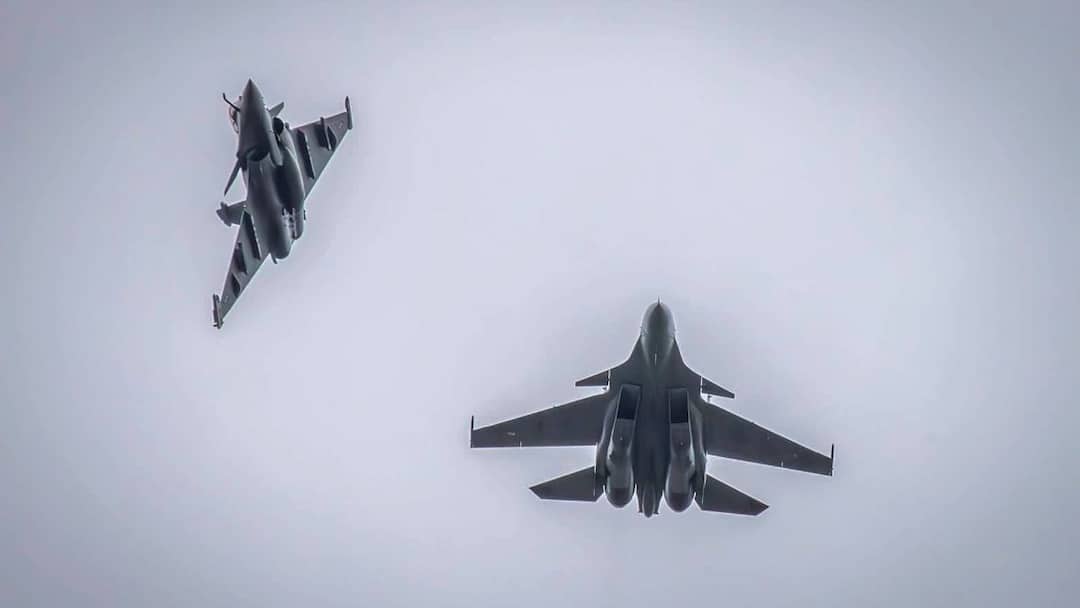
China allegedly conducted a sophisticated disinformation campaign aimed at undermining the reputation of French-made Rafale fighter jets following the India-Pakistan border conflict earlier this year, according to a new assessment from the US-China Economic and Security Review Commission.
The report claims Beijing deployed fake social media accounts to disseminate misleading visuals and promote China’s domestically produced J-35 stealth aircraft as a superior alternative. These efforts reportedly began in the weeks after hostilities between India and Pakistan subsided in May.
According to the commission, the campaign involved circulating fabricated images, including AI-generated visuals and even screenshots from video games, designed to create the false impression that Chinese weapons had successfully destroyed Rafale aircraft during the conflict. Investigators believe the ultimate goal was to influence international buyers to reconsider purchases of the French jets in favor of Chinese alternatives.
These findings align with concerns previously expressed by French officials. Military and intelligence authorities in Paris had already signaled they were combating what appeared to be a coordinated attempt to damage the credibility of the Rafale platform in international defense markets.
The border crisis that sparked this alleged disinformation campaign erupted when Pakistan launched drone and missile strikes against Indian military installations. A French intelligence review, previously cited by the Associated Press, indicated that defense attachés working within Chinese embassies played a significant role in propagating misleading narratives throughout the conflict and its aftermath.
The US commission report suggests Beijing “opportunistically leveraged” regional tensions to promote its weapons systems across Asia. In one notable case, China reportedly convinced Indonesia to pause its planned Rafale purchase despite negotiations being at an advanced stage, effectively slowing French defense industry progress in the strategically important region.
China’s broader strategy appeared to focus on portraying its weapons systems as battle-proven and effective, even when such claims relied on manufactured or exaggerated evidence. This approach reflects China’s expanding ambitions to increase its defense industry footprint across South and Southeast Asia, challenging traditional suppliers including France, Russia, and the United States.
The alleged disinformation campaign occurred against a backdrop of deepening China-Pakistan military cooperation. Months before the border violence erupted, the two countries had participated in a three-week Warrior-VIII counterterrorism exercise in late 2024. By February 2025, the Chinese Navy joined Pakistan in multinational AMAN maritime drills, further cementing their defense relationship.
By June, Beijing had reportedly offered Islamabad a comprehensive defense package including 40 J-35 fifth-generation fighters, KJ-500 airborne early-warning aircraft, and ballistic missile defense systems. This coincided with Pakistan’s announcement of a 20% increase in its defense budget for 2025-2026, signaling a significant military buildup in the region.
In India, the Bharatiya Janata Party (BJP) quickly utilized the US commission’s findings for domestic political purposes. BJP leader Amit Malviya indirectly criticized opposition figures who had questioned India’s official accounts during the conflict, writing on social media: “Who kept demanding ‘numbers’ on jets lost, even after the Indian Air Force clearly stated that all its assets were intact, and that sharing operational details mid-conflict would jeopardize national security?”
The original conflict had escalated when India launched Operation Sindoor on May 7, described by New Delhi as retaliation for a terror strike in Pahalgam that killed 26 civilians. Indian authorities claim the operation targeted militant infrastructure in Pakistan and Pakistan-occupied Kashmir, resulting in over 100 terrorist casualties.
This alleged disinformation campaign highlights the increasingly complex nature of modern conflicts, where information warfare can continue long after conventional hostilities end, potentially reshaping defense procurement decisions worth billions of dollars across multiple countries.
Fact Checker
Verify the accuracy of this article using The Disinformation Commission analysis and real-time sources.

27 Comments
Production mix shifting toward Disinformation might help margins if metals stay firm.
Uranium names keep pushing higher—supply still tight into 2026.
Interesting update on China Led Disinformation Campaign Against Rafale Jets After India-Pakistan Conflict, US Report Finds. Curious how the grades will trend next quarter.
Nice to see insider buying—usually a good signal in this space.
Good point. Watching costs and grades closely.
Silver leverage is strong here; beta cuts both ways though.
Good point. Watching costs and grades closely.
Good point. Watching costs and grades closely.
Uranium names keep pushing higher—supply still tight into 2026.
Good point. Watching costs and grades closely.
Good point. Watching costs and grades closely.
Silver leverage is strong here; beta cuts both ways though.
Good point. Watching costs and grades closely.
Interesting update on China Led Disinformation Campaign Against Rafale Jets After India-Pakistan Conflict, US Report Finds. Curious how the grades will trend next quarter.
Good point. Watching costs and grades closely.
Good point. Watching costs and grades closely.
Interesting update on China Led Disinformation Campaign Against Rafale Jets After India-Pakistan Conflict, US Report Finds. Curious how the grades will trend next quarter.
Good point. Watching costs and grades closely.
Good point. Watching costs and grades closely.
Interesting update on China Led Disinformation Campaign Against Rafale Jets After India-Pakistan Conflict, US Report Finds. Curious how the grades will trend next quarter.
Good point. Watching costs and grades closely.
I like the balance sheet here—less leverage than peers.
Good point. Watching costs and grades closely.
Good point. Watching costs and grades closely.
If AISC keeps dropping, this becomes investable for me.
Interesting update on China Led Disinformation Campaign Against Rafale Jets After India-Pakistan Conflict, US Report Finds. Curious how the grades will trend next quarter.
Good point. Watching costs and grades closely.