


Listen to the article
China Exploited India-Pakistan Border Conflict to Test Weapons and Influence Defense Markets, US Commission Finds
A new report from the bipartisan US-China Economic and Security Review Commission reveals that China opportunistically used the May 2025 India-Pakistan border conflict to test its latest military hardware and expand its influence in international defense markets. The findings, released on November 19, detail Beijing’s strategic exploitation of regional tensions to advance its military-industrial goals.
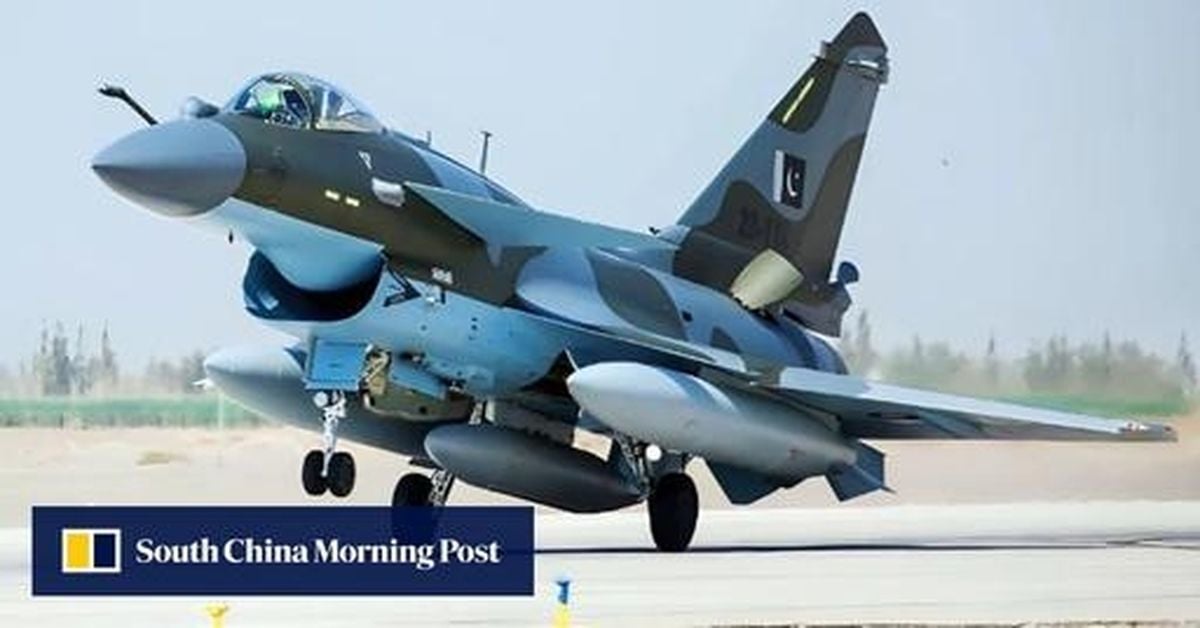
According to the commission, the May skirmish provided China with a valuable “real-world field experiment” for its modern weapons systems in active combat. Among the Chinese systems deployed were the HQ-9 air defense network, PL-15 beyond-visual-range air-to-air missiles, and J-10C fighter jets. Pakistan, a longtime recipient of Chinese military technology, reportedly used J-10C jets to shoot down five Indian aircraft, including French-made Rafales, during the four-day confrontation.
While stopping short of characterizing the episode as a “proxy war,” the commission emphasized that Pakistan’s military success with Chinese weaponry served both nations’ interests. For China, the conflict validated its arms in combat conditions—an invaluable marketing opportunity as it seeks to expand its global defense footprint. For Pakistan, the technological edge provided crucial support amid ongoing tensions with India.
The report also alleges that China launched a coordinated disinformation campaign in the conflict’s aftermath, targeting French Rafale aircraft to boost sales of its own J-35 jets. This operation reportedly included the use of fake social media accounts to spread AI-generated images purporting to show debris from Rafale jets destroyed by Chinese weapons. These efforts aimed to undermine the Rafale’s reputation while enhancing the appeal of Chinese alternatives in the competitive international arms market.
Chinese influence operations extended beyond social media manipulation, according to the commission. Embassy officials reportedly convinced Indonesia to cancel a planned purchase of Rafale jets, representing a significant victory for Chinese defense diplomacy and a setback for French ambitions in Southeast Asia.
These developments unfold against the backdrop of an increasingly robust China-Pakistan military relationship. The commission noted that in late 2024, the two countries conducted the three-week Warrior-VIII counterterrorism drills, followed by China’s participation in Pakistan’s multinational AMAN naval exercises in February 2025. This pattern of joint training intensified throughout the year, culminating in China’s June 2025 offer to sell Pakistan 40 J-35 fifth-generation fighter jets, KJ-500 early warning aircraft, and ballistic missile defense systems.
Pakistan’s shifting defense priorities became further evident when it announced a 20 percent increase in its 2025-2026 defense budget in June 2025, raising planned expenditures to $9 billion despite overall budget constraints. The commission links this increase directly to Pakistan’s modernization goals and deepening partnership with Beijing.
The May 2025 conflict itself arose from longstanding India-Pakistan tensions, triggered by a deadly terror attack in Pahalgam, Jammu and Kashmir, in April that killed 26 people. India responded with precision strikes on Pakistani terror camps under Operation Sindoor, precipitating the border clashes where advanced Chinese weaponry significantly altered the regional military dynamic.
The geopolitical impact of these events has reached Washington, where US President Donald Trump has repeatedly claimed personal credit for halting the hostilities. During a bilateral meeting with Saudi Arabia’s Crown Prince Mohammed bin Salman on the day the commission’s report was published, Trump stated he had “stopped India and Pakistan” among eight wars he claimed to have prevented. He has consistently attributed the ceasefire to his use of trade tariffs and direct diplomacy—claims firmly denied by Indian officials.
China’s embassy in Washington has not commented on the commission’s findings. However, analysts note that the report’s revelations highlight Beijing’s multifaceted regional strategy, which combines military support for Pakistan, information warfare against competitors, and aggressive pursuit of new defense clients to position China as a central player in Asia’s evolving security architecture.
For the nations involved and their international partners, the events of 2025 demonstrate that regional security increasingly depends on complex interplays of military capability, diplomatic influence, and information dominance—factors that will continue to shape South Asia’s fragile stability in the coming years.
Fact Checker
Verify the accuracy of this article using The Disinformation Commission analysis and real-time sources.

12 Comments
Interesting report on China’s strategic exploitation of regional tensions to advance its military capabilities. It seems China is constantly looking for opportunities to test and showcase its latest weaponry, even at the cost of regional stability.
You’re right, this highlights China’s willingness to leverage conflicts for its own gain. The report’s findings on how Chinese weapons systems performed during the India-Pakistan skirmish are concerning.
This report paints a very concerning picture of China’s behavior during the India-Pakistan conflict. Rather than seeking to de-escalate tensions, they appear to have cynically exploited the situation to field-test their latest military hardware and boost their global defense exports. Such actions demonstrate a clear disregard for regional stability in pursuit of their own strategic interests.
You’re right, this report highlights China’s deeply troubling approach to regional conflicts. Their willingness to leverage these tensions for their own military and economic gain, rather than promoting de-escalation, is extremely worrying from a geopolitical standpoint.
While China’s actions are troubling, I’m not surprised they’re using conflicts to bolster their military-industrial complex. Gaining real-world combat data is invaluable for weapons development and export. The geopolitical implications are worrying though.
Agreed. China seems to have a ruthlessly pragmatic approach to these regional tensions. Their focus on testing and showcasing military tech is a stark contrast to efforts at de-escalation and conflict resolution.
This report underscores China’s disregard for regional stability in pursuit of its own strategic interests. Exploiting conflicts to field-test weapons and expand defense exports is a concerning pattern. It raises questions about China’s long-term goals and willingness to instigate or prolong tensions.
Absolutely. China’s actions demonstrate a clear prioritization of military dominance over diplomatic solutions. The fact that they’re willing to leverage regional conflicts for these ends is deeply troubling from a geopolitical standpoint.
This report sheds light on China’s cynical approach to regional conflicts. Rather than seeking to de-escalate tensions, they seem intent on using them as a proving ground for their military hardware and a means to expand their defense exports. Such behavior undermines stability and raises serious questions about China’s long-term intentions.
Absolutely. China’s willingness to exploit regional conflicts for its own strategic gain is very troubling. The report’s findings underscore the need for greater international scrutiny and pressure on China’s actions in these sensitive geopolitical situations.
The revelations in this report are quite alarming. China’s blatant exploitation of the India-Pakistan conflict to advance its military capabilities and global influence is a troubling development. It speaks to their willingness to escalate regional tensions for their own strategic gain.
I agree, this report highlights China’s highly opportunistic and destabilizing approach to regional conflicts. Their focus on field-testing weapons and boosting defense exports rather than conflict resolution is deeply concerning.