


Listen to the article
In a significant development highlighting the growing intersection of geopolitical tensions and defense industry competition, China reportedly launched a sophisticated disinformation campaign targeting French Rafale fighter jets following the India-Pakistan border clashes in May, according to a newly released U.S. government report.
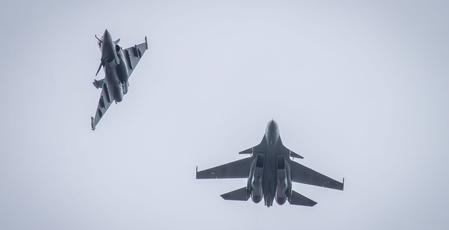
The U.S.-China Economic and Security Review Commission’s annual report to Congress, presented Wednesday, details how Chinese operatives allegedly circulated AI-generated images purporting to show “debris” from Rafale fighters supposedly destroyed by Chinese weapon systems. The campaign appeared designed to undermine confidence in the French aircraft while promoting China’s own J-35 fighters.
This alleged disinformation effort came in the wake of the Pahalgam terror attacks, which triggered a significant military confrontation between India and Pakistan along their contested border. The Commission’s report notes that the May 7-10 confrontation drew international attention partly because Pakistan’s forces relied heavily on Chinese military equipment and reportedly benefited from Chinese intelligence support.
“The Indian Army alleged that China provided Pakistan with real-time intelligence on Indian troop positions during the crisis,” the report states, adding that Beijing treated the confrontation as “an opportunity to test its own military systems.” While Pakistan rejected these claims, Chinese officials neither confirmed nor denied their level of involvement in the conflict.
The bipartisan Commission, established to provide U.S. lawmakers with policy guidance on China-related issues, included this assessment among 28 recommendations spanning technology, economic policy, trade, and national security concerns. Commission Chair Reva Price highlighted in the opening statement that President Xi Jinping has explicitly expressed intentions to make other nations more dependent on China.
According to the report, 2025 saw China expanding its defense cooperation with Pakistan even as Beijing’s own tensions with India continued to escalate. While the Commission cautioned against labeling the episode a “proxy war,” it suggested Beijing opportunistically used the situation to showcase and test advanced weapons systems – serving both its strategic interests in the border standoff with India and its commercial ambitions in the global defense market.
The report characterizes the conflict as the first combat deployment of several of China’s newer military systems, including the HQ-9 air-defense platform, PL-15 air-to-air missiles, and J-10 fighters. Following the cessation of hostilities, China reportedly offered Pakistan a substantial military hardware package in June 2025, including 40 J-35 fifth-generation jets, KJ-500 aircraft, and ballistic-missile defense systems.
In what appears to be a coordinated information operation, Chinese embassies subsequently promoted narratives about the superior performance of Chinese equipment during the India-Pakistan exchanges, using these claims to advance arms sales internationally.
Perhaps most concerning from a Western perspective, the report cites French intelligence sources claiming that Beijing’s disinformation operation specifically targeted the reputation of the Rafale aircraft. Through the dissemination of fabricated images – some apparently derived from video games – China allegedly sought to discredit the French fighter’s reliability and combat effectiveness.
The campaign appears to have yielded tangible results, with the report stating that Chinese diplomats successfully persuaded Indonesia to pause an already in-progress procurement of Rafale fighters.
This incident illustrates the evolving nature of great power competition in the 21st century, where military confrontations between regional powers can serve as both testing grounds for advanced weapons systems and opportunities for information warfare designed to reshape the global defense market.
The Commission’s findings come at a time of heightened concern about China’s growing military-industrial capabilities and its increasingly assertive stance in territorial disputes across the Indo-Pacific region.
Fact Checker
Verify the accuracy of this article using The Disinformation Commission analysis and real-time sources.

17 Comments
This report sheds light on China’s apparent efforts to discredit the Rafale fighter jets, likely in an attempt to boost their own domestic military capabilities. It’s a concerning example of how disinformation can be weaponized in geopolitical competitions.
Absolutely. These kinds of coordinated disinformation campaigns are a major challenge for democratic societies trying to maintain transparency and trust in defense matters.
The alleged Chinese disinformation campaign against the Rafale jets is quite alarming. It underscores the importance of rigorous fact-checking and sourcing when it comes to sensitive defense-related information, especially in today’s polarized information landscape.
Wow, this report provides a troubling glimpse into China’s alleged disinformation efforts targeting the Rafale jets. It highlights the growing complexity of defense industry competition and the need for rigorous verification of claims, especially in the online realm.
Fascinating to see the details of China’s alleged disinformation efforts targeting the Rafale jets. It really highlights the growing role of information warfare in defense procurement and geopolitical competition. Curious to see how this evolves and what the broader implications might be.
Absolutely. This is a sobering example of how defense technologies have become battlegrounds in the broader information landscape. It will be important for policymakers and the public to stay vigilant and fact-based in this arena.
This report shines a light on China’s apparent attempts to undermine the Rafale jets through disinformation. It’s a troubling example of how geopolitical tensions can play out in the defense industry and information space. Rigorous fact-checking and transparency will be crucial going forward.
The revelations about China’s alleged disinformation campaign against the Rafale jets are quite concerning. It speaks to the growing role of information warfare in defense procurement and geopolitical maneuvering. Maintaining trust and credibility in this domain will be an ongoing challenge.
Absolutely. These kinds of coordinated efforts to shape public perceptions around defense capabilities are a major threat to democratic discourse. Vigilance and fact-based reporting will be essential to counter such tactics.
Interesting to see China allegedly trying to undermine the Rafale jets through disinformation. I wonder what their motivations are and how effective this campaign has been. It highlights the growing information warfare around defense technologies.
Yes, the geopolitical implications of this are quite concerning. It speaks to the need for robust verification of defense-related claims, especially those circulated online.
This report highlights the growing intersection of geopolitics, defense technology, and information warfare. China’s apparent efforts to undermine the Rafale jets through disinformation are troubling and reinforce the need for robust cybersecurity and media literacy efforts.
Agreed. Disinformation campaigns like this can have real-world consequences, so it’s critical that policymakers and the public remain vigilant and well-informed.
The details in this report about China’s alleged disinformation campaign against the Rafale jets are quite alarming. It underscores the importance of maintaining transparency and fact-based discourse when it comes to sensitive defense matters, given the high-stakes geopolitical implications.
Absolutely. Disinformation campaigns like this can have very real consequences, so it’s critical that policymakers and the public remain vigilant and well-informed on these issues.
The U.S. report’s revelations about China’s alleged disinformation campaign against the Rafale jets are a stark reminder of the complex geopolitical dynamics at play in the defense industry. This underscores the importance of transparency and fact-based reporting in this sensitive domain.
This report on China’s alleged disinformation campaign against the Rafale jets is a sobering reminder of the information warfare taking place in the defense industry. It highlights the need for robust verification of claims and the importance of maintaining credibility and trust in this sensitive domain.