


Listen to the article
China Launched Disinformation Campaign Following India-Pakistan Conflict, US Report Finds
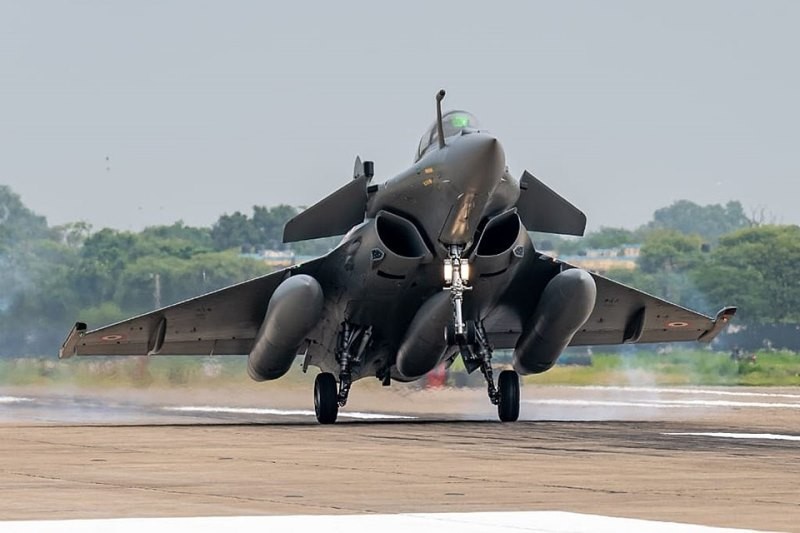
China orchestrated a coordinated disinformation campaign in the aftermath of India’s Operation Sindoor, attempting to undermine global confidence in French-made Rafale fighter jets while promoting its own J-35 aircraft, according to a newly released report by the US–China Economic and Security Review Commission.
The annual report, submitted to the US Congress, details how Beijing deployed fake social media accounts to circulate AI-generated and video game-derived images that purported to show debris from Indian fighter jets allegedly shot down during the May 7–10 clash between India and Pakistan.
According to the Commission, the primary objective of this campaign was twofold: to damage French defense exports and to advance China’s own military sales in the global market. The report specifically highlights that Chinese Embassy officials successfully persuaded Indonesia to pause an ongoing Rafale purchase, helping Beijing strengthen its influence over regional defense acquisitions.
The three-day conflict drew significant international attention particularly because Pakistan relied heavily on Chinese-made weapons systems. The Indian Army claimed that Beijing provided Islamabad with “live inputs” on Indian military positions throughout the crisis, using the conflict as an opportunity to observe and test its own military capabilities in a real-world scenario. While Pakistan dismissed these allegations, China has neither confirmed nor denied them.
Despite Pakistan’s assertions that India lost six fighter jets, including Rafales, during the confrontation, the US Commission report states that evidence indicates only three Indian jets were reportedly shot down, and not all were confirmed to be Rafales.
“The disinformation campaign represents a concerning evolution in how military conflicts can be leveraged through information warfare,” said a defense analyst who requested anonymity due to the sensitivity of the topic. “China’s approach wasn’t just about supporting Pakistan but about creating commercial opportunities for its defense industry.”
The report also documents a significant increase in China–Pakistan military cooperation, pointing to multiple joint exercises conducted in 2024 and scheduled for 2025. These included the Warrior-VIII counterterrorism drills held in late 2024 and the AMAN 2025 naval exercise, which featured participation from China’s navy. These activities reflect a deepening defense partnership that India views as a direct strategic challenge to its regional security interests.
The conflict provided China with an opportunity to test and showcase its weapon systems under combat conditions. Chinese military assets deployed during the confrontation included the HQ-9 air defense system, PL-15 missiles, and J-10 fighters—marking their first documented use in active combat situations.
As Pakistan’s largest arms supplier—responsible for 82 percent of its weapons imports between 2019 and 2023—China quickly moved to capitalize on the moment. Following the confrontation, Beijing offered Islamabad 40 J-35 fifth-generation jets, KJ-500 early warning aircraft, and advanced missile defense systems.
This arms deal coincided with Pakistan increasing its 2025–26 defense budget by 20 percent to $9 billion, despite reducing overall government expenditure—a move that signals the growing prioritization of military capabilities in Pakistan’s national strategy.
Defense industry observers note that Chinese embassies worldwide amplified Pakistan’s claims about successful engagements against Indian Rafales, using these narratives to market Chinese systems to potential buyers in other countries. This approach represents a shift in China’s defense export strategy, leveraging real-world conflicts to demonstrate the purported effectiveness of its military hardware.
The report comes amid growing concerns about the militarization of the South Asian region and escalating tensions between India and the China-Pakistan alliance. Military analysts suggest that this triangular relationship will remain one of the most significant geopolitical challenges in Asia for years to come.
For India, the disinformation campaign highlights the multifaceted nature of modern conflicts, where battlefield engagements are followed by information warfare designed to shape international perceptions and influence defense procurement decisions across the region.
Fact Checker
Verify the accuracy of this article using The Disinformation Commission analysis and real-time sources.

8 Comments
This report paints a worrying picture of China’s willingness to engage in deceptive practices to boost their own defense industry. The use of fake social media accounts and manipulated imagery is a troubling tactic that erodes trust and fair competition. The international community must remain vigilant.
This story is a stark reminder of the lengths China will go to in order to boost its own military capabilities at the expense of others. Their willingness to spread misinformation and manipulate public opinion is quite alarming. The international community needs to stay vigilant.
It’s really concerning to see China leveraging disinformation to undermine a key defense partner like France. This report highlights how high the stakes are in the global race for military technological superiority. Maintaining a level playing field is critical.
This is quite an eye-opening report on China’s disinformation tactics. It’s concerning to see how they leveraged fake accounts and manipulated imagery to undermine the Rafale jets and promote their own military tech. Geopolitical competition is getting more cutthroat.
It’s really disappointing to see China resorting to such underhanded tactics. Spreading misinformation to undermine a competitor’s military tech is a concerning abuse of their influence. This report highlights the importance of media literacy and fact-checking in the digital age.
China’s disinformation campaign against the Rafale jets is a troubling example of how authoritarian powers can abuse digital technologies to distort reality and gain unfair advantages. This report underscores the urgent need for greater transparency and accountability in global defense trade.
I’m not surprised China would resort to such underhanded tactics. They seem determined to counter Western military influence and boost their own domestic industry. This kind of deception erodes trust and fair competition in the global defense market.
Absolutely. China’s actions here are a troubling example of how authoritarian states can use disinformation to gain unfair advantages. Transparency and integrity should be the foundation of international defense cooperation.