


Listen to the article
Beijing Accused of Orchestrating Disinformation Campaign Against India’s Rafale Jets
China has been accused of conducting a sophisticated disinformation campaign aimed at undermining India’s Rafale fighter jet program and influencing defense markets across Asia, according to a report released Wednesday by the United States–China Economic and Security Review Commission.
The commission alleges that Beijing deliberately worked to sway public opinion in the aftermath of the brief military confrontation between India and Pakistan that occurred in May 2025. According to the findings, Chinese operatives deployed fake social media profiles and artificial intelligence-generated imagery to spread false claims that Rafale jets had been shot down during the conflict.
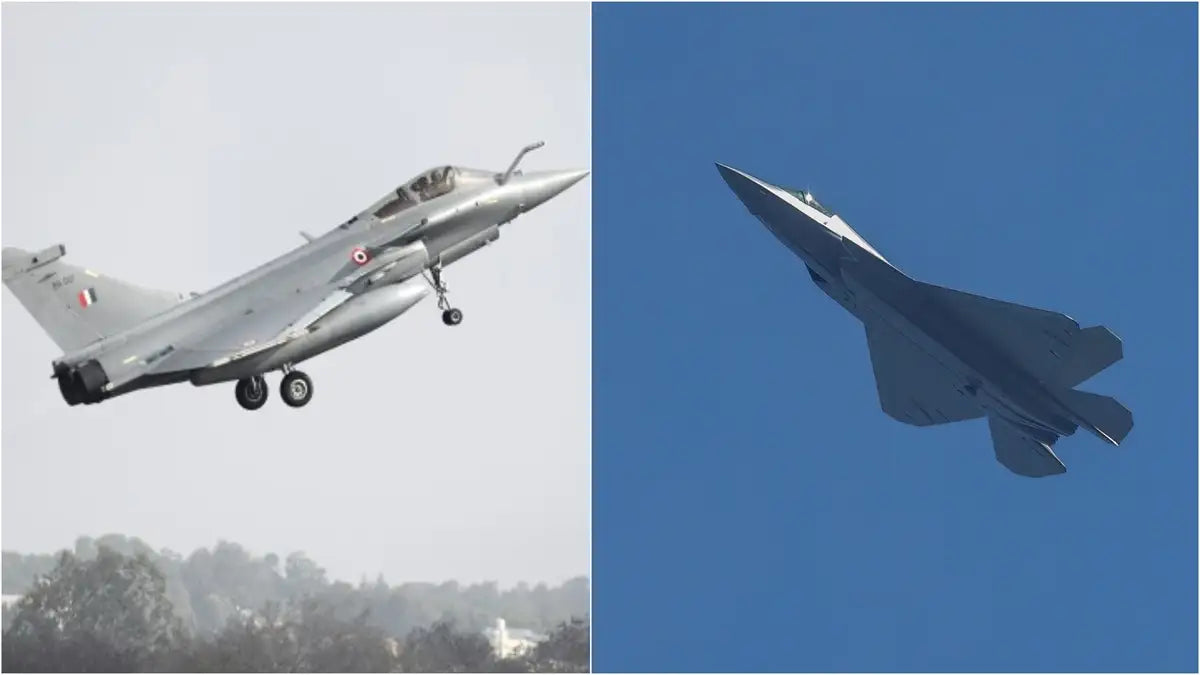
These fabricated narratives were specifically designed to cast doubt on the reliability of the French-manufactured aircraft while simultaneously promoting China’s domestically produced J-35 fifth-generation fighter jet as a superior alternative. Investigators documented extensive circulation of manipulated images purporting to show debris from downed Rafale aircraft, in what appears to be a calculated effort to influence defense procurement decisions throughout the region.
The impact of this alleged campaign extends beyond information warfare. The report indicates that Chinese diplomatic pressure may have directly influenced Indonesia’s decision to pause its ongoing Rafale procurement program. This development potentially opens the door for Chinese-manufactured alternatives, particularly the J-35, to gain market share in Southeast Asia.
Analysts view these actions as part of China’s broader strategic objective to displace Western defense suppliers in the region. Beijing has reportedly leveraged a combination of economic incentives, political influence, and coordinated digital propaganda to promote defense systems developed by Shenyang Aircraft Corporation and other Chinese manufacturers.
The commission’s assessment also highlights the strengthening military partnership between China and Pakistan over the 2024-2025 period. This relationship was evidenced by several joint military exercises, including the Warrior-VIII counterterrorism drills conducted in late 2024 and China’s participation in Pakistan’s AMAN naval exercises in February 2025.
In a significant development, Beijing reportedly offered Islamabad a comprehensive defense package in June 2025. This package included 40 J-35 stealth fighters, KJ-500 airborne early warning aircraft, and advanced ballistic missile defense systems. The timing coincided with Pakistan’s announcement of a 20% increase in its defense budget for fiscal year 2025-26, raising it to $9 billion despite broader government austerity measures.
“This substantial budget increase signals Pakistan’s determination to accelerate its military modernization efforts, likely with significant Chinese support,” said a regional security expert who requested anonymity due to the sensitivity of the subject. “The growing China-Pakistan defense relationship represents a considerable strategic challenge for India and its Western allies in the region.”
The publication of these findings coincided with statements from U.S. President Donald Trump, who reiterated claims that he personally intervened to prevent a full-scale war between India and Pakistan during the May 2025 confrontation, known as Operation Sindoor. Speaking alongside Saudi Crown Prince Mohammed bin Salman, Trump stated he had “stopped eight wars,” with the India-Pakistan conflict among them.
New Delhi has consistently rejected these assertions, maintaining that the de-escalation resulted from India’s calculated military and diplomatic initiatives rather than external intervention.
The Commission concludes that China’s alleged disinformation activities represent part of a comprehensive strategy to weaken Western defense influence in Asia while simultaneously challenging India’s air superiority in the Indo-Pacific region. With Rafale jets forming a crucial component of India’s advanced air combat capabilities, undermining their credibility aligns with Beijing’s long-term strategic objectives.
Defense analysts note that this case illustrates how information warfare, defense economics, and geopolitical competition have become increasingly interconnected in Asia’s complex security landscape. These dynamics are reshaping procurement decisions, strategic partnerships, and the regional balance of power in ways that will likely have lasting consequences for stability across the Indo-Pacific.
Fact Checker
Verify the accuracy of this article using The Disinformation Commission analysis and real-time sources.

13 Comments
If the claims in this report are true, it’s a clear example of how state actors can weaponize information to undermine another country’s military capabilities. Maintaining transparency and verifying information is critical in these sensitive matters.
The alleged Chinese efforts to discredit the Rafale jet program seem like a calculated move to promote their own domestic fighter. It’s important for countries to make defense decisions based on merit, not disinformation.
You raise a good point. Geopolitical rivalries should not influence critical defense acquisitions. Objective performance assessments are key when it comes to such high-stakes military equipment.
The alleged Chinese disinformation campaign against India’s Rafale jets is a concerning development. Countries must be vigilant in identifying and countering these tactics, which can have significant consequences for national security and defense procurement.
The alleged Chinese campaign to undermine India’s Rafale jets is a concerning development. Spreading false claims about military equipment performance is a dangerous tactic that can have serious geopolitical implications.
This is a troubling report. Disinformation targeting defense programs is a serious issue that needs to be addressed. Countries must prioritize fact-based decision-making and work together to counter these malicious influence operations.
The alleged Chinese disinformation campaign against the Rafale fighter jets is a concerning development. Maintaining transparency and ensuring objective, fact-based decision-making is crucial when it comes to critical defense acquisitions.
This report highlights the growing threat of state-sponsored disinformation campaigns targeting defense programs. Countries must be vigilant and develop robust strategies to counter these malicious efforts to influence public opinion.
Absolutely. Disinformation can have far-reaching consequences, from eroding public trust to skewing defense procurement decisions. A coordinated, multilateral approach is needed to combat these sophisticated influence operations.
Disinformation campaigns aimed at undermining military capabilities are a serious threat to global security. Countries must work together to develop effective strategies to identify, counter, and mitigate the impact of these malicious efforts.
This is a concerning report. Disinformation campaigns can have serious consequences for defense procurement and international relations. It’s important to scrutinize all claims and verify information from credible sources.
Absolutely. Fabricated content and manipulated imagery are worrying tactics to undermine another country’s military capabilities. Transparency and fact-checking are crucial in these sensitive matters.
This report highlights the need for robust measures to address state-sponsored disinformation targeting defense programs. Fact-based assessments and international cooperation are essential to ensuring fair and reliable defense procurement decisions.