


Listen to the article
West African Journalists Tackle Disinformation Crisis in Regional Media Training
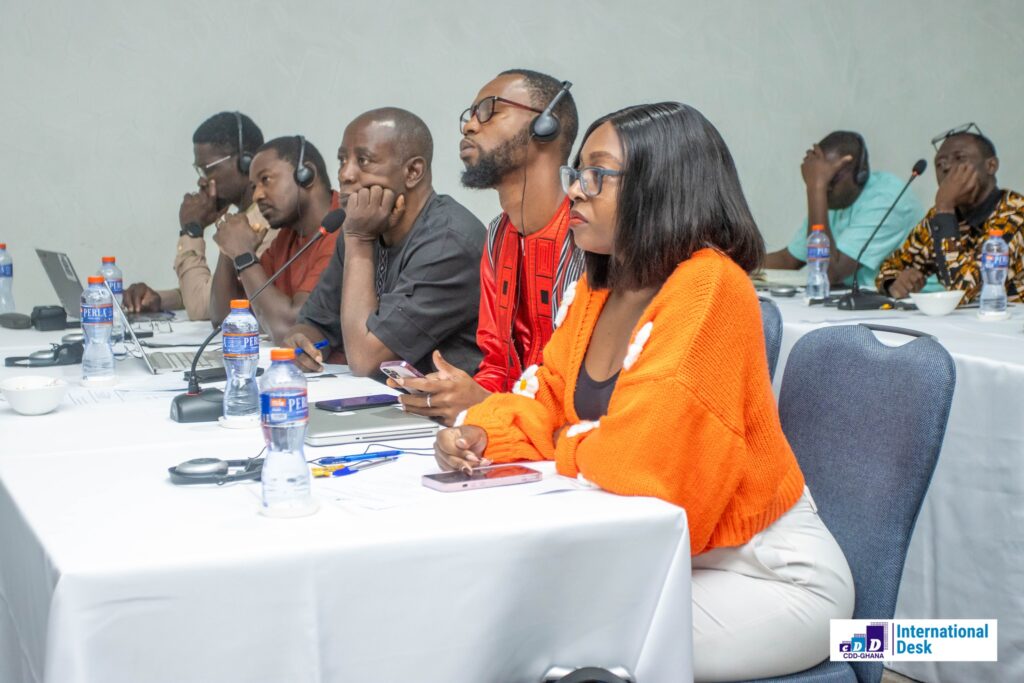
The growing challenge of disinformation, technology misuse, and information warfare across West Africa took center stage during the second day of the CDD-Ghana International Desk Regional Media Training. As digital platforms continue to reshape the information landscape, journalists from across the region gathered to develop strategies against the rising tide of false information and propaganda.
Led by Kwaku Krobea Asante of the Media Foundation for West Africa (MFWA), the session delved into the complex mechanisms through which misinformation spreads throughout West African countries. Asante highlighted the alarming involvement of both foreign and domestic actors who strategically manipulate narratives to influence public opinion and potentially destabilize democratic processes.
“What we’re seeing is a sophisticated weaponization of information,” noted one participant from Nigeria. “The challenge isn’t just identifying false news but understanding the networks and motivations behind these campaigns.”
The training specifically addressed how digital platforms, increasingly accessible artificial intelligence tools, and coordinated propaganda campaigns are being deployed across the region with concerning effectiveness. These technologies have transformed the speed and scale at which disinformation can spread, creating unprecedented challenges for media professionals attempting to maintain journalistic integrity.
West Africa has become particularly vulnerable to information manipulation due to increasing internet penetration, widespread social media usage, and political instability in several countries. Recent elections in Ghana, Nigeria, and Senegal have all faced significant disinformation campaigns, often with cross-border implications and sometimes linked to geopolitical interests.
Participants received hands-on training in fact-checking methodologies, digital forensics, and source verification—essential skills in a region where fabricated content regularly goes viral before journalists can verify its authenticity. The session also covered how to identify coordinated inauthentic behavior on social platforms, where networks of accounts work together to artificially amplify divisive content.
The CDD-Ghana initiative comes at a critical time for regional media. A 2023 study by the Reuters Institute revealed that trust in news across West Africa has declined by nearly 18 percent over the past five years, largely due to the proliferation of false information. This erosion of trust threatens not only media institutions but democratic governance across the region.
“Building public resilience against disinformation requires journalists who understand these threats and can effectively counter them,” explained a representative from CDD-Ghana. “This training equips them with both technical skills and contextual understanding of the broader information ecosystem.”
The program also addressed the economic pressures facing independent media outlets, which often struggle to compete with sensationalist content and clickbait headlines that drive engagement but compromise accuracy. As advertising revenue increasingly flows toward social media giants rather than traditional news platforms, maintaining quality journalism becomes increasingly difficult.
Regional experts participating in the training highlighted how information warfare has become a security concern across West Africa, particularly in areas facing insurgency or political transition. Countries in the Sahel region have experienced campaigns deliberately targeting ethnic tensions, while coastal nations like Ghana and Côte d’Ivoire have seen misinformation targeting economic policies and democratic institutions.
The training represents part of a broader initiative to strengthen media capacity across the region, recognizing that professional journalism serves as a frontline defense against democratic backsliding. By the program’s conclusion, participants will have developed concrete strategies for their newsrooms to better identify, analyze, and counter disinformation campaigns.
As digital technologies continue evolving, particularly with the rapid advancement of generative AI tools capable of creating convincing synthetic media, the challenges facing West African journalism will likely intensify. However, collaborations like the CDD-Ghana training program demonstrate a growing regional commitment to preserving information integrity in an increasingly complex digital landscape.
Fact Checker
Verify the accuracy of this article using The Disinformation Commission analysis and real-time sources.

22 Comments
Addressing the complex mechanisms of disinformation is a critical first step. This training’s emphasis on understanding the networks and motivations driving these campaigns is a positive development.
The weaponization of information is a worrying trend that threatens to undermine public trust. This training’s focus on developing effective strategies against false narratives is commendable.
I agree. Equipping journalists with the tools to identify and counter disinformation campaigns is crucial for safeguarding the integrity of the media in the region.
Kudos to CDD-Ghana for organizing this important training. Developing strategies to combat disinformation in West African media is essential for maintaining the integrity of public discourse.
Addressing the complex mechanisms behind the spread of false information is key. Understanding the networks and motivations driving disinformation campaigns will help journalists mount a more effective response.
Absolutely. The weaponization of information is a serious threat to democratic processes in the region. This training seems timely and necessary.
The training’s focus on the involvement of foreign and domestic actors in spreading misinformation is particularly concerning. Developing a coordinated, regional response to this threat is crucial.
Agreed. Journalists need to be vigilant in identifying the various forces behind disinformation campaigns and work together to counter their influence across West Africa.
The training’s focus on the role of digital platforms in the spread of misinformation is timely and necessary. Equipping journalists with the skills to navigate this evolving landscape is essential.
Absolutely. Building resilience against the manipulation of information across digital media is crucial for maintaining the integrity of news and public discourse in the region.
The involvement of both foreign and domestic actors in spreading misinformation is deeply concerning. This training highlights the urgent need for a coordinated, regional response to this growing challenge.
Combating disinformation is essential for maintaining democratic processes in West Africa. This training seems like a positive step towards empowering journalists to navigate the complex information landscape.
The rise of artificial intelligence and its potential misuse in spreading disinformation is a worrying development. This training’s focus on addressing this challenge is both timely and necessary.
Absolutely. Journalists need to be equipped with the knowledge and skills to navigate the evolving landscape of information warfare and propaganda.
This training is a much-needed initiative to address the growing challenge of disinformation in West African media. Empowering journalists to combat the weaponization of information is essential for safeguarding democratic processes.
This training sounds crucial for combating the growing problem of disinformation in West African media. Journalists need to develop robust strategies to identify and counter the sophisticated manipulation of information across digital platforms.
I agree, the involvement of foreign and domestic actors in spreading misinformation is very concerning. Building awareness and resilience among journalists is a vital first step.
It’s alarming to see how digital platforms can be exploited to manipulate public opinion. The training’s focus on developing strategies against this rising tide of propaganda is commendable.
Agreed. Equipping journalists with the skills to identify and counter disinformation campaigns will be crucial in safeguarding the integrity of information in West African media.
The training’s emphasis on identifying the complex networks and motivations behind disinformation campaigns is crucial. Equipping journalists with these insights will help them mount a more effective response.
I agree. Understanding the underlying drivers of misinformation is key to developing robust counter-strategies that can withstand the evolving tactics of those seeking to manipulate narratives.
Disinformation is a growing concern across West Africa. This training’s emphasis on understanding the networks and motivations behind these campaigns is a critical first step towards a more effective response.