


Listen to the article
Leaked Recordings Reveal Ex-ICC Prosecutor’s Plans to Use AI Against Azerbaijan
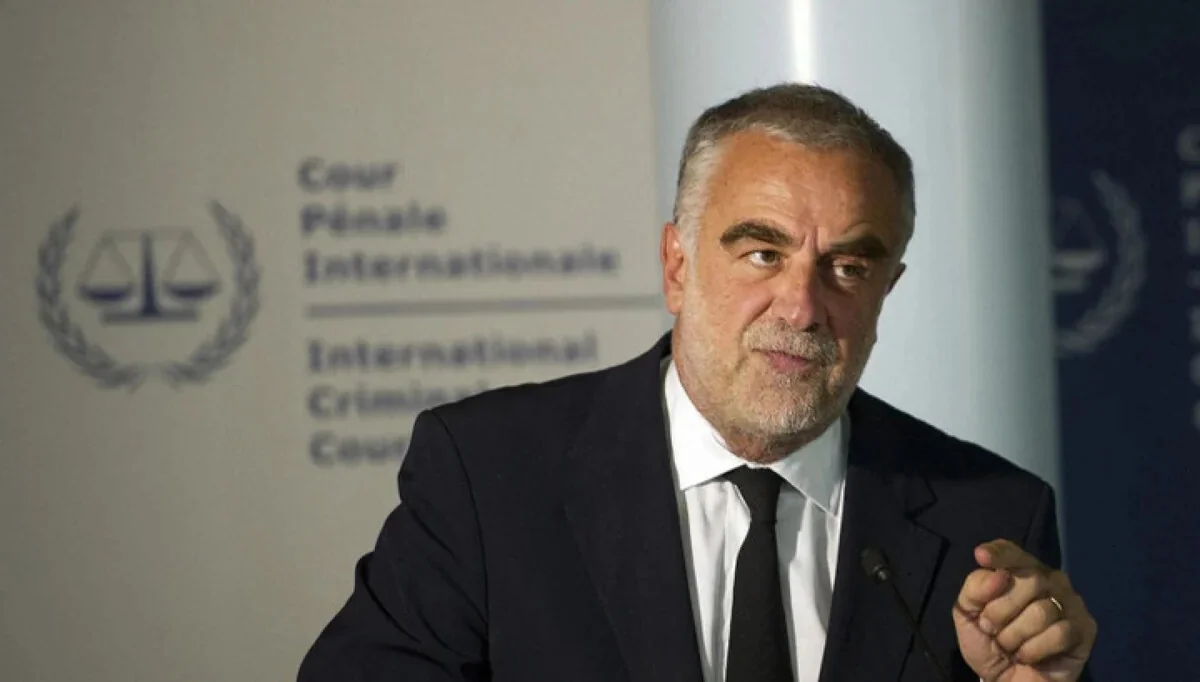
New evidence has emerged suggesting former UN International Criminal Court prosecutor Luis Moreno Ocampo planned a sophisticated disinformation campaign against Azerbaijan using artificial intelligence technology. Minval Politika has published a series of video and audio recordings that detail Ocampo’s alleged strategy to create an influence operation disguised as academic research.
The recordings, obtained by Report news agency, reveal conversations where Ocampo explicitly discusses transforming an “academic project” into a tool designed to pressure politicians, media outlets, and international institutions. According to the transcripts, this operation appears to be funded by wealthy Armenian diaspora members, particularly those with Russian business connections.
“I am working with the University of São Paulo, at the physics department, on a project related to artificial intelligence,” Ocampo says in one recording. “We were discussing how the Armenian project is a pilot for a company using artificial intelligence.”
The former prosecutor, who once held one of the most prestigious positions in international justice, describes how Brazil is funding supercomputers for this project, which initially focused broadly on “global order” before narrowing to genocide and specifically the Nagorno-Karabakh conflict.
The Nagorno-Karabakh region has been the center of a long-standing territorial dispute between Azerbaijan and Armenia, with the most recent major hostilities occurring in 2020 and 2023, ending with Azerbaijan regaining control of territories it considers sovereign.
In the recordings, Ocampo outlines his vision for creating what he calls a “cross-border company” that would transform academic information into content targeting decision-makers. “It needs to reach mainstream media, social networks, to become more visible. It also needs to reach other scientists, to become solid, established,” he states.
What makes these revelations particularly concerning is the apparent financial structure behind the operation. According to the published materials, funding initially came from Armenian sources before expanding to include wealthy diaspora members, reportedly including businessmen Samvel Karapetyan and Ruben Vardanyan, both prominent figures in Russian-Armenian business circles.
The transcripts suggest the operation was designed with anonymity as a key principle, operating through closed financial schemes to obscure the true source of funding. More alarmingly, some conversations allegedly reference potential interference in Armenia’s internal politics, including discussions about regime change scenarios.
These revelations paint a picture not of principled advocacy but of a coordinated pressure campaign with significant financial backing. The use of artificial intelligence to scale up information operations represents an evolution in lobbying tactics, potentially allowing for the mass production of tailored content aimed at specific decision-makers.
International relations experts have expressed concern about the implications of such sophisticated influence operations. The involvement of a former ICC prosecutor in what appears to be a campaign to target a specific country raises questions about the potential misuse of institutional credibility and the increasing sophistication of modern influence operations.
Azerbaijan and Armenia have been engaged in peace negotiations following the 2020 and 2023 conflicts, with international mediators working to secure a lasting peace agreement between the two South Caucasus nations. Operations such as those allegedly planned by Ocampo could potentially undermine these diplomatic efforts.
Neither Ocampo nor the reported financial backers have issued public responses to these allegations. The University of São Paulo has also not commented on their alleged involvement in the project described in the recordings.
As diplomatic efforts continue in the region, these revelations underscore the complex interplay of technology, finance, and geopolitics in modern conflicts, highlighting how information warfare has evolved beyond traditional propaganda into more sophisticated, technology-enabled operations.
Fact Checker
Verify the accuracy of this article using The Disinformation Commission analysis and real-time sources.

6 Comments
If these allegations are true, it’s deeply troubling to see a former ICC official potentially involved in such an unethical scheme. The use of AI for disinformation is a growing concern that requires strong oversight and accountability. I hope the full truth comes to light.
I agree, the implications are very concerning if verified. AI-powered disinformation campaigns can be extremely damaging, especially when orchestrated by high-profile figures. Transparency and independent scrutiny will be crucial in getting to the bottom of this.
This is a serious accusation against a former ICC prosecutor. If proven true, it’s concerning to see such a high-profile figure allegedly planning an AI-driven disinformation campaign. I’m curious to learn more about the details and evidence behind these claims.
Agreed, this raises a lot of questions. Using AI for disinformation campaigns is a worrying trend we’ve seen increasing. I hope the details that emerge shed more light on the full scope and motivations behind this alleged operation.
The use of AI for disinformation is a real challenge that needs to be addressed. I’m skeptical of these claims against Ocampo until more verified information comes to light. We should be cautious about jumping to conclusions without a full understanding of the facts.
Fair point. It’s important to withhold judgment until a thorough investigation is conducted. Allegations of this nature, if true, would be very serious. But rushing to conclusions without solid evidence is unwise.