


Listen to the article
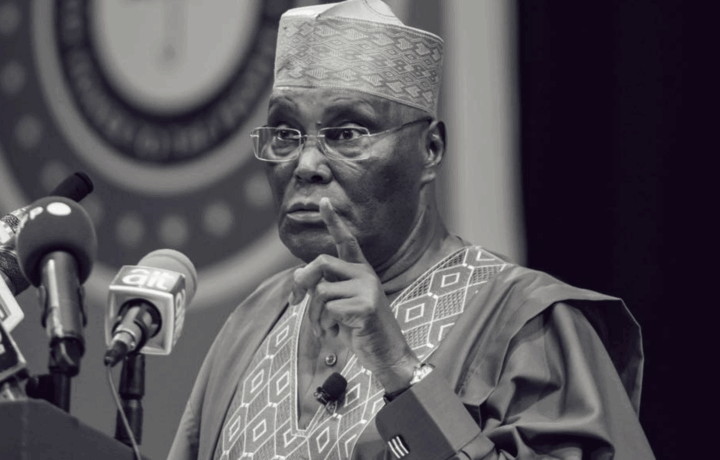
Former Vice-President Atiku Abubakar has forcefully denied reports claiming he has withdrawn from Nigeria’s 2027 presidential race, dismissing the allegations as “coordinated disinformation” designed to mislead voters and undermine his political ambitions.
The denial comes amid growing speculation about potential candidates for Nigeria’s next general election, with political maneuvering already intensifying despite the vote being nearly three years away. Atiku, who was the People’s Democratic Party (PDP) presidential candidate in the 2019 and 2023 elections, remains one of the country’s most prominent opposition figures.
“These reports are categorically false and represent a deliberate attempt to confuse the Nigerian electorate,” said a spokesperson from Atiku’s campaign office. “The former Vice-President remains fully committed to his presidential ambitions and continues to prepare for the 2027 electoral cycle.”
Political analysts suggest the premature circulation of such misinformation reflects the high-stakes nature of Nigerian politics and the significant influence Atiku wields within the opposition landscape. As one of the most recognizable political figures in the country, any suggestion of his withdrawal would substantially reshape the political terrain.
The false reports appear to have originated from several online sources before spreading across social media platforms, creating what Atiku’s team described as a “manufactured narrative” designed to benefit political rivals. The timing is particularly notable as political parties begin informal discussions about potential candidates and coalition building ahead of the next electoral cycle.
Atiku, 79, has maintained a significant presence in Nigerian politics since serving as vice president under President Olusegun Obasanjo from 1999 to 2007. His persistent presidential ambitions have made him a constant feature in the country’s political landscape for over two decades, though electoral success has thus far eluded him despite multiple attempts.
The PDP, Nigeria’s main opposition party, has not yet formally announced its candidate selection process for 2027, though internal discussions are reportedly underway. Party officials have refrained from commenting directly on Atiku’s candidacy but have emphasized their commitment to presenting a strong challenge to the ruling All Progressives Congress (APC).
“The opposition’s unity and candidate selection will be crucial factors in mounting an effective challenge against the incumbent government,” said Ibrahim Mohammedu, a political science professor at the University of Lagos. “Premature misinformation campaigns demonstrate how high the stakes are already becoming.”
Nigeria’s political environment has grown increasingly contentious following the 2023 elections, which saw significant disputes over results and electoral processes. The country continues to face substantial economic challenges, including currency instability, high inflation, and security concerns that will likely dominate the upcoming campaign cycle.
Atiku’s team has called on supporters to remain vigilant against what they describe as “an orchestrated campaign of falsehoods” and urged media organizations to verify information before publication. They have also indicated that legal action may be considered against those deliberately spreading misinformation about the former vice president’s political intentions.
The incident highlights the growing challenge of disinformation in Nigeria’s political discourse, with social media amplifying unverified claims at unprecedented speeds. Election observers and civic organizations have already expressed concern that the 2027 electoral cycle could see even more sophisticated disinformation campaigns than previous elections.
As preparations for 2027 begin to take shape, political watchers expect Atiku and other potential candidates to clarify their positions more formally in the coming months, setting the stage for what promises to be another fiercely contested presidential race in Africa’s most populous nation.
Fact Checker
Verify the accuracy of this article using The Disinformation Commission analysis and real-time sources.

17 Comments
As a prominent opposition figure, Atiku will likely continue to face these kinds of disinformation attempts. Maintaining transparency and public trust will be crucial for his campaign.
Nigeria’s 2027 election cycle is still years away, but the political maneuvering has already begun. Voters will need to be discerning consumers of information to cut through the noise.
It’s not surprising to see disinformation targeting a prominent opposition figure like Atiku this early in the election cycle. Maintaining public trust will be crucial for his campaign.
With the 2027 vote still years away, the political maneuvering has already begun. Voters will need to be discerning consumers of information to separate fact from fiction.
Atiku’s denial of the withdrawal reports is a sensible move. Coordinated disinformation campaigns aimed at undermining candidates are a worrying trend in Nigerian politics.
Atiku’s presidential ambitions are clearly still intact, despite these reports. Coordinated disinformation campaigns are concerning, but his denial is a reassuring response.
It’s good to see Atiku forcefully refuting these withdrawal reports. Allegations of ‘coordinated disinformation’ suggest a concerning trend in Nigerian politics.
As a seasoned political figure, Atiku is likely well-prepared to navigate the challenges of disinformation. His forceful denial of the withdrawal reports is a prudent response.
With the 2027 election still years away, the level of political maneuvering is concerning. Voters will need to be vigilant about fact-checking claims to make informed choices.
While it’s concerning to see disinformation already circulating about the 2027 Nigerian election, Atiku’s forceful denial is a positive step. Maintaining transparency will be key.
The high-stakes nature of Nigerian politics means we can expect more attempts to sow confusion and undermine candidates. Fact-checking and critical thinking will be essential for voters.
Atiku’s commitment to his presidential ambitions, despite these reports, is commendable. Dealing with coordinated disinformation campaigns is an unfortunate reality of Nigerian politics.
Denying false reports of withdrawal is the right move by Atiku. Voters deserve accurate information to make informed choices, not coordinated disinformation campaigns.
With the 2027 election still years away, it’s concerning to see this level of political maneuvering already underway. Voters will need to be vigilant about fact-checking claims.
Atiku has been a prominent opposition figure in Nigeria for years. It’s not surprising to see disinformation campaigns targeting his presidential ambitions this early on.
Given the high-stakes nature of Nigerian politics, we can expect more of these kinds of attempts to sow confusion and undermine candidates. Transparency and fact-checking will be crucial.
Atiku’s denial of the withdrawal reports is understandable, given his political ambitions. Voters should be wary of premature misinformation campaigns targeting candidates.