


Listen to the article
Iranian journalists are facing a new challenge in covering political developments: increasingly sophisticated fake videos that can mislead even experienced reporters familiar with the regions they cover.
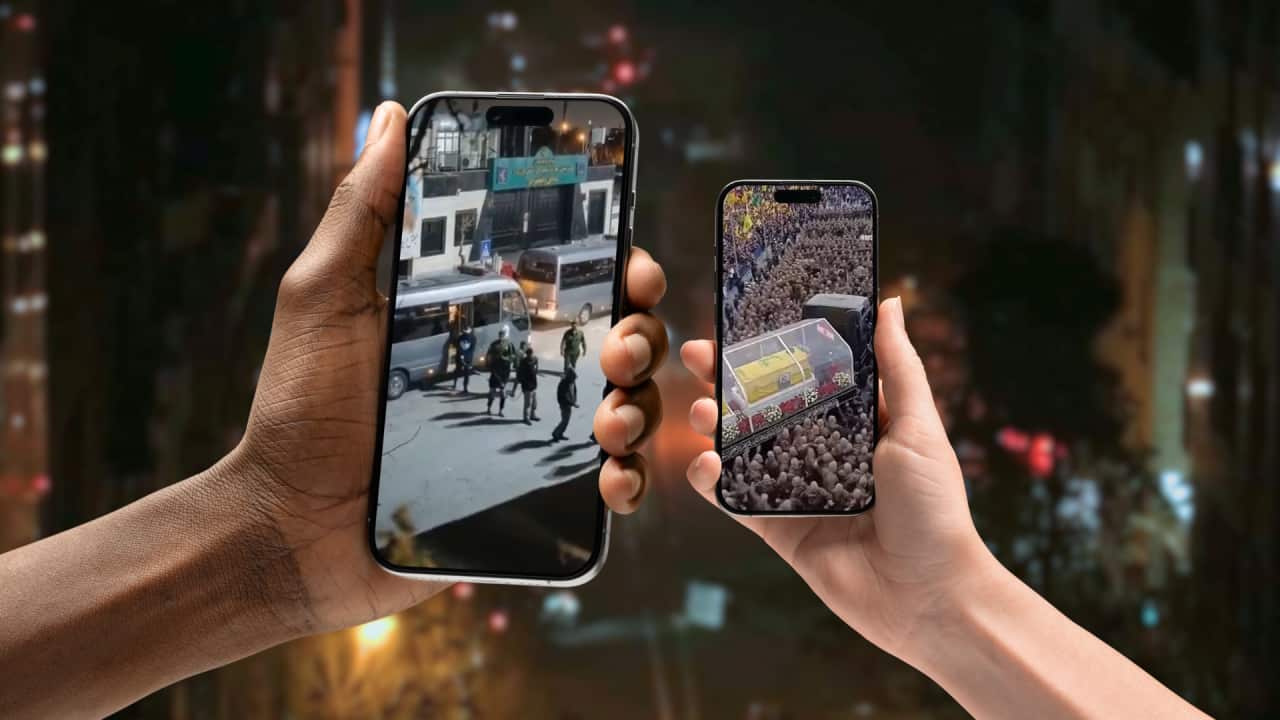
Niv Sadrolodabaee, an Iranian journalist, recently encountered this problem while investigating reports of mistreatment of political prisoners in Iran. While working on the story, Sadrolodabaee came across video footage that appeared to show prisoners being transported into Tehran’s notorious Evin prison, a facility long associated with the detention of political dissidents and human rights activists.
The timing seemed perfect. With ongoing internet blackouts across Iran—a tactic frequently employed by authorities during periods of political unrest to control information flow—verifiable footage from inside the country has become increasingly scarce and valuable.
“It seemed like somebody had filmed it with their phone, which is a pretty common thing in Iran,” Sadrolodabaee told SBS Examines. “People usually film protests with their phone, and Western media covers those videos.”
The footage showed prisoners exiting a truck while surrounded by guards—exactly the kind of visual evidence that could substantiate the concerns his sources had raised about prisoner treatment. For journalists covering Iran’s human rights situation, such footage is particularly valuable given the government’s tight control over information and denial of international monitoring of detention facilities.
However, something caught Sadrolodabaee’s attention before publication. Upon closer examination of the video, he noticed concerning inconsistencies.
“When they zoom in, you see someone disappearing from the video, and then you see someone walking in a very unusual way,” he explained. These visual anomalies prompted him to consult with an expert who confirmed his suspicions—the video was a sophisticated fake.
The revelation was particularly unsettling for Sadrolodabaee because the video purportedly showed an area near where he grew up. “I knew those parts of my town, and being almost misled by a video of my own hometown was a very concerning moment for me,” he said. “It was a massive reality check for me.”
This incident highlights the growing challenge facing journalists covering conflict zones and authoritarian regimes where direct access is limited. Artificial intelligence and deepfake technology have created a new landscape of misinformation that threatens to undermine legitimate reporting on human rights abuses and political developments.
The problem is particularly acute in coverage of the Middle East, where verification of information is already challenging due to limited press access, language barriers, and complex political dynamics. When combined with intentional information blackouts, journalists often must rely heavily on visual evidence and social media content to piece together events on the ground.
Media experts warn that the proliferation of fake videos is increasingly sophisticated, with AI-generated content becoming harder to distinguish from authentic footage. This creates a dual challenge: the risk of publishing misinformation and the potential for legitimate evidence to be dismissed as fake.
For news organizations covering regions like Iran, where the detention and treatment of political prisoners represent critical human rights concerns, the stakes of such verification are particularly high. False information can undermine advocacy efforts, while failure to report genuine abuses can leave victims without international attention.
This technological challenge comes at a time when Iran’s political prisoners have faced increasing pressure, with human rights organizations documenting overcrowding and deteriorating conditions in facilities like Evin prison, especially following widespread protests in recent years.
The incident underscores the growing need for journalists to develop enhanced verification techniques and collaborate with technical experts who can identify the subtle markers of AI-generated content. Several international news organizations have established specialized teams focused on digital verification, particularly for content emerging from conflict zones and countries with restricted press freedom.
As Sadrolodabaee’s experience demonstrates, even journalists with regional expertise and local knowledge must now navigate a media landscape where seeing is no longer necessarily believing.
Fact Checker
Verify the accuracy of this article using The Disinformation Commission analysis and real-time sources.

10 Comments
This highlights the challenges journalists face in reporting on sensitive political situations, especially when access to information is restricted. Verifying the authenticity of visual content is crucial, as even experienced reporters can be misled by sophisticated deepfakes. Maintaining high journalistic standards is essential to combat the rise of disinformation.
The use of AI-generated disinformation is a worrying trend that can undermine public trust in media. While technological advances enable more realistic fake footage, it’s vital for journalists to remain vigilant and employ rigorous verification processes. Fact-checking is the best defense against the spread of misinformation.
The use of AI-generated deepfakes to spread disinformation is a worrying trend that can have serious consequences, as seen in this case where even experienced journalists were misled. Fact-checking and cross-referencing multiple sources are essential to ensuring the accuracy and integrity of news reporting, particularly in regions with restricted access to information. Vigilance and adherence to high standards are key to combating the rise of misinformation.
This is a troubling example of how AI-powered deepfakes can be used to spread misinformation, even fooling experienced journalists. Verifying the authenticity of visual content is crucial, especially in sensitive political situations where access to information is restricted. Maintaining high journalistic standards is key to combating the rise of disinformation.
This is a concerning development. Fake video content can spread disinformation and mislead even experienced journalists. It’s crucial to verify the authenticity of any footage, especially during periods of unrest and internet blackouts. Fact-checking and due diligence are essential to maintain journalistic integrity.
This is a concerning development that highlights the growing threat of AI-generated disinformation. Journalists must remain vigilant and employ robust verification protocols to combat the spread of misleading content, especially in sensitive political situations where access to information is limited. Maintaining high journalistic standards is crucial to preserving public trust in the media.
The rise of AI-generated disinformation is a worrying trend that can have significant consequences, as evidenced by this case where even experienced journalists were misled. Fact-checking and cross-referencing multiple sources are essential to maintaining the integrity of news reporting, particularly in regions with limited access to information. Vigilance is key to combating the spread of misinformation.
This is a troubling development that highlights the need for increased vigilance and fact-checking in journalism, especially when reporting on sensitive political issues. The use of AI-generated deepfakes to spread disinformation is a serious concern that can undermine public trust in the media. Rigorous verification processes are crucial to ensuring the accuracy of reporting.
The use of AI-generated disinformation to mislead journalists is a worrying trend that undermines the public’s trust in the media. Fact-checking and rigorous verification processes are essential to upholding journalistic integrity, particularly in regions with limited access to information. Vigilance is key to preventing the spread of misinformation.
The increasing prevalence of AI-generated disinformation is a serious concern. Journalists must be extra diligent in verifying the authenticity of any footage, particularly during times of limited access and internet blackouts. Fact-checking and cross-referencing multiple sources are essential to upholding the integrity of reporting.