


Listen to the article
Nigeria Faces Three-Pronged Electoral Challenge Ahead of 2027 Elections, INEC Chairman Warns
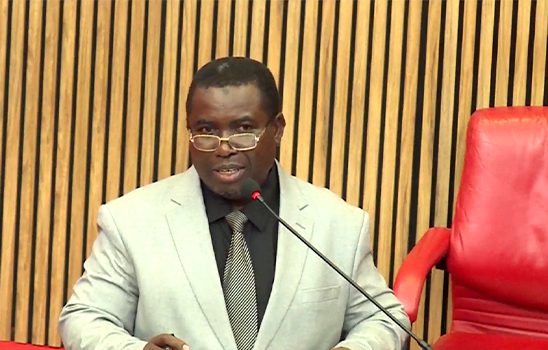
The Chairman of Nigeria’s Independent National Electoral Commission (INEC), Professor Joash Amupitan, has identified a “sophisticated triad” of electoral challenges confronting the country ahead of the 2027 general elections. Speaking yesterday at the 2nd annual meeting of the Alumni Association of the National Institute for Security Studies (AANISS) in Abuja, Amupitan highlighted the convergence of social media volatility, AI-driven disinformation, foreign information manipulation, and logistical deficits as key threats to electoral integrity.
The INEC chairman emphasized the intrinsic relationship between credible elections and national security, describing them as “two sides of the same coin of national stability.” He stressed that while Nigeria’s constitution, the newly enacted Electoral Act of 2026, and INEC regulations provide the legal framework for democratic processes, it is the security architecture that creates the enabling environment for these laws to function effectively.
“Without a secure environment, the sovereign will of the people is not just threatened; it would be silenced,” Amupitan warned.
The electoral body recently released the notice of election for the 2027 general elections, scheduling the Presidential and National Assembly elections for January 16, 2027, while Governorship and State Houses of Assembly elections are set for February 6, 2027. According to Amupitan, this timeline represents not just an administrative roadmap but a “security trigger” that requires careful planning and coordination among stakeholders.
Amupitan expressed particular concern about the intersection of digital threats with physical challenges such as insurgency and communal conflicts, noting that this combination widens the trust deficit among voters. The situation demands what he termed “surgical precision” from all stakeholders to address these challenges effectively.
“When these digital threats intersect with physical challenges like insurgency and communal strife, the trust deficit widens. It is our collective responsibility to close this gap with surgical precision,” he stated.
The electoral commission’s approach under Amupitan’s leadership is anchored on the supremacy of the Constitution and the Electoral Act. He explained that INEC is adapting to new statutory requirements that necessitate earlier and more robust security deployments. The commission is also leveraging technological innovations to safeguard electoral integrity.
“We are not merely watching the law; we are enforcing its technical safeguards—specifically the Bimodal Voter Accreditation System (BVAS) and the INEC Result Viewing Portal (IReV)—as the ultimate defense against electoral fraud,” Amupitan explained.
The INEC chairman emphasized that credible elections foster public trust in governance, which is crucial for national security. When citizens believe in the electoral process, they are more likely to accept outcomes, thereby reducing tensions that could lead to unrest. He called for collaboration among all stakeholders—INEC, security agencies, civil society organizations, and the electorate—to strengthen the systems that underpin Nigeria’s elections.
The timing of Amupitan’s warnings is significant, coming as Nigeria enters the early stages of preparation for the 2027 electoral cycle. The country’s electoral history has been marred by various challenges, including malpractices, violence, and vote trading, all of which undermine public confidence in the process.
Electoral integrity has become increasingly complex in the digital age, with social media and artificial intelligence presenting new frontiers for manipulation. Foreign information interference adds another layer of complexity to Nigeria’s electoral landscape, potentially threatening the sovereignty of the democratic process.
As Africa’s most populous nation and largest democracy, Nigeria’s electoral stability has significant implications for regional security and political development. The INEC chairman’s call for a collaborative approach to addressing these challenges reflects the growing recognition that electoral security requires a whole-of-society response rather than being the sole responsibility of the electoral commission or security agencies.
Fact Checker
Verify the accuracy of this article using The Disinformation Commission analysis and real-time sources.

16 Comments
The INEC chairman’s warning about the convergence of disinformation, logistics issues, and electoral threats is a sobering reminder of the challenges facing Nigeria’s democracy. Strengthening institutional capacity and public awareness will be crucial.
Agreed, this is a multifaceted challenge that requires a coordinated, whole-of-society response. Safeguarding the integrity of the 2027 elections should be a national priority.
The INEC chairman’s warning about the convergence of disinformation, logistics issues, and electoral threats is a sobering reminder of the challenges facing Nigeria’s democracy. Strengthening institutional capacity and public awareness will be crucial.
Agreed, this is a multifaceted challenge that requires a coordinated, whole-of-society response. Safeguarding the integrity of the 2027 elections should be a national priority.
The INEC chairman raises valid concerns about the potential for AI-driven disinformation to undermine the 2027 elections. Strengthening digital literacy and fact-checking efforts will be crucial in this regard.
Agreed, tackling AI-fueled disinformation will require a concerted, multi-stakeholder effort. Regulatory frameworks, tech solutions, and public education campaigns could all play a role in bolstering electoral resilience.
Interesting to see the INEC chairman highlight the interplay between electoral integrity and national security. Safeguarding the democratic process is indeed vital for Nigeria’s long-term stability and development.
Absolutely, the stakes are high when it comes to the 2027 elections. Amupitan is right to sound the alarm on the complex threats facing the electoral process. Vigilance and proactive measures will be essential.
Amupitan’s emphasis on the intrinsic relationship between credible elections and national security is a prudent perspective. Maintaining public trust in the electoral process is essential for Nigeria’s long-term political stability.
Absolutely, protecting the integrity of the 2027 elections should be a top priority for the Nigerian government and civil society. Addressing the complex technological, logistical, and disinformation challenges will be crucial.
Interesting to hear the INEC chairman highlight the intersection of technology, disinformation, and electoral integrity. Securing the 2027 elections will require a multifaceted approach to address these complex challenges.
I agree, the convergence of social media, AI, and logistics issues poses a real threat to free and fair elections. Vigilance and proactive measures will be critical to safeguarding the democratic process.
Amupitan is right to emphasize the connection between credible elections and national security. Maintaining public trust in the electoral system is essential for political stability and good governance.
Absolutely, protecting the integrity of elections should be a top priority. Addressing disinformation and logistical challenges will be key to ensuring the 2027 vote reflects the true will of the Nigerian people.
Interesting to see the INEC chairman highlight the interplay between electoral integrity and national security. Protecting the democratic process is indeed vital for Nigeria’s long-term stability and development.
I concur, the stakes are high when it comes to the 2027 elections. Amupitan is right to sound the alarm on the complex threats facing the electoral process. Vigilance and proactive measures will be essential.