


Listen to the article
Cuban Exiles’ Hopes and Concerns Rise Amid Possible U.S.-Cuba Negotiations
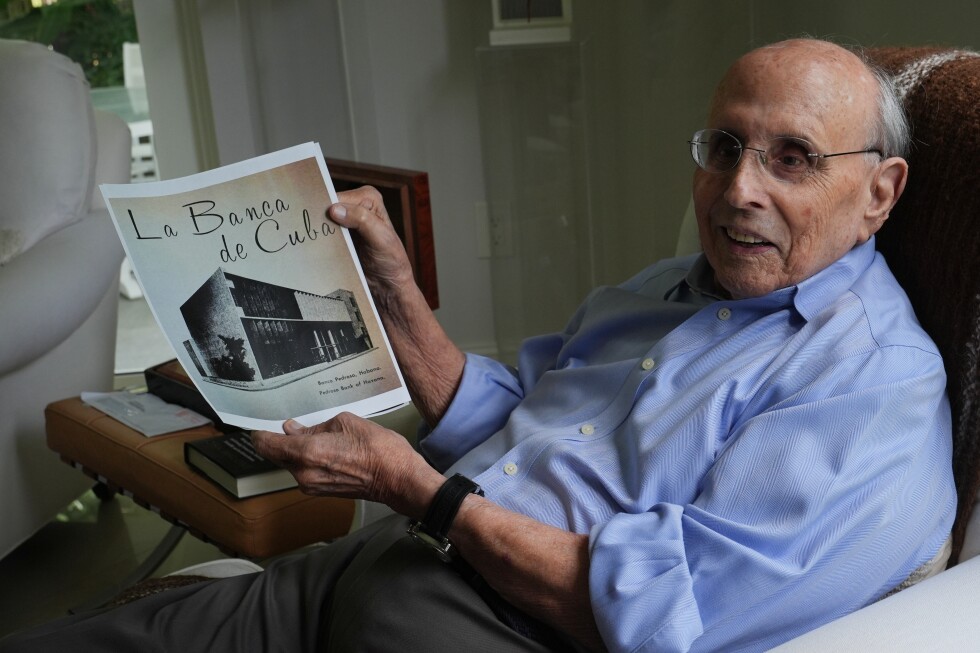
For Raul Valdes-Fauli, the memory remains vivid. In November 1960, an armed agent of Fidel Castro’s revolutionary government stormed into his family’s Pedroso Bank in Havana, brandishing a machine gun. The agent declared it “the people’s bank” and expelled the Valdes-Fauli family—who had roots in Cuba dating back to the 16th century—without allowing them to take even family photographs from their office walls.
“They called my father and uncle gusanos,” recalls Valdes-Fauli, now an attorney and former mayor of Coral Gables, Florida, using the derogatory Spanish term for “worms” that Castro coined for those fleeing the island.
Seven decades after Castro’s revolution dispossessed thousands of Cuban families, these painful histories are gaining renewed relevance. President Donald Trump’s threats of military intervention, coupled with a naval blockade restricting fuel shipments that has severely crippled Cuba’s already struggling economy, have led to negotiations between Washington and Havana. Many Cuban Americans believe 2026 could finally bring regime change to the communist-run island.
However, this cautious optimism is tempered by significant concerns, particularly in light of recent events in Venezuela. There, after ousting Nicolás Maduro, Trump formed partnerships with former Maduro allies, seemingly prioritizing oil industry deals over democratic reforms.
“I hope that he doesn’t do what he did in Venezuela, which is keep the thieves in power,” said Valdes-Fauli, who is married to a Venezuelan.
Among the most emotionally charged and complex issues in any potential U.S.-Cuba reconciliation are the hundreds of thousands of property claims from Cuban Americans whose assets were seized after Castro took power in 1959.
Nick Gutiérrez has dedicated years to this cause. As president of the National Association of Cuban Landowners in Exile, his home contains a collection of faded land titles, vintage photographs, and books documenting Cuba’s pre-revolutionary wealth distribution, including a torn copy of “The Owners of Cuba, 1958,” cataloging the 550 largest fortunes nationalized by Castro’s government.
“A lot of it just fell on deaf ears,” Gutiérrez said of his decades-long efforts to seek compensation for exiles. But with growing speculation about regime change, interest in these claims has surged, both among those who previously viewed litigation as futile and younger Cuban American entrepreneurs eager to participate in rebuilding their ancestral homeland.
“Now we’re talking about the existential issue of whether the Cuban dictatorship will survive until next month,” said Gutiérrez, whose parents fled Cuba two years before his birth.
Robert Muse, a Washington attorney specializing in U.S.-Cuba legal matters, describes the property claims situation as “a multiheaded hydra.” The most legally recognized claims are the 5,913 certified by the Justice Department in 1972, initially valued at $1.9 billion but now worth approximately $10 billion. These include assets seized from major corporations like ExxonMobil and Marriott International during Castro’s sweeping nationalization program.
Under U.S. law, resolving these claims is a prerequisite for fully normalizing economic and diplomatic relations with Cuba. However, the executive branch has authority to consolidate private claims for a lump-sum settlement as part of broader negotiations. Notably, Cuba has recently signaled willingness to discuss these claims, provided the conversation includes their counterclaims for damages caused by the U.S. trade embargo implemented in 1962.
Further complicating matters is Title III of the 1996 Helms-Burton Act, which allows Cuban exiles to sue companies “trafficking” in confiscated property. Previous presidents suspended this provision due to objections from U.S. allies doing business in Cuba. However, Trump activated it in 2019, resulting in approximately 50 lawsuits to date.
Two cases currently before the U.S. Supreme Court could potentially unleash more claims. Exxon is seeking $1 billion from Cuban state entities, while Delaware-based Havana Docks is suing four cruise lines that paid the Cuban government to use port facilities it once operated during the Obama-era diplomatic thaw.
Muse likens the legal risks surrounding Cuban investments to a “stalactite” formed over decades, deterring both investment and political compromise. “You can’t have a restitution remedy for hundreds of thousands of claimants,” he notes. “It’s unworkable.”
Nevertheless, if Cuba genuinely seeks to attract foreign investment, Gutiérrez believes the government has incentives to negotiate with Cuban Americans willing to invest in the country. He points to former Communist states in Eastern Europe that compensated for property seizures after the Cold War, facilitating economic recovery.
Muse suggests Trump’s business instincts, disregard for convention, and second-term political freedom could help navigate this complex situation. Trump’s approach to Venezuela, where he reportedly told oil executives to write off unpaid claims from asset seizures, may preview his Cuba strategy.
While Gutiérrez worries about Trump’s dealmaking impulses, he finds reassurance in the president’s longstanding relationships with Cuban American supporters. “Trump doesn’t have moral qualms of doing business with bad guys,” Gutiérrez observed. “But he knows how important this is to us, and that gives us some comfort he won’t sell us out.”
Fact Checker
Verify the accuracy of this article using The Disinformation Commission analysis and real-time sources.

8 Comments
It’s interesting to see the Trump administration taking a harder line on Cuba, even if it’s to appeal to the exile community in Florida. The potential for regime change is certainly an X-factor.
This is a complex situation with a lot of history and emotion involved. It will be interesting to see if these property claims can be resolved through negotiations, or if tensions flare up again.
This is a complex situation with a lot of history and emotion involved. I’m curious to see if the negotiations can make progress on the property claims, or if the tensions will remain unresolved.
Agreed, this is a sensitive issue with deep roots. Any resolution will require a lot of nuance and compromise from all sides.
The Trump administration’s threats raise the stakes, but also create an opportunity for a breakthrough on these long-standing property claims. It will be interesting to see how the negotiations unfold.
This is a delicate issue that touches on geopolitics, human rights, and economic interests. I hope the parties involved can find a constructive path forward that provides some measure of justice and closure.
The exiled Cubans have a very understandable desire to reclaim the properties and businesses their families lost during the revolution. However, the current Cuban government may be reluctant to undo those nationalizations.
You raise a good point. Any negotiations would need to carefully balance the rights of the exiles with the realities on the ground in Cuba today.