


Listen to the article
UK Inflation Rises to 3.3% as Middle East War Drives Fuel Prices Higher
UK inflation climbed to a three-month high of 3.3% in March, driven primarily by surging fuel costs as the ongoing conflict in Iran disrupts global energy supplies, the Office for National Statistics reported Wednesday.
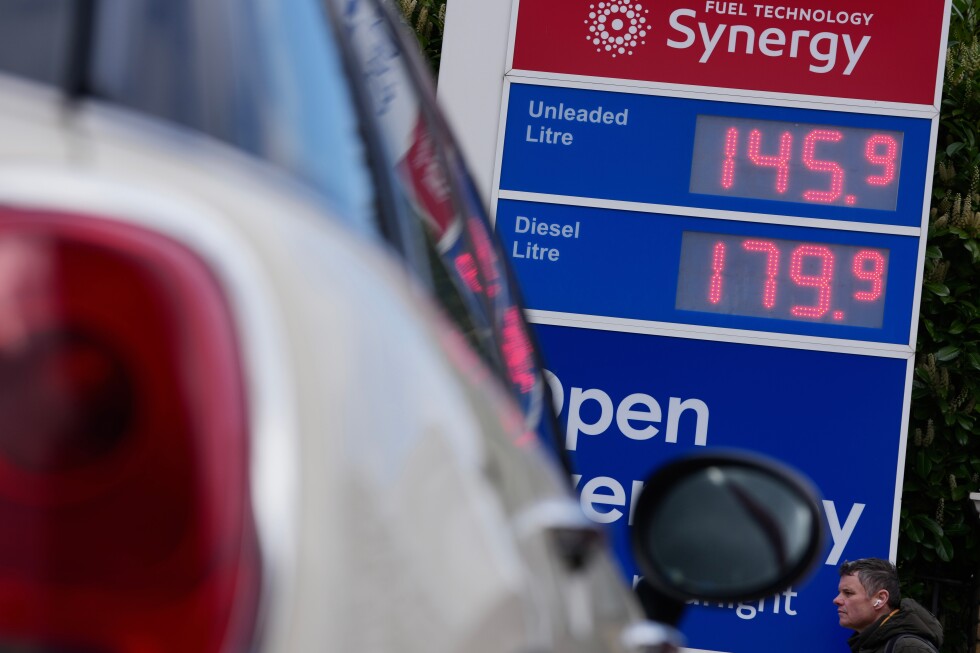
Motor fuel prices increased by 8.7% month-on-month, marking the largest jump since June 2022, shortly after Russia’s invasion of Ukraine. The inflation uptick also reflected higher airfares and food prices, both linked to rising energy costs.
Treasury chief Rachel Reeves acknowledged the war’s economic impact on British households, stating: “This is not our war, but it is pushing up bills for families and businesses.”
The inflation data comes as a setback to hopes for an improving cost-of-living situation. Before hostilities began on February 28, financial markets had anticipated the Bank of England would reduce its main interest rate from the current 3.75%, as inflation was expected to fall toward the 2% target this spring.
Instead, experts now project inflation could reach as high as 4% in coming months as higher energy prices filter through to household bills. However, most economists don’t foresee a return to the four-decade highs above 11% experienced after Russia’s 2022 invasion of Ukraine. Two key factors differentiate the current situation: oil and gas prices haven’t spiked as dramatically, and higher prevailing interest rates are helping contain consumer spending.
The Bank of England faces a challenging policy decision at its April 30 meeting. Policymakers are closely monitoring whether this inflation spike could spread throughout the economy through mechanisms like wage increases, potentially triggering a wage-price spiral.
Luke Bartholomew, deputy chief economist at Aberdeen asset management, suggests such concerns may be overstated: “It will be hard to see workers and firms being able to push through higher wages and prices, given the relative weakness of both the labor market and the British economy.” He added, “That should ultimately limit the size and extent of the coming inflation shock.”
The conflict’s economic impact centers on the strategic Strait of Hormuz, a critical maritime passage that has been largely closed to oil tanker traffic since fighting began. This disruption has created significant uncertainty in global energy markets, with oil prices fluctuating dramatically between $90-$100 per barrel in recent weeks, after briefly spiking even higher during the most intense fighting. Pre-war, oil prices had been relatively stable around $60 per barrel.
Financial markets remain on edge as the current ceasefire appears precarious. A swift resolution would help limit long-term economic damage, while prolonged hostilities could exacerbate inflationary pressures not just in the UK but across global economies dependent on Middle Eastern energy supplies.
For now, the consensus among economists suggests the Bank of England will maintain its current monetary policy stance, keeping interest rates unchanged while preserving flexibility to either raise or lower rates later in the year depending on how inflation trends develop and whether higher energy costs become embedded in broader price increases throughout the economy.
Fact Checker
Verify the accuracy of this article using The Disinformation Commission analysis and real-time sources.

13 Comments
Inflation at 3.3% is concerning, especially given the Bank of England’s 2% target. I wonder how long this elevated level will persist.
Agreed, the BOE will likely need to continue raising interest rates to try to bring inflation back under control.
It’s unfortunate to see UK inflation surge due to the war’s impact on energy prices. This will really test the government and central bank’s policy responses.
It’s concerning to see fuel and energy costs driving such a sharp rise in UK inflation. This will really squeeze household budgets at a difficult time.
Absolutely, the government and central bank will need to act decisively to support consumers and businesses through this period of high inflation.
3.3% is quite a jump in inflation. I wonder what impact this will have on consumer spending and the broader economic recovery in the UK.
The link between the war, rising fuel costs, and this jump in UK inflation is quite clear. It will be a difficult period for the economy.
Interesting that UK inflation is still rising despite the global uncertainty. I wonder how long this surge in fuel and energy costs will last, and what it means for the broader economy.
Yes, it’s a challenging situation for UK households and businesses. The impact of the war on global energy supplies is really being felt.
The 3.3% inflation rate is quite high, especially with the Bank of England’s 2% target. I hope they can find ways to bring these costs under control soon.
Agreed, the BOE will likely need to be aggressive with rate hikes to get a grip on this elevated inflation.
This surge in UK inflation is a real challenge. I hope policymakers can find ways to offset the impacts on households and businesses.
Yes, it will be critical for the government and BOE to coordinate their policy responses to mitigate the inflationary pressures.