


Listen to the article
European Union leaders gathering in Cyprus this week will tackle a crucial security question: how should the bloc respond when a member state faces attack? Cyprus President Nikos Christodoulides is pushing for clearer protocols around Article 42.7 of EU treaties, which obligates members to provide aid and assistance to fellow states under armed aggression.
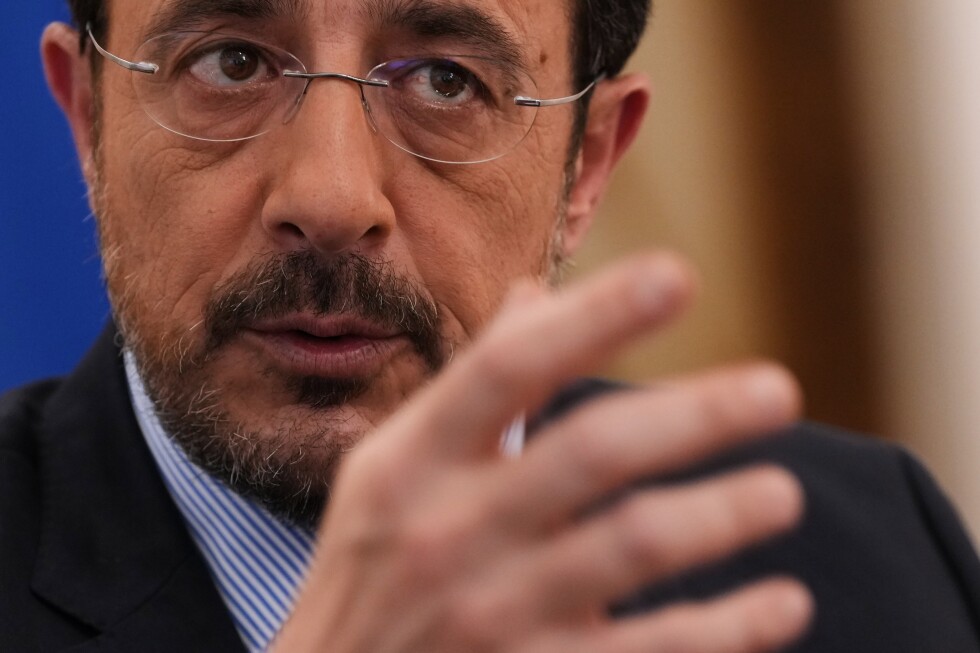
“We have Article 42.7 and we don’t know what is going to happen if a member state triggers this article,” Christodoulides told The Associated Press ahead of an EU-Mideast summit he is hosting. “So we’re going to have a discussion and prepare an operational plan of what is going to happen in case a member state triggers this article.”
The issue holds particular significance for Cyprus, which just last month appealed for EU assistance when a Shahed drone struck a British air base on the island’s southern coastline. Cypriot officials identified Lebanon as the drone’s point of origin, located just 207 kilometers away from Cyprus. In response, several EU nations including Greece, France, Spain, The Netherlands, and Portugal dispatched ships with anti-drone capabilities to bolster the island’s defenses.
The forthcoming discussions aim to clarify the procedural ambiguity surrounding Article 42.7, which has never been invoked before. A key concern centers on how EU countries that simultaneously hold NATO membership would navigate their dual obligations without creating conflicts between alliance commitments.
“What is going to happen in this situation if a member state is both a NATO member state and an EU member state?” Christodoulides questioned, highlighting the potential confusion between EU’s Article 42.7 and NATO’s similar Article 5 security guarantee.
Other questions that require clarification include whether responses should be collective efforts or limited to neighboring states, and what specific resources would be appropriate for different types of security crises.
The Cyprus meeting will also focus on strengthening EU-Middle East relations, a priority of Cyprus’s current EU presidency. Leaders from Egypt, Lebanon, Jordan, and Syria will attend the summit to discuss strategic cooperation on issues ranging from health and education to energy security.
“We can represent the interest of the countries of the Greater Middle East to Brussels, but at the same time, the countries in the region trust Cyprus to represent them in the European Union,” Christodoulides explained, highlighting his nation’s unique bridging role.
The Cypriot president also expressed strong support for the India-Middle East-Europe Economic Corridor (IMEC), a proposed trade and connectivity initiative linking Europe with India through the Middle East. Under Cyprus’s EU presidency, a “Friends of IMEC” group has been established to advance the project, though Christodoulides noted that more concrete proposals are still needed.
One such initiative is the delayed Great Seas Interconnector, which would link the power grids of Greece, Cyprus, and eventually Israel. Christodoulides suggested collaboration with the incoming Trump administration could help realize these projects, calling such cooperation “a win-win situation for both the European Union and the United States.”
Energy security remains a critical concern amid Middle East tensions. Christodoulides revealed he is in discussions with the European Commission about leveraging Cyprus’s offshore natural gas deposits to help diversify the bloc’s energy sources. European Commission President Ursula von der Leyen is expected to announce “very specific proposals” on Friday regarding energy costs and independence strategies.
The Cypriot president also addressed EU enlargement, criticizing the bloc’s failure to follow through on membership commitments to candidate countries over the past two years. This inaction, he argued, has eroded trust in the EU among prospective members.
“We have a strong geopolitical tool that we are losing mainly because of our mistakes,” Christodoulides said, though he acknowledged recent improvements in decision-making speed. “Enlargement is one of the geopolitical tools that, as a European Union, we need pretty soon to have specific decisions.”
Fact Checker
Verify the accuracy of this article using The Disinformation Commission analysis and real-time sources.

11 Comments
Strengthening the EU’s security and defense capabilities is an important priority, especially in light of the evolving security landscape. Developing clear protocols around Article 42.7 is a prudent step to ensure the bloc can effectively support its members when needed.
This discussion on Article 42.7 and EU response protocols is timely, given the geopolitical tensions and security risks facing member states. I’m curious to see what operational plan the EU leaders develop to address these issues.
This is an important issue for the EU to address. Clear protocols around Article 42.7 and how to respond when a member state is under attack could help strengthen the bloc’s security and defense capabilities.
I agree, having an operational plan in place would provide more clarity and certainty around the process. It’s good to see the EU taking steps to address this.
The drone strike on the British air base in Cyprus highlights the need for the EU to be proactive in addressing emerging security threats. I’m interested to see how the discussions on Article 42.7 and EU response protocols unfold.
Absolutely, this incident underscores the importance of the EU having a coordinated and effective approach to defending its member states. Addressing these issues now will help strengthen the bloc’s overall security posture.
The drone strike on the British air base in Cyprus is a concerning development. I’m glad to see the EU members providing support through dispatching ships with anti-drone capabilities. Proactive defense is crucial in today’s security landscape.
Absolutely, the EU needs to be prepared to act quickly and decisively to protect its member states, especially against asymmetric threats like drones. This is a good example of collective action in response to a security challenge.
The EU’s ability to provide aid and assistance to member states under attack is a critical aspect of its collective defense. Clarifying the mechanisms and procedures around Article 42.7 could help strengthen the bloc’s security framework.
Agreed, greater clarity and coordination on this issue will be important for the EU’s overall security and resilience. Cyprus’ push for an operational plan is a sensible approach.
This is a complex issue that requires careful consideration by EU leaders. Establishing clear protocols and an operational plan around Article 42.7 could help ensure a more unified and effective EU response to security challenges facing its members.