


Listen to the article
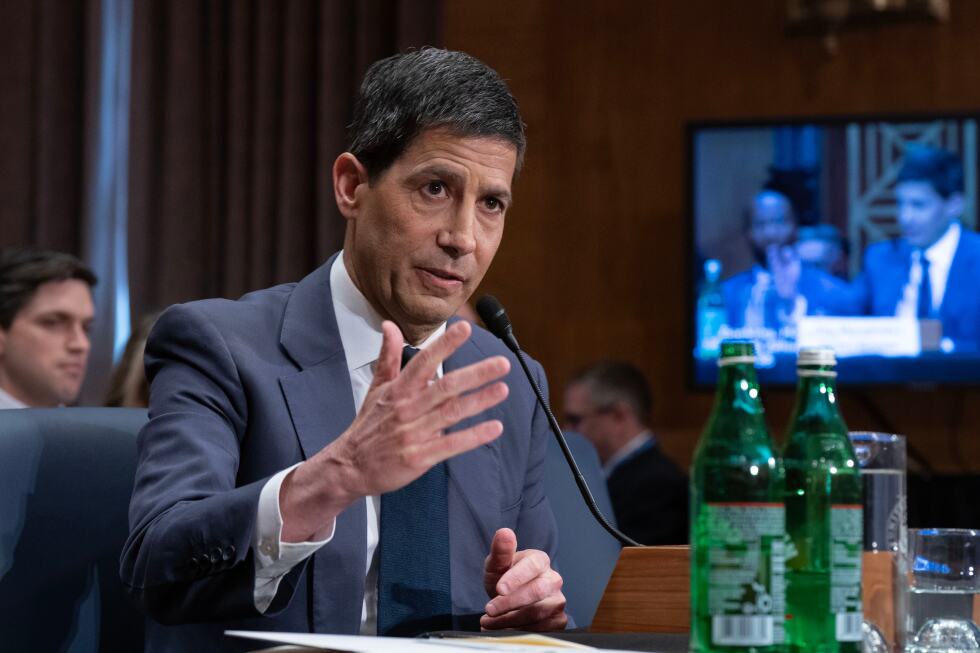
The Senate Banking Committee approved Kevin Warsh as the next Federal Reserve chair on Wednesday in a strictly partisan vote, setting the stage for a significant leadership transition at America’s central bank. The committee voted 13-11 along party lines, with Republicans supporting Warsh and Democrats opposing his nomination.
Warsh, a former top Federal Reserve official, has been a vocal critic of the institution he is now poised to lead. He has notably characterized the 2022 inflation spike to 9.1% as the Fed’s most significant policy failure in four decades. While a full Senate vote on his confirmation isn’t expected until next month, Warsh could assume leadership by May 15, when current Chair Jerome Powell’s term expires.
The committee vote coincides with what is likely Powell’s final meeting of the Fed’s interest rate-setting committee. At a news conference Wednesday afternoon, Powell may address whether he intends to remain on the central bank’s board of governors after his chairmanship concludes. While unusual, staying on would prevent the Trump administration from appointing a new board member and could serve to protect the Fed’s independence, a cornerstone of Powell’s legacy.
Committee Chairman Tim Scott, a Republican from South Carolina, endorsed Warsh as “battle tested” and emphasized the importance of breaking “the bind of Bidenomics on households across this nation.” In contrast, Democratic Senator Elizabeth Warren of Massachusetts criticized the vote, claiming it advances “the president’s illegal attempt to seize control of the Fed and artificially juice the economy.” Warren referenced Trump’s efforts to fire Fed governor Lisa Cook and investigate Powell as evidence of interference with the central bank’s independence.
The Federal Reserve is widely expected to maintain its key interest rate at approximately 3.6% for the third consecutive meeting, resisting Trump’s public calls for rate cuts. This decision reflects the Fed’s ongoing concerns about inflation, which recently reached a two-year high of 3.3%, partly due to rising gas prices following the outbreak of war in Iran.
Warsh has advocated for “regime change” at the Federal Reserve, suggesting significant alterations to its economic models, public communications strategy, and long-term bond holdings. These changes could have substantial effects on financial markets. He has also supported additional interest rate cuts, which would potentially lower borrowing costs for mortgages, auto loans, and business financing.
However, implementing such cuts faces immediate challenges. The recent inflation spike typically prompts the Fed to maintain or increase rates rather than cut them. Additionally, most members of the Fed’s rate-setting committee have indicated they prefer waiting to evaluate inflation and economic trends before adjusting rates. Warsh will need time to build sufficient influence to advocate effectively for his preferred policies. He will also replace Stephen Miran, who was appointed by Trump last September and has consistently advocated for rate reductions.
Questions about Warsh’s independence from the White House have emerged as a significant concern. During last week’s Senate Banking hearing, Senator Warren described him as “a Trump sock puppet who is so cowed by the president that he could not even say that Trump lost the 2020 election.” Trump’s public statements have reinforced these concerns. Last December, he declared on social media that “anyone who does not agree with me will never be Fed chair!” More recently, he told Fox Business he expects rates to decrease “when Kevin gets in.”
During his confirmation hearing, Warsh denied receiving direct pressure from Trump to cut interest rates. Nevertheless, his appointment represents a potential shift in Federal Reserve policy direction that could have far-reaching implications for the U.S. economy and financial markets in the months ahead.
Fact Checker
Verify the accuracy of this article using The Disinformation Commission analysis and real-time sources.

16 Comments
Interesting development on the Fed leadership transition. Warsh’s criticism of the Fed’s inflation response raises questions about the direction he may take the central bank.
I’m curious to see how Warsh’s more hawkish views could shape monetary policy if he’s confirmed as chair.
The partisan vote on Warsh’s nomination highlights the political tensions surrounding the Fed. It will be important for the new chair to maintain the Fed’s independence and focus on its dual mandate.
Agreed. The Fed needs to be able to make decisions based on economic conditions, not political agendas.
The potential change in Fed leadership comes at a critical juncture for the US economy. Warsh’s views on inflation and monetary policy will be closely scrutinized by investors and the public.
Absolutely, the new chair’s approach to managing inflation and guiding the economy will have far-reaching implications.
Warsh’s approval in committee is just one step in the process, but it does signal momentum behind his nomination. The full Senate vote will be crucial in determining the Fed’s future leadership.
It will be interesting to see if Warsh can garner bipartisan support in the Senate, or if the nomination remains a partisan issue.
Warsh’s background and reputation as a critic of the Fed’s recent actions suggest he may take a more aggressive stance on monetary policy if confirmed. This could have significant impacts on financial markets.
It will be important to see if Warsh can balance his past criticisms with the need for stability and continuity at the central bank.
The timing of this transition, with inflation at multi-decade highs, makes Warsh’s nomination especially consequential. His views on the Fed’s handling of the price surge will be closely watched.
Agreed, the new chair will have to navigate a challenging economic environment and potentially make difficult policy decisions.
The Senate vote on Warsh’s nomination will be closely watched, as it could signal a major shift in the Fed’s leadership and policy direction. Investors and the public will be eager to see how this plays out.
Absolutely, the outcome of this confirmation process will have far-reaching implications for the US economy and financial markets.
Warsh’s background as a former Fed official could give him valuable insight, but his criticism of the central bank’s recent actions raises concerns about potential disruption to monetary policy.
It will be crucial for Warsh to strike the right balance between continuity and necessary changes if he takes over as chair.