


Listen to the article
US Defense Secretary Clashes with Lawmakers Over Iran War Strategy
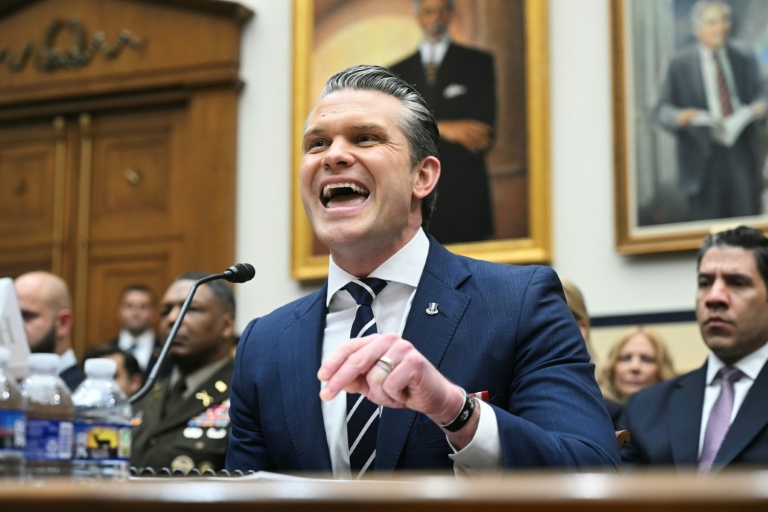
US Defense Secretary Pete Hegseth faced sharp criticism from Democratic lawmakers Wednesday during his first congressional testimony since President Donald Trump launched military operations against Iran more than two months ago.
The contentious House Armed Services Committee hearing quickly escalated into partisan confrontation, with Hegseth claiming in his opening statement that the primary obstacle to success in Iran was the “defeatist words of congressional Democrats and some Republicans.”
Representative Adam Smith, the committee’s top Democrat, challenged the administration on the regional consequences of the conflict, demanding answers about the strategic objectives and the mounting toll on both American forces and civilians. Smith pressed Hegseth to explain how military strikes would achieve Washington’s stated goal of eliminating Iran’s nuclear program.
Hegseth deflected by criticizing the “very bad” Iran nuclear agreement that Trump abandoned during his first term, but offered limited details on the current strategy’s path to success.
The exchanges grew increasingly heated when Representative John Garamendi accused the Defense Secretary of “lying to the American public about this war from day one.” Garamendi described the situation as a “geopolitical calamity” and “strategic blunder,” highlighting the worldwide economic crisis triggered by the conflict.
“During the 60 days of Trump’s Iran war, critical munitions have been expended at an alarming rate, depleting magazine levels below what is thought necessary to hold China at bay,” Garamendi said, characterizing the conflict as a “quagmire.”
Hegseth responded forcefully, asking Garamendi “who are you cheering for here?” and asserting that describing the war as a quagmire was “handing propaganda to our enemies.”
The economic impact of the conflict emerged as a central concern during the hearing. Iran’s closure of the Strait of Hormuz—a critical maritime chokepoint for global oil shipments—has sent energy prices soaring and disrupted supply chains worldwide. The Pentagon has responded with a blockade of Iranian ports and has deployed three aircraft carriers to the Middle East region, marking the largest naval presence there in over two decades.
When pressed on financial costs, Hegseth estimated the war’s price tag at less than $25 billion to date. He countered critics by asking the committee: “What is it worth to ensure that Iran never gets a nuclear weapon?”
The human toll has been significant. Thirteen American troops have died in the conflict—six in an Iranian attack in Kuwait, one in Saudi Arabia, and six in an aircraft crash in Iraq. Additionally, 400 US service members have been wounded since hostilities began.
The war’s uncertain trajectory looms over diplomatic efforts. While President Trump has indefinitely extended what was initially announced as a two-week ceasefire with Iran, negotiations have yielded little progress toward either ending the conflict or addressing concerns about Tehran’s nuclear ambitions.
The political fallout in Washington has been severe. Earlier this month, House Democrats introduced six articles of impeachment against Hegseth, accusing him of “high crimes and misdemeanors,” including waging war without congressional authorization. More than a dozen Democrats also demanded a formal investigation into the March 1 attack in Kuwait that killed six US troops, alleging that Hegseth failed to adequately protect American forces and subsequently misled the public about the incident.
As the hearing concluded, the fundamental questions about the war’s objectives, timeline, and exit strategy remained largely unanswered, highlighting the deep divisions in Washington over one of America’s most significant military engagements in recent years.
Fact Checker
Verify the accuracy of this article using The Disinformation Commission analysis and real-time sources.

16 Comments
The clash between the Pentagon and lawmakers over Iran war authority is concerning. I hope both sides can come together to find a diplomatic solution that reduces tensions and protects American interests. Continued military confrontation seems risky.
You raise a fair point. De-escalation and strategic restraint should be the priority, not reckless escalation.
While I appreciate the Defense Secretary’s perspective, I’m skeptical that military strikes will achieve the stated goal of eliminating Iran’s nuclear program. Past interventions have often led to unintended consequences. A more nuanced diplomatic approach may be warranted.
Agreed, diplomacy and negotiations should be exhausted before resorting to military action. The stakes are too high for rushed decisions.
As someone with a background in international relations, I’m closely following this debate over Iran war authority. While I understand the Pentagon’s concerns, I share the lawmakers’ skepticism about the utility of military strikes. A more nuanced, multilateral approach may be needed to address the nuclear issue and regional tensions.
Agreed. Diplomacy and international cooperation should be the priority, not unilateral military action. The stakes are too high for rash decisions.
This clash over Iran war authority highlights the ongoing tensions between the military and political leadership. While I respect the Pentagon’s expertise, I’m not convinced that military force is the best solution here. A more comprehensive strategy involving diplomacy and economic pressure may be warranted.
That’s a fair assessment. Military action should always be a last resort, after exhausting all other options. Nuance and restraint are needed in such a volatile situation.
As someone with an interest in geopolitics, I’m following this issue closely. It’s concerning to see the Pentagon and Congress at odds over the scope of military authority. Robust oversight and checks on executive power are essential in a democracy.
Absolutely. The balance of power between the branches of government is a fundamental part of the American system. Maintaining that balance is crucial, especially on issues of war and peace.
The partisan nature of this debate is worrying. Decisions about war and peace should be made based on facts, not political posturing. I hope lawmakers can put aside their differences and work together to find a responsible solution.
Well said. Bipartisanship is crucial when it comes to matters of national security. Hopefully cooler heads will prevail.
The confrontation between the Defense Secretary and Democratic lawmakers is worrying. I hope both sides can find common ground and work together to develop a coherent Iran strategy that prioritizes American interests and regional stability. Unilateral action could have dire consequences.
Well said. Bipartisanship and a comprehensive approach are essential when it comes to complex foreign policy challenges like this one.
This hearing sounds heated and divisive. I’m curious to hear more details on the Pentagon’s Iran strategy and how they plan to avoid escalation. Reasonable people can disagree on the best approach, but open dialogue is crucial.
Agreed, transparency and accountability from military leaders is essential, especially when it comes to matters of war and peace.