


Listen to the article
Federal Reserve at Crossroads as Powell Presides Over Likely Final Meeting
Wednesday marks a pivotal moment for the Federal Reserve as Chair Jerome Powell prepares to lead what could be his final meeting while a Senate committee is expected to advance his replacement’s nomination.
Powell, whose term as chair ends May 15, will preside over the meeting and hold a news conference where he may address speculation about his unusual potential decision to remain on the Fed’s board of governors after his chairmanship concludes. If Powell chooses this path, he would be the first chair since 1948 to stay on the board after their leadership term ended.
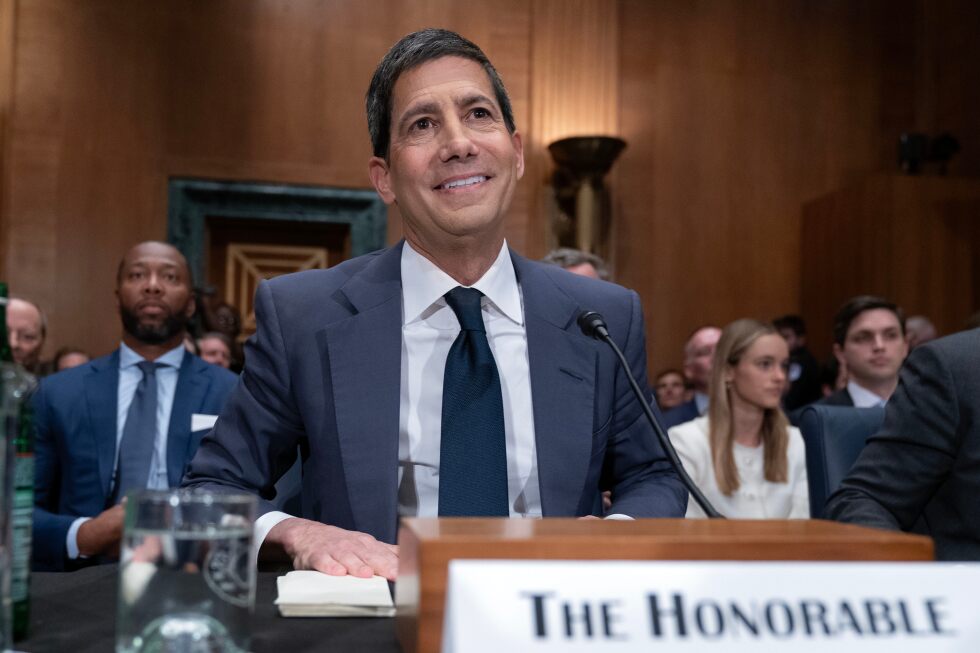
Meanwhile, the Senate Banking Committee is set to vote on Kevin Warsh’s nomination as the next Fed chair. The vote is expected to follow party lines, with the full Senate taking up the nomination next month. Warsh, a former top Fed official nominated by President Donald Trump in January, has previously echoed Trump’s calls for interest rate cuts, raising concerns among Democratic lawmakers about his independence.
The potential leadership transition comes during a particularly challenging economic environment. The Fed is widely expected to maintain its benchmark interest rate at 3.6% for a third consecutive meeting. Most policymakers believe this level can help cool inflation without significantly harming employment or economic growth.
Powell’s possible decision to remain on the board carries significant implications. By staying, he would deny Trump the opportunity to appoint his replacement and fill another seat on the seven-member board, where three governors are already Trump appointees. This move would align with Powell’s emphasis on protecting Fed independence throughout his tenure.
However, Powell’s continued presence could create what analysts have dubbed a “two Popes” scenario, potentially increasing divisions among policymakers if some members choose to align with Powell rather than Warsh. This dynamic could complicate the Fed’s decision-making process and policy implementation.
The leadership uncertainty emerges amid conflicting economic signals. Inflation has jumped to 3.3%, a two-year high, partly due to rising gas prices stemming from the ongoing war in Iran. This inflationary pressure complicates any potential interest rate cuts, as the Fed typically maintains or raises rates when inflation worsens.
Simultaneously, the job market presents a mixed picture. Hiring has significantly slowed, frustrating job seekers, which would normally prompt the Fed to lower rates to stimulate economic activity. However, layoffs remain low, with companies adopting what economists describe as a “low-hire, low-fire” strategy. The unemployment rate actually declined slightly to 4.3% in March from 4.4% previously.
Many Fed officials have indicated that with unemployment rates remaining relatively low, there’s less urgency to cut rates to boost hiring and spending. This stance reflects the central bank’s dual mandate of maintaining price stability while supporting maximum employment.
Economists will closely watch whether the Fed modifies its post-meeting statement on Wednesday to indicate that future rate movements could go in either direction. Currently, the statement suggests the next move would be a cut. However, according to minutes from the March meeting, many members of the Fed’s rate-setting committee support considering a rate hike, though likely not a majority.
The Fed’s decision-making process is further complicated by the need to assess the economic impact of the Iran conflict, with most policymakers preferring to wait and evaluate before making significant policy changes.
As Powell potentially concludes his chairmanship, his legacy will be defined not only by navigating the economy through the pandemic but also by his emphasis on Fed independence—a principle that may influence his decision about remaining on the board during a challenging transition period.
Fact Checker
Verify the accuracy of this article using The Disinformation Commission analysis and real-time sources.

12 Comments
The market will be closely watching Powell’s final meeting and his comments on the future leadership of the Fed. Warsh’s nomination raises questions about the Fed’s independence, which will be an important consideration as the Senate reviews his candidacy.
Given the current economic uncertainties, the Fed leadership will need to balance price stability and employment goals. Powell’s potential decision to stay on the board could provide some continuity, but Warsh’s views may signal a shift in policy direction.
This is a critical juncture for the Fed as it navigates high inflation and the risk of recession. Powell’s legacy and Warsh’s nomination will be closely scrutinized, as the market and the public seek a steady hand at the helm of the central bank.
The potential leadership transition at the Fed could have significant implications for the direction of monetary policy, which will be closely watched by investors and the public alike.
The future of the Fed is in focus, with Powell’s decision and Warsh’s nomination raising questions about the central bank’s independence and policy direction. Maintaining credibility and stability will be paramount as the Fed addresses the current economic challenges.
Investors will be closely monitoring the Senate committee’s vote on Warsh’s nomination, as it could signal a shift in the Fed’s approach to monetary policy.
This is a critical juncture for the Federal Reserve, with the potential leadership transition raising questions about the central bank’s independence and policy direction. Maintaining public trust and credibility will be crucial as the Fed navigates the current economic environment.
The market will be closely watching Powell’s final meeting and how his potential decision to stay on the board could impact the Fed’s policy decisions going forward.
This is an interesting and consequential moment for the Fed. Powell’s potential decision to stay on the board after his term as chair ends would be quite unusual. It will be worth watching how the Senate committee vote on Warsh’s nomination goes, and whether concerns about his independence are borne out.
The Fed is navigating a challenging economic environment, so the leadership transition will be crucial. Powell’s experience and Warsh’s views on interest rates could have a significant impact on the Fed’s policy decisions.
The future of the Federal Reserve is in focus, with Powell’s potential decision and Warsh’s nomination sparking concerns about the central bank’s independence. Maintaining a steady, credible hand at the helm will be crucial as the Fed addresses the current economic challenges.
Investors will be closely monitoring the Senate committee’s vote on Warsh’s nomination, as it could signal a shift in the Fed’s approach to monetary policy and its impact on the markets.