


Listen to the article
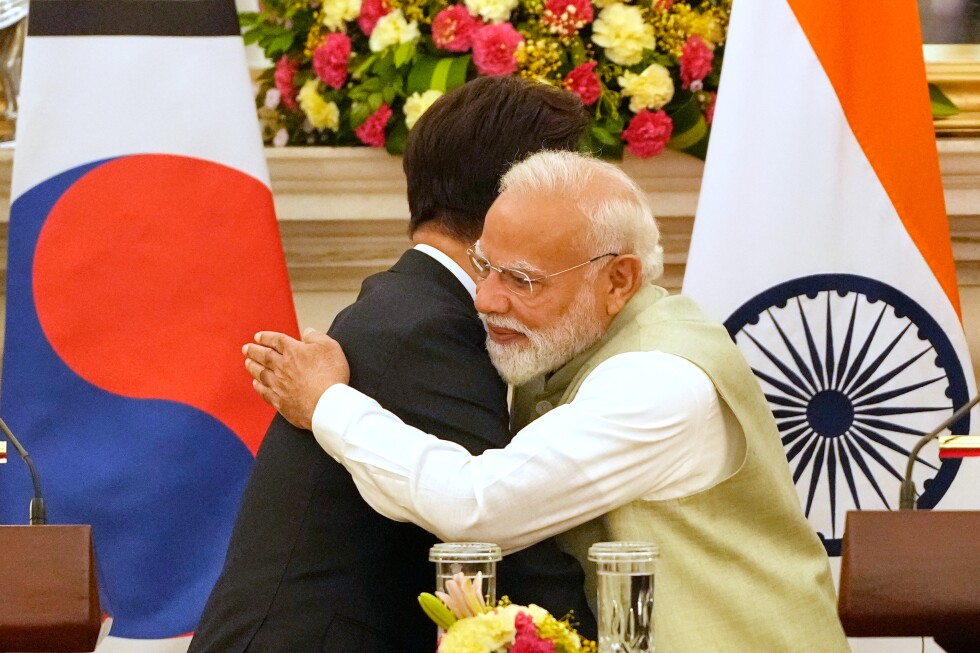
South Korean President Lee Jae Myung and Indian Prime Minister Narendra Modi announced ambitious plans to nearly double bilateral trade between their nations during a high-level meeting in New Delhi on Monday.
The leaders set a target to increase trade from the current $27 billion to $50 billion by 2030, signaling a significant deepening of economic and strategic ties between the two Asian powers. This commitment comes at a critical time when both nations are navigating global economic uncertainties and supply chain vulnerabilities.
“India and South Korea are going to transform their trusted ties into a futuristic partnership,” Modi declared during the meeting, emphasizing the forward-looking nature of their cooperation.
The talks focused on strengthening economic resilience through improved supply chains, enhanced market access, and increased bilateral investment. Both leaders agreed to significantly upgrade cooperation across multiple strategic sectors, including shipbuilding, defense, and artificial intelligence—areas where South Korea holds significant technological expertise.
Lee highlighted that the partnership would extend to advanced manufacturing and sensitive domains such as critical minerals and nuclear energy. These areas have gained strategic importance globally as countries race to secure resources essential for technological development and energy security.
The South Korean President also announced plans to increase imports of naphtha, a crucial crude-oil derivative, from India. This strategic move aims to diversify South Korea’s supply sources and mitigate potential disruptions linked to ongoing tensions in the Middle East. India currently accounts for approximately 8% of South Korea’s naphtha imports, a figure likely to rise following this agreement.
The timing of this enhanced partnership is significant as global supply chains continue to face pressures from multiple fronts, including the conflict in the Middle East and lingering effects of pandemic-related disruptions. By strengthening ties, both nations aim to build resilience against external economic shocks.
For India, the expanded partnership aligns with Modi’s “Make in India” initiative and broader goals to position the country as a manufacturing hub and reliable supply chain partner. South Korean investments could accelerate technology transfer and manufacturing capabilities in critical sectors.
For South Korea, India represents not only a massive consumer market but also a potential manufacturing base that could help Korean companies diversify their production networks beyond China, where geopolitical tensions and rising labor costs have prompted many businesses to seek alternatives.
The partnership also has geopolitical dimensions. Both nations share concerns about China’s growing economic and military influence in the Asia-Pacific region. Closer India-South Korea ties could serve as a counterbalance to Beijing’s assertiveness while creating a more integrated economic network among democracies in the region.
Trade experts note that achieving the ambitious $50 billion target will require addressing several existing barriers, including tariff issues, regulatory differences, and infrastructure gaps. The countries will need to implement specific policy measures to streamline trade procedures and create a more conducive environment for cross-border investment.
Following the conclusion of his visit to India, President Lee is scheduled to travel to Vietnam, another rapidly growing Asian economy, as part of South Korea’s broader strategy to diversify its economic partnerships across the region.
The India-South Korea partnership, if successfully implemented, could emerge as a model for economic cooperation between major Asian economies seeking to navigate the complex geopolitical landscape while addressing shared challenges related to technology development, resource security, and sustainable growth.
Fact Checker
Verify the accuracy of this article using The Disinformation Commission analysis and real-time sources.

9 Comments
It’s notable that this announcement comes at a time when both nations are navigating economic challenges. This partnership could provide a much-needed boost to their domestic mining and materials sectors.
A fair point. Strengthening regional economic ties is a smart strategic move in these uncertain times.
A $50 billion trade target by 2030 is ambitious, but it signals the strategic importance both countries are placing on this partnership. It will be interesting to see how this affects global commodity flows and prices going forward.
Strengthening cooperation in areas like shipbuilding, defense, and AI could have interesting implications for the mining industry as well. I wonder what kind of technological innovations might emerge from this partnership.
This partnership could be a game-changer for the global mining industry. I’m curious to see how it might shift the geopolitical dynamics around critical mineral supply and demand.
The focus on advanced manufacturing and sensitive domains like AI is intriguing. I wonder how this might impact the development and adoption of new mining technologies in the years ahead.
This is exciting news for the mining and commodities sectors. Deepening economic ties between major Asian economies like South Korea and India could lead to more stable and diversified supply chains for critical minerals.
The focus on economic resilience and supply chain stability is prudent given recent global uncertainties. This partnership could help insulate both countries from external shocks that impact commodity markets.
Absolutely, diversifying trade relationships is crucial in today’s volatile global environment.