


Listen to the article
Northeast Farmers Face Challenges as Temperature Swings Threaten Crops
An unexpected shift from unseasonably warm to freezing temperatures across the Northeast has created significant challenges for flower and fruit farmers, forcing many to adjust their harvesting schedules or risk losing crops entirely.
The temperature rollercoaster began when the region experienced an unusually warm first half of April. Cities including Boston saw temperatures climb into the high 70s (around 26 Celsius), while New York, Philadelphia, and Washington, D.C. reached the 90s (around 32 Celsius). By weekend’s end, temperatures had plummeted into the 50s (around 10 Celsius), with some areas in New England even experiencing snow showers.
The National Weather Service extended freeze warnings through Monday night and Tuesday morning for parts of Ohio, Pennsylvania, Virginia, Maryland, and North Carolina, prolonging concerns for vulnerable crops.
At Apple Hill Orchards in Ohio, which encompasses about 80 acres in Mansfield and 110 acres in Fredericktown, the warm weather prompted peach and apple trees to bud early. When temperatures subsequently dropped into the low 20s (around minus 5 Celsius), one variety of peach was destroyed completely.
“Farming is farming, and you never know what you’re gonna get, but we had a pretty good bloom, so we were expecting a pretty good crop,” said owner Anne Joudrey. While expressing disappointment over the lost peach variety, she remained cautiously optimistic about her apple crop, noting that the trees’ placement on high ground, which allows cold air to drain away, might help protect them from frost damage.
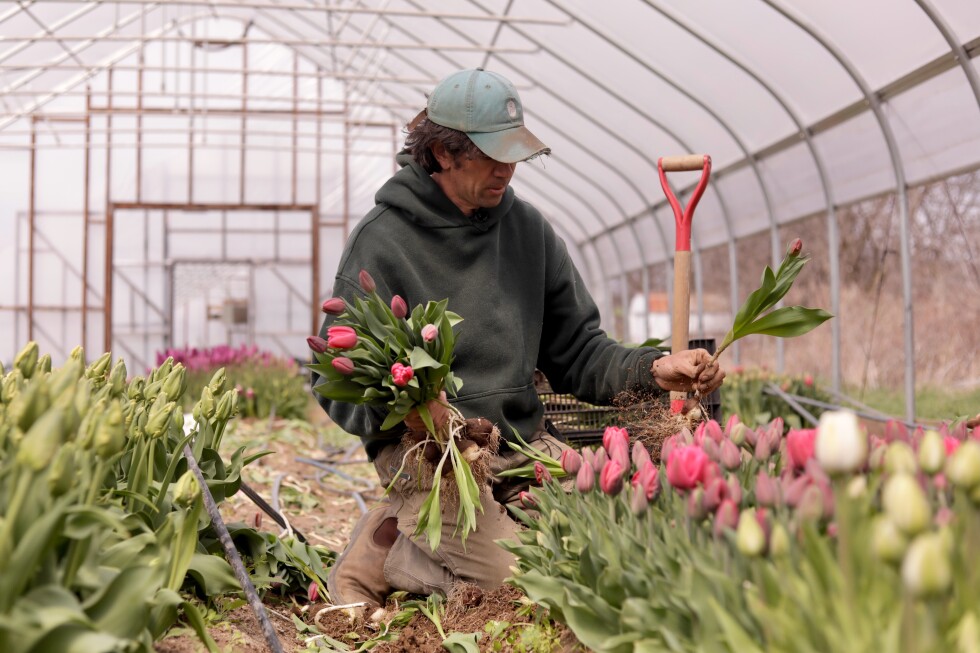
In Vermont, Gregory Witscher, owner of Understory Farm in Bridport, faced a different challenge with his cut flower operation. Tulips intended for Mother’s Day sales in mid-May have already bloomed in the farm’s greenhouses due to the early warm spell.
“That just means that we have to harvest them all at the same time,” Witscher explained. “We have to harvest them and store them with the bulbs on in crates in a walk-in cooler for longer.”
Witscher, who cultivates approximately 50 varieties of flowers for wholesale markets, emphasized that weather fluctuations require adaptability. He noted that it’s becoming increasingly common for small vegetable and flower farms to invest in protective equipment such as row covers, heaters to shield plants from cold snaps, or shade cloth to mitigate extreme heat.
“With the hot weather and then the cold weather, I think it’s intense, and it makes things challenging,” he said. “The longer I do this, the more I want to have as many options as possible and have a lot of tools and resources available to be extremely nimble.”
While frost events aren’t unusual during spring in the Northeast—the average date of the last frost ranges from mid-April to early June according to the Northeast Regional Climate Center at Cornell University—the rapid transition from summer-like temperatures to freezing conditions creates particular challenges for agricultural planning.
These temperature swings represent a growing concern for the region’s agricultural sector, which contributes billions to the local economy. Fruit orchards are particularly vulnerable to late frosts following warm periods, as trees that have already flowered can suffer significant damage when temperatures drop below freezing.
For consumers, these weather challenges could potentially affect the availability and pricing of locally grown fruits and flowers in the coming months, particularly for early-season varieties that were furthest along in their development when the cold snap hit.
Fact Checker
Verify the accuracy of this article using The Disinformation Commission analysis and real-time sources.

5 Comments
Wow, that’s really tough for those flower and fruit farmers. Sudden temperature swings like that must be incredibly stressful and damaging to their crops. I hope they’re able to adjust and find ways to protect their harvests despite the unpredictable weather.
Agreed, the unpredictability of the weather is a major challenge for farmers these days. Diversifying crops and adopting climate-resilient farming practices could help them mitigate the risks.
It’s really worrying to see how much these weather extremes are disrupting food production. I hope the affected farmers can get the support they need to bounce back from this season’s losses. Reliable access to nutritious, locally-grown food is so important for communities.
This is a good example of how climate change is impacting agriculture, even in unexpected ways. Farmers will need to be increasingly adaptable to survive these kinds of rapid temperature fluctuations. I wonder what other strategies they could explore to protect their crops?
Good point. Investing in climate-controlled greenhouses or cold storage facilities could help insulate them from temperature swings. And breeding more resilient crop varieties could also be part of the solution.