


Listen to the article
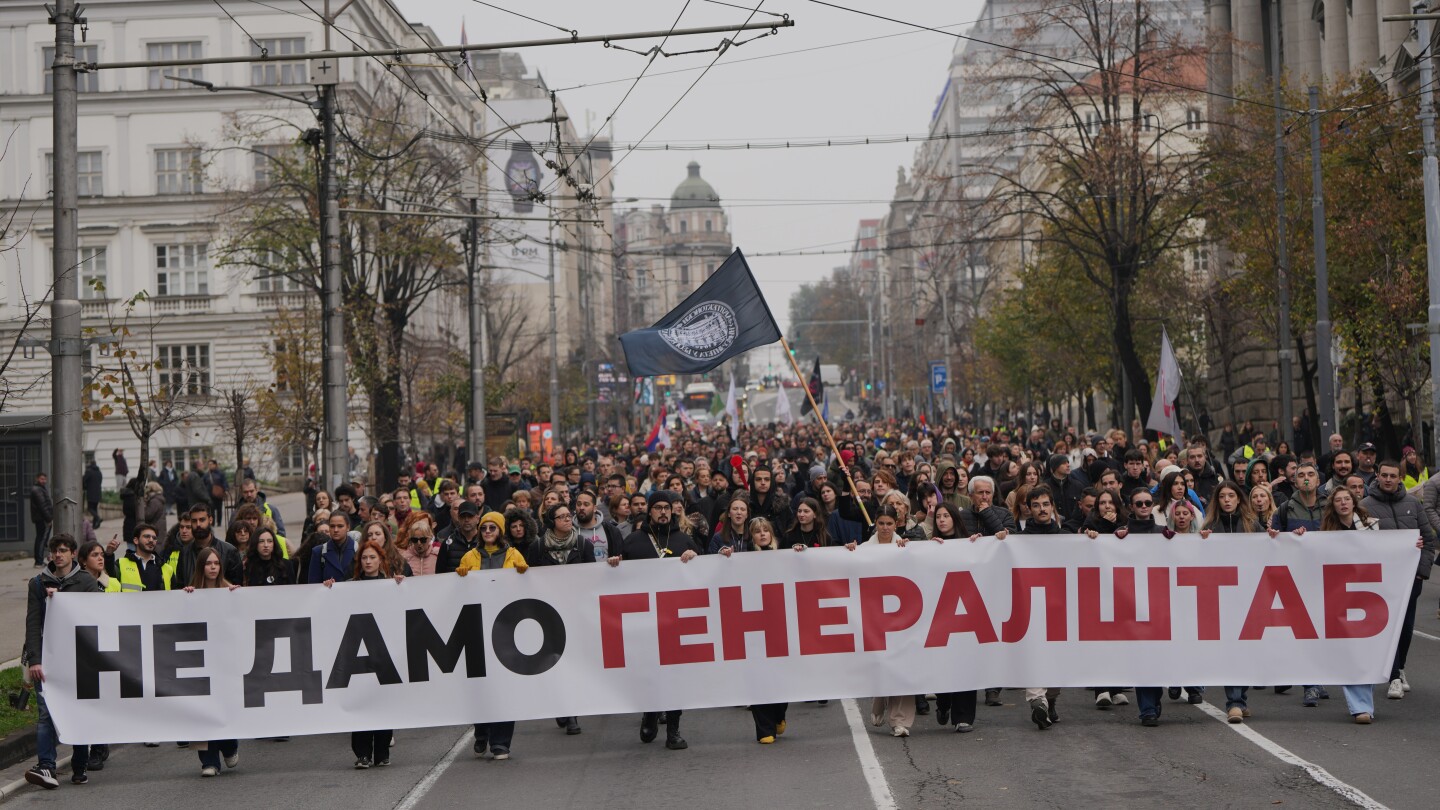
Thousands of protesters formed a human shield around a bombed military complex in Belgrade on Tuesday, vowing to protect it from being transformed into a luxury development by a company with ties to Jared Kushner, son-in-law of former U.S. President Donald Trump.
The demonstration saw mostly young protesters encircling the partially destroyed buildings in Serbia’s capital, drawing a symbolic red line around the site. The complex was damaged during NATO’s 1999 bombing campaign and now faces demolition under a controversial $500 million redevelopment plan backed by President Aleksandar Vucic’s government.
“This is a warning that we will all defend these buildings together,” declared one student protester. “We will be the human shield.”
The project, which would transform the site into a high-rise hotel with offices and shopping areas, has sparked significant opposition from architectural experts, preservation advocates, and ordinary citizens. Despite this resistance, Serbian lawmakers passed special legislation last week to clear legal obstacles standing in the way of construction.
President Vucic’s administration, which has cultivated close ties with the Trump family, argues the development would strengthen the economy and diplomatic relations with the United States. This comes at a time when Serbia faces 35% tariffs on exports to America and sanctions against its Russian-controlled oil monopoly.
Critics maintain the complex represents an important architectural monument from Yugoslavia’s mid-20th century period and symbolizes resistance to the NATO bombing campaign, which many Serbians still view as an unjustified act of aggression against their country.
The controversy intensified last year when the Serbian government stripped the complex of its protected heritage status and signed a 99-year lease agreement with Kushner-affiliated Affinity Global Development. The legitimacy of this arrangement came into question after organized crime prosecutors launched an investigation into allegations that documents used to remove the protected status may have been forged.
Protesters are demanding that authorities restore the heritage protection status and rehabilitate the existing structures rather than demolish them for commercial development.
The dispute has become a focal point in ongoing anti-government protests that have challenged Vucic’s increasingly authoritarian rule. Demonstrators have accused his administration of endemic corruption in state-backed projects, with protests gaining momentum following a tragedy in the northern city of Novi Sad, where a poorly renovated train station canopy collapsed, killing 16 people. Tens of thousands gathered to mark the anniversary of that disaster on November 1.
The Belgrade military complex redevelopment is particularly sensitive due to lingering anti-NATO sentiment in Serbia. The 78-day bombing campaign in 1999 aimed to force then-President Slobodan Milosevic to end his crackdown on ethnic Albanian separatists in Kosovo, but remains a source of national trauma and resentment toward Western powers.
This is not the first Kushner-linked development project in the Balkans to draw attention. Earlier this year, neighboring Albania’s government approved a $1.6 billion plan from Kushner’s company to develop a luxury resort on a former communist-era fortified island along the Adriatic coast.
The Belgrade protests highlight the ongoing tension between commercial development, historical preservation, and national identity in post-communist Eastern Europe. As the Serbian government pursues closer economic ties with Western investors, many citizens fear the country is sacrificing its cultural heritage and collective memory for short-term financial gain.
As protesters continue their resistance, the dispute underscores broader questions about government transparency, historical preservation, and the influence of foreign investment in Serbia’s future development path.
Fact Checker
Verify the accuracy of this article using The Disinformation Commission analysis and real-time sources.

10 Comments
This highlights the complexities that can arise when foreign companies or investors get involved in domestic development projects. The political connections only add to the controversy. I hope the local community’s voice is heard in the decision-making process.
It’s good to see citizens taking an active role in protecting their built heritage. Developers don’t always consider the full cultural impact of their projects.
The Trump family’s ties to this development are certainly raising eyebrows. The protesters seem to have valid concerns about the project’s impact on Belgrade’s architectural legacy. However, the government may view it as an economic opportunity. I’ll be following this story with interest.
With the legislation now passed, the protesters may face an uphill battle. But their determination to form a human shield is admirable. This conflict underscores the tensions that can arise between progress and preservation.
This is a sensitive situation involving a controversial development project with political connections. It will be interesting to see how the government and protesters negotiate a resolution that balances economic needs with cultural preservation concerns.
Preserving historical sites is important, but the government may feel the development offers economic benefits. Hopefully they can find a compromise that satisfies both sides.
This looks like a complex issue with valid concerns on both sides. The protesters are right to be cautious about a project with ties to Trump’s son-in-law. At the same time, Serbia may see the development as an opportunity. I wonder what the local community thinks.
It will be interesting to see how this plays out. The government seems determined to push ahead, but the protesters appear equally resolute in their opposition. Compromise may be difficult.
Eminent domain and development disputes often pit community interests against commercial interests. I’m curious to learn more about the architectural and cultural significance of this site, and whether the protesters can gain enough leverage to halt or modify the project.
Governments sometimes prioritize economic growth over heritage preservation. But in this case, the protesters seem to have a strong case for saving this historically significant complex.