


Listen to the article
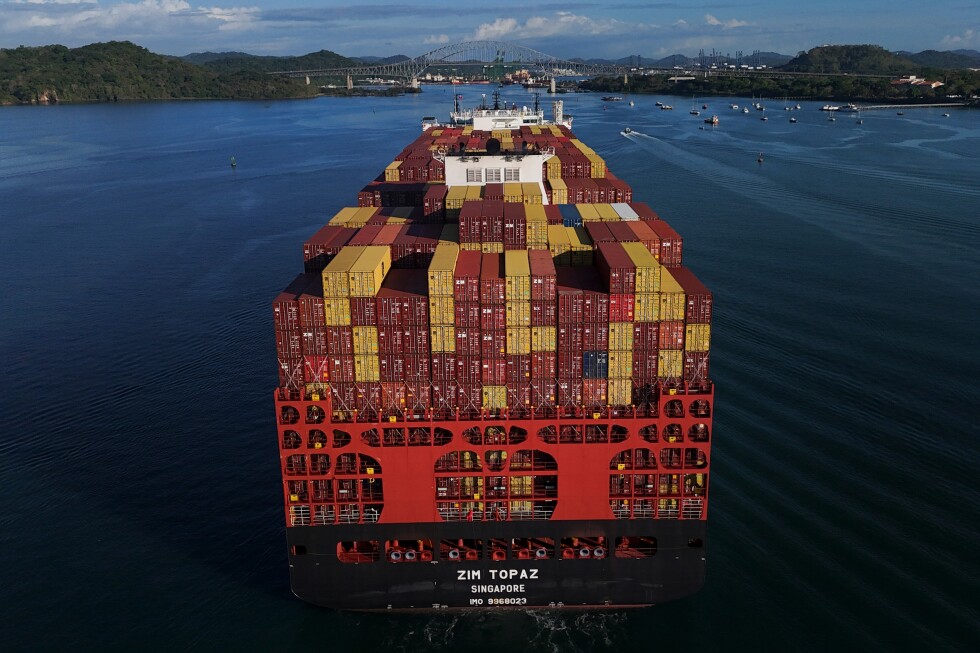
As tensions in the Strait of Hormuz drive global shipping to find alternative routes, businesses are paying record premiums of up to $4 million for expedited passage through the Panama Canal, according to the Panama Canal Authority.
Companies without regular bookings can participate in auctions for transit slots to avoid potentially lengthy waits off Panama’s coast. These auction prices have surged dramatically in recent weeks as the Iran-U.S. standoff has effectively closed the critical Middle Eastern waterway, forcing a significant reorganization of global trade routes.
“With all the bombings, the missiles, the drones… companies are saying it’s safer and less expensive to cross through the Panama Canal,” said Rodrigo Noriega, a lawyer and analyst based in Panama City. “All of this is affecting global supply chains.”
The typical Panama Canal transit fee ranges between $300,000 and $400,000 depending on vessel size. Prior to the current crisis, companies seeking expedited passage would pay an additional $250,000 to $300,000. That premium has now jumped to an average of $425,000, with some desperate shippers paying much more.
Ricaurte Vásquez, the canal’s administrator, revealed that one unnamed company paid an extra $4 million when its fuel vessel needed to urgently change course due to the geopolitical situation. “It was a ship carrying fuel to Europe, and they redirected it to Singapore, and it needed to get there because Singapore is running out of fuel,” he explained.
Other oil companies have paid premiums exceeding $3 million to accelerate their passage amid soaring oil prices. The price of Brent crude oil briefly surpassed $107 per barrel this week, up from approximately $66 a barrel a year ago.
Vásquez emphasized that these elevated fees aren’t due to congestion at the canal but rather result from last-minute rerouting decisions and increased urgency caused by broader trade disruptions. “They decide how high to go on the price,” he noted, indicating that companies are willingly shouldering these temporary costs based on their specific needs.
The Panama Canal, which connects the Atlantic and Pacific oceans, normally handles about 6% of global trade. Professor Patrick Penfield of Syracuse University pointed out that the canal has recovered from recent drought conditions that had previously limited its operations. The waterway typically facilitates the movement of car parts, grain, and consumer electronics between China and Europe or from China to the U.S. East Coast.
While some oil does transit the Panama Canal, its capacity constraints make it an imperfect alternative to the Strait of Hormuz for energy shipments. Ultra-large container vessels that transport significant oil volumes are simply too large for the canal’s locks.
Panama’s government is capitalizing on this shift in trade patterns, but it’s also facing direct impacts from the Middle Eastern conflict. On Wednesday, Panama’s foreign ministry accused Iran of illegally seizing the Panama-flagged vessel MSC Francesca in the Strait of Hormuz. The ship, operated by Italian company MSC, was reportedly “forcibly taken” by Iran.
“This represents a serious attack on maritime security and constitutes unnecessary escalation at a time when the international community is advocating for the Strait of Hormuz to remain open to international navigation without threats or coercion of any kind,” the ministry stated.
Panama maintains one of the world’s largest ship registries, meaning many vessels fly the Panamanian flag while being owned by companies based elsewhere.
The situation highlights the interconnected nature of global shipping networks and how regional conflicts can have far-reaching consequences. As Noriega observed, “Nobody expected the war to have quite so much effect on global trade.”
If the conflict persists, industry analysts predict that Panama Canal transit premiums could continue rising, further straining supply chains already dealing with significant disruption and contributing to inflation pressures worldwide as companies pass increased shipping costs to consumers.
Fact Checker
Verify the accuracy of this article using The Disinformation Commission analysis and real-time sources.

8 Comments
This is a concerning development for the global economy. The Panama Canal is a critical trade artery, and the massive price inflation for expedited transit will undoubtedly impact the cost of goods worldwide. I hope the geopolitical situation de-escalates soon to restore some stability.
With the Strait of Hormuz effectively closed, it’s no surprise to see the Panama Canal premiums skyrocket. Companies need to find safe and reliable alternatives to maintain global trade, even if it costs more. This will undoubtedly have major ripple effects on supply chains.
You’re right, the geopolitical tensions in the Middle East are really disrupting global logistics. The Panama Canal is a crucial chokepoint, so the price surge is understandable as shippers scramble for capacity.
Wow, up to $4 million for expedited passage through the Panama Canal? That’s an astronomical premium. I wonder how long this crisis will last and how companies will adapt their supply chains to manage the higher costs.
Good point. These price spikes are not sustainable long-term. Companies may have to rethink their entire logistics networks if the Strait of Hormuz remains closed for an extended period.
The Panama Canal Authority must be raking in the profits right now with these skyrocketing premiums. But I worry that smaller companies without deep pockets will struggle to afford the exorbitant prices, disrupting their supply chains. This crisis demonstrates the fragility of global trade networks.
You raise a good point. The Panama Canal premiums will likely disadvantage smaller businesses that lack the resources of larger multinationals. This could lead to further economic distortions as the global supply chain adjusts.
I’m curious to see how the Panama Canal’s capacity will hold up under this surge in demand. With companies paying millions extra for priority passage, will there be enough slots and infrastructure to accommodate everyone? Potential bottlenecks and delays could negate the benefit of the alternate route.