


Listen to the article
In 1985, a 13-year-old New Zealand girl named Molly Nunns spotted a pair of purple, lip-shaped sunglasses in “Young Miss” magazine. Nearly four decades later, her American pen pal traveled 9,000 miles from New Hampshire to finally deliver them, fulfilling a decades-old request and cementing a friendship that has endured since childhood.
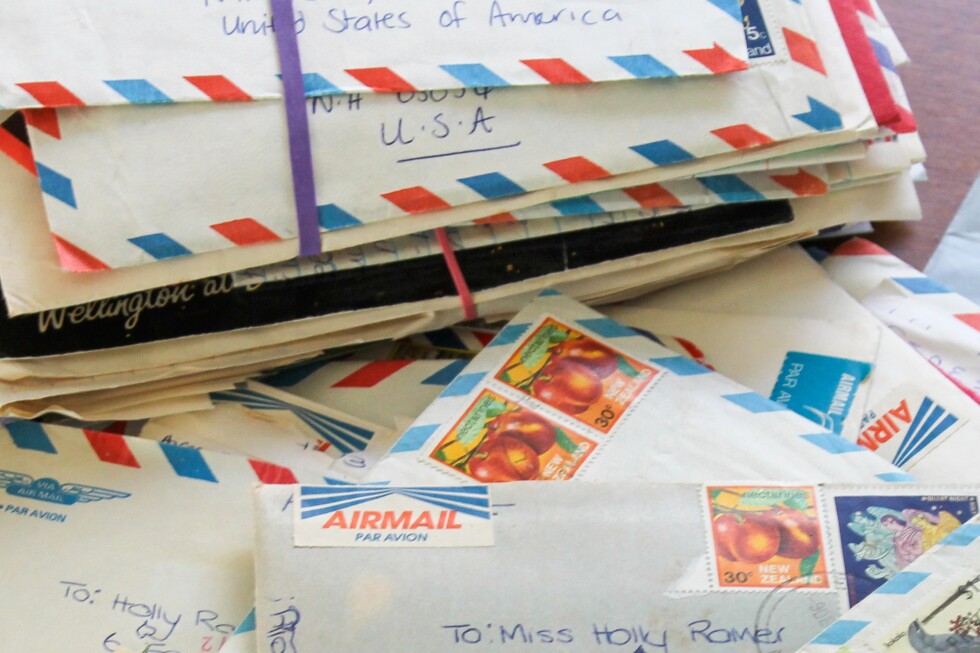
The International Youth Service that matched these pen pals 40 years ago has long since closed its doors, but the tradition of letter writing persists—and may even be experiencing a revival—despite the dominance of digital communication and the reduction of postal services worldwide.
“The hunger is there,” explains Rachel Syme, a writer for The New Yorker who created a pen pal program called Penpalooza during the COVID-19 pandemic. The program attracted more than 15,000 participants in 2020, and Syme still coordinates new matchmaking rounds every few months, consistently drawing hundreds of enthusiastic participants.
Syme, who later published “Syme’s Letter Writer – A Guide to Modern Correspondence,” notes a growing interest in physical, analog experiences. “I think it really has an appeal especially to a younger generation who grew up with a phone glued to their hand, to do something that’s more tactile, slower, more intentional, more mindful, but also just disconnected from the internet in every way,” she says.
This renewed appreciation for handwritten correspondence comes despite postal systems scaling back internationally. New Zealand has reduced home delivery days, Denmark has completely eliminated letter delivery, and Canada is moving in a similar direction.
Julie Delbridge, president of International Pen Friends (IPF), has witnessed the enduring appeal of letter writing firsthand. She joined the organization as a teenager in 1979, finding that corresponding with pen pals from more than a dozen countries provided “an abundance of non-judgmental friendship, fun and different perspectives” during her parents’ difficult divorce.
During its 59-year history, IPF has connected more than 2 million people ranging from 8 to over 80 years old. While membership peaked in the late 1990s, Delbridge says the organization experienced another surge during the pandemic. This year has brought a notable increase in participants aged 21-26, suggesting younger adults are discovering the value of this traditional form of communication.
Educational institutions have also embraced letter writing. In 2021, the U.S. Postal Service provided materials to 25,000 elementary school classrooms for a pen pal project. At the university level, Villanova professor Kamran Javadizadeh requires students to exchange physical letters in his literature class exploring different forms of communication.
“Something is lost when you have instantaneous communication,” Javadizadeh explains. “I’m interested in the relationship between synchronous kinds of intimacy and asynchronous forms of intimacy.”
Gordon Alley-Young, dean of communications at New York’s Kingsborough Community College, compares letters to vinyl records—both are experiencing renewed interest as younger generations explore tangible media from the past. He has used letter writing to teach empathy, finding that students respond more thoughtfully to case studies when they’re presented as letters from friends rather than as academic exercises.
“We really want students to connect to what they’re looking at,” he says. “And letter writing encourages that.”
The digital world has found ways to adapt this tradition. An app called Slowly, launched in 2017, mimics the delayed gratification of traditional correspondence by imposing waiting periods ranging from an hour to several days before messages are delivered. Co-founder JoJo Chan notes that “this delay naturally encourages longer, more thoughtful messages because you wouldn’t just say ‘hi’ if you know you have to wait days for a reply.”
The app has gained 10 million users across more than 160 countries, primarily among those in their 20s and 30s. Chan shares that some users were drawn to the platform after hearing about pen pals from their grandparents, seeking “a convenient way and a modern way for them to try that experience.”
For Syme, however, the physical aspects of letter writing remain essential. Her book offers advice on paper, pens, and various items that can be tucked into envelopes. While she celebrates these embellishments, she emphasizes that the true value lies in the content: “That’s where I think it can get very real, very quickly.”
The story of Molly and her American pen pal Holly illustrates the deep connections that can form through years of correspondence. After 15 years of exchanging letters, they finally met in person in New York in 2000, later crossing paths in London and New Hampshire. During Holly’s recent visit to New Zealand, she presented Molly not only with the long-requested sunglasses but also a bound book containing 200 pages of scanned letters they had exchanged as teenagers.
“Who would have thought when we started writing in 1985 that one day you’d be sitting here? It’s quite amazing,” Molly remarked. “We’ll always have a special connection, I’m sure.”
Fact Checker
Verify the accuracy of this article using The Disinformation Commission analysis and real-time sources.

9 Comments
While I’m optimistic about the enduring appeal of pen pal programs, I do wonder about the logistical challenges. Coordinating international matches, ensuring letters are delivered reliably, and sustaining interest over long distances – it seems like a lot of work. But the rewards of those lasting friendships must make it worthwhile.
What a heartwarming story! I love hearing about pen pal friendships that stand the test of time, even in our digital age. A handwritten letter feels so much more personal and meaningful than a text or email.
I agree, there’s something special about the ritual of letter writing that really fosters deeper connections. It’s nice to see younger generations embracing this tradition.
While I’m glad to see pen pal programs thriving, I’m curious about the long-term viability as postal services continue to decline globally. Will the novelty wear off, or will people find creative ways to keep the tradition alive? It will be interesting to see how it evolves.
The trend of younger people gravitating towards analog experiences is really fascinating. I wonder if it’s a reaction to being so immersed in digital communication all the time. Putting pen to paper and taking the time to craft a thoughtful letter must feel like a welcome respite.
The growth of the Penpalooza program during the pandemic is fascinating. I wonder if people were craving more tangible human connection during that isolating time. Physical mail feels more deliberate and thoughtful compared to the rapid pace of digital communication.
That’s a great point. Putting pen to paper and waiting for a reply must have been a welcome respite from endless Zoom calls and instant messages. It’s cool to see this timeless tradition making a comeback.
As someone who grew up exchanging letters with a pen pal, I can attest to the special bond that develops over time. The anticipation of receiving a handwritten reply, the ability to really express yourself, and the feeling of having a true confidant – it’s an experience that can’t be replicated digitally.
I completely agree. There’s something magical about the ritual of letter writing that fosters a deeper level of intimacy and trust. It’s a shame that younger generations may miss out on that experience if postal services continue declining.