


Listen to the article
Metropolitan Museum of Art Embraces Body Diversity with Revolutionary Mannequin Display
On a sweltering summer day in Brooklyn last year, artist and couture designer Michaela Stark found herself in an unusual situation. Surrounded by 175 cameras and clad only in her signature corsetry, she posed as part of an elaborate photogrammetry process designed to capture her body from every angle.
The purpose? To create three mannequins based on her actual body for display at the Metropolitan Museum of Art’s upcoming spring exhibit, “Costume Art,” which will launch with the prestigious Met Gala on May 4.
“It was definitely a bit nerve-wracking,” recalls Stark of the “intimate and vulnerable” experience. But, she quips, “something about being naked on a 40-degree (Celsius) day in a corset that isn’t hiding anything kind of takes the awkwardness away from the situation, actually.”
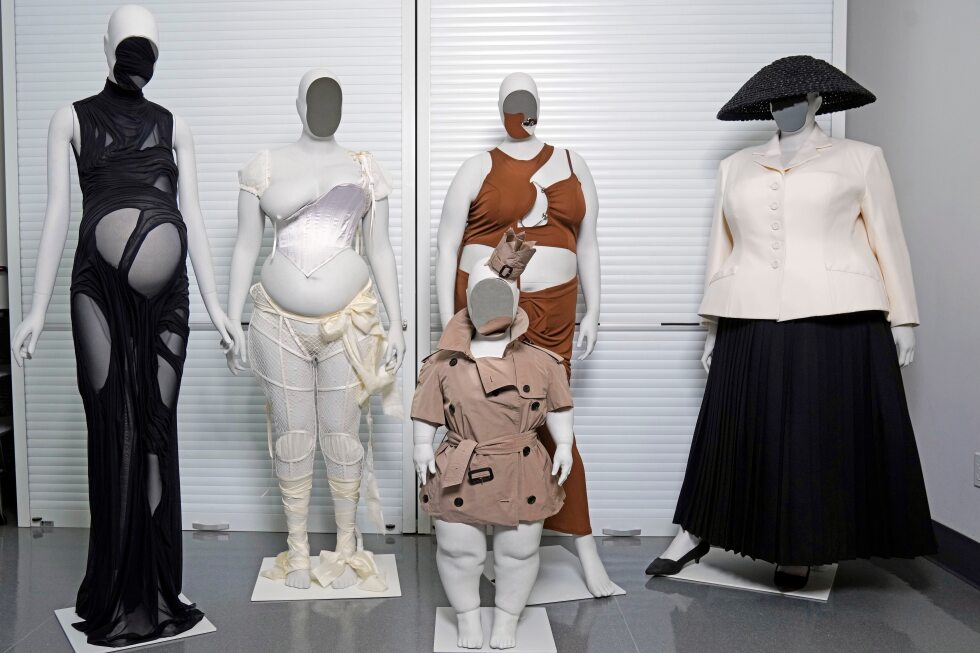
This innovative approach represents a significant departure for the Met’s Costume Institute. Curator Andrew Bolton explains that the new mannequins are part of an effort to add body positivity to a show examining the dressed body in art throughout centuries. The exhibit will feature approximately 400 items—half art objects and half garments from the museum’s collection—displayed in pairs.
“The aim was to challenge a history of museum mannequin display that’s very much characterized by thin, abled and standardized bodies,” Bolton says. Rather than simply adapt existing mannequins, curators wanted to base the new ones “on a diverse range of real bodies with real, lived experiences.”
Making Room for Body Types That Art Has Ignored
Bolton notes that classic fashion mannequins typically represent a women’s size 2. The new mannequins, which will accompany the traditional ones, aim to highlight body types historically ignored or excluded in art—including corpulent, disabled, and aging bodies.
Along with Stark, Bolton recruited models including Sinéad Burke, the Irish disability activist born with dwarfism; Aimee Mullins, the athlete, actor, and activist who wears prosthetic lower legs; and Aariana Rose Philip, a musician and model who uses a wheelchair, among others. In total, nine real-life models were used to create 18 new mannequins, with seven additional mannequins representing shapes like the pregnant body and thin male body not based on specific individuals.
Importantly, these 25 new mannequins won’t be retired after the exhibition concludes in January 2027. Instead, they’ll join the museum’s permanent collection for future use—a fact that excites Stark, who has created looks for Beyoncé and runs her own body-positive lingerie line called Panty.
Stark’s three mannequins will display her own designs in the Reclaimed Body and Corpulent Body sections of the exhibit. Her work has long used corsetry techniques in unconventional ways. While corsets traditionally molded bodies to classic beauty standards, Stark uses the same techniques “to actually emphasize those parts of the body that we’ve been conditioned to hide. It’s using the corsets to bring back power to the female form.”
Highlighting Body Positivity While Fashion Industry Retreats
The designer believes the Met’s exhibit comes at a crucial moment, as the fashion industry’s commitment to body positivity appears to be waning.
“It’s a really interesting moment in time for the Met to be doing this show because obviously we’ve seen the complete rapid decline of the body positivity industry,” Stark says. “Designers left, right, and center are just starting more and more to refuse to work with plus-size models.” Her observation is supported by a recent Vogue Business Size Inclusivity Report, which documented a decline in plus sizes on the runways of four major Fashion Week cities for the Fall/Winter 2026 season.
Burke, who will attend the Met Gala as a member of the host committee, agrees, calling that decline “shameful and embarrassing.” Her organization, Tilting the Lens, aims to place disabled people in positions of power and leadership across the industry—”whether they are creative directors and designers, whether they’re CEOs, whether they are chief marketing officers,” she says.
Burke modeled for two mannequins that will be displayed in the Disabled Body section—one wearing a Burberry trench coat made specifically for her, and the other in a dress by Vivienne Westwood and Malcolm McLaren. Describing the modeling experience, she said, “You stood in this cage of cameras. It’s deeply uncomfortable and really vulnerable in the sense that you are in your skin and in very little else… your body is photographed, observed, recorded from every angle, angles which you yourself may not even be familiar with.”
Despite the vulnerability involved, Burke welcomes her participation in the show, particularly the opportunity to consult with the museum on presenting disabled people appropriately, including the language used. “There’s so many ways in which we could have called the disabled body something else, using euphemisms that create a distance from being disabled,” she noted.
Visitors Can See Themselves in the Mannequins
The creation process was complex and high-tech. After models like Stark and Burke were scanned at New York Capture in Brooklyn, artist Frank Benson used the scans to create a sort of digital clay, molded to better display the garments. The digital information was then sent to Bonaveri, an Italian company, to create the actual mannequins.
All mannequins in “Costume Art”—just over 200 in total—have been fitted with polished steel surfaces that function like mirrors, allowing visitors to see themselves reflected. Bolton explains that this design choice lets viewers see not only the person the mannequin represents but also themselves.
About a third of the mannequins are placed on pedestals, with the others at ground level. Burke’s mannequin is intentionally elevated on a pedestal. “Andrew, my entire life, I’ve been looked down on, both literally and metaphorically,” Bolton recalls the activist telling him. She was, he said, deeply humbled at the idea that people would now—literally—look up to her.
Bolton emphasizes that the exhibit isn’t about rejecting traditional representations. “We’re using it as an opportunity to add new voices and new silhouettes and new presences,” he says. “The figures don’t deny the past, but in a way, I suppose they complete the picture.”
The “Costume Art” exhibit opens to the public on May 10, 2026, following the Met Gala on May 4.
Fact Checker
Verify the accuracy of this article using The Disinformation Commission analysis and real-time sources.

16 Comments
While the fashion industry has historically favored very narrow beauty standards, this exhibit at the Met Gala seems to be challenging that in an interesting way. Looking forward to seeing the results.
Yes, it will be fascinating to see how visitors respond to the diverse mannequins and the overall message of the exhibit.
As someone who has struggled with body image, I really appreciate the Met’s efforts to challenge traditional beauty standards with this exhibit. Representation like this can make a big difference.
Absolutely, representation and celebrating diverse body types is so important. This exhibit could be very empowering.
The photogrammetry process to create these mannequins sounds fascinating. I’m curious to see how the exhibit explores the dressed body in art throughout history in a more inclusive way.
Yes, the technology used to capture the models’ bodies is really innovative. Should make for a thought-provoking exhibit.
It’s great to see the fashion industry taking steps towards more inclusive representation. The Met Gala exhibit’s new mannequins seem like a meaningful step in the right direction.
Agreed, this is an encouraging sign that change is happening, even at the highest levels of the fashion world.
Body positivity is so important, and I’m glad the Met Gala is embracing that with this new exhibit. Representation matters, and seeing diverse mannequins can really help shift public perceptions.
Absolutely. More diverse representation in fashion and art is long overdue.
Interesting move by the Met to showcase more diverse body types with their new mannequins. This should help challenge traditional norms and celebrate the beauty in different shapes and sizes.
Agreed, it’s a positive step towards greater inclusivity in the fashion industry.
While the traditional mannequin shapes have been the norm, I think this new approach will really resonate with a wider audience. It’s great to see the Met taking strides to reflect real bodies.
Definitely, this exhibit could spark some important conversations around body image and societal standards.
The Met’s new approach to mannequins for their upcoming fashion exhibit is a welcome change. Representation and inclusivity are so crucial, especially in an influential setting like the Met Gala.
Absolutely, this could be a pivotal moment in challenging outdated beauty norms in the fashion world.