


Listen to the article
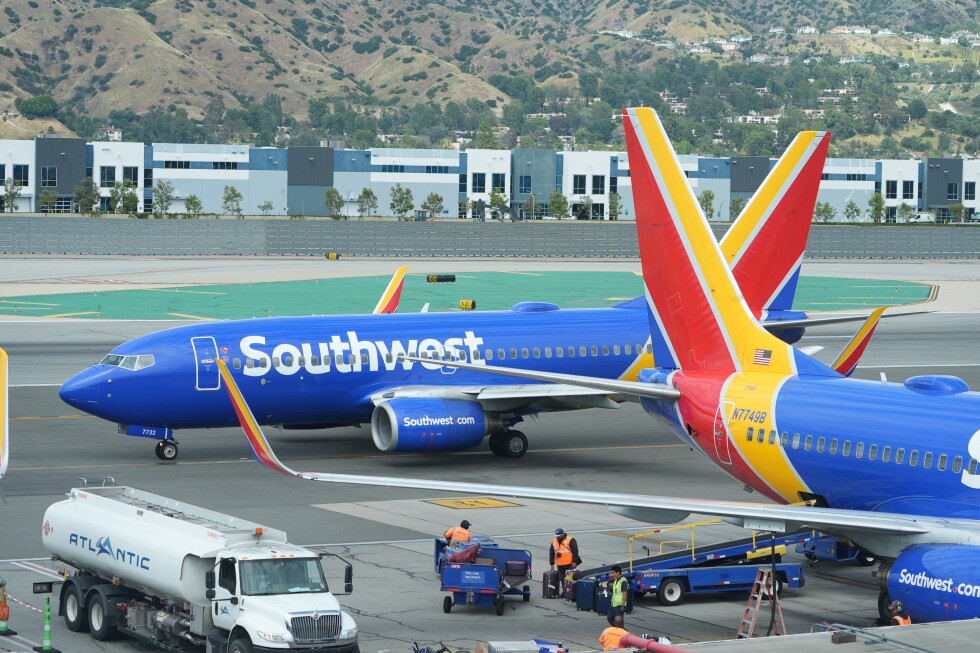
Two Southwest Airlines aircraft narrowly avoided a midair collision in Nashville on Saturday after an air traffic controller mistakenly directed one plane into the path of another, forcing pilots to take emergency evasive action.
The incident occurred around 5:30 p.m. when gusty winds prompted the pilot of Southwest flight 507 to abort a landing attempt and perform a “go-around” maneuver. According to audio recordings posted on LiveATC.net, the controller then instructed the aircraft to turn into the flight path of another Southwest plane that had just taken off from a parallel runway.
Both pilots reported receiving alerts from their onboard collision avoidance systems, which directed one plane to climb while the other descended to avoid impact. Flight tracking data from FlightRadar24 suggests the aircraft may have come within 500 feet of each other vertically, with one plane passing directly over the other—meeting the technical definition of a near midair collision.
“Southwest appreciates the professionalism of its pilots and flight crews in responding to the event,” said Southwest Airlines spokesperson Lynn Lunsford in a statement. “Nothing is more important to Southwest than the safety of our customers and employees.”
The Federal Aviation Administration has launched an investigation into the incident but has not yet confirmed exactly how close the aircraft came to colliding. The agency acknowledged that the pilot “received instructions from air traffic control that put the flight in the path of another airplane that was departing from a parallel runway.”
According to the audio recordings, when the controller recognized the potential conflict, they attempted to instruct the departing aircraft to maintain an altitude below 2,000 feet, but the pilot reported already climbing above that level.
This near-miss brings renewed attention to aviation safety concerns following several high-profile incidents in recent years. Last January, an American Airlines jet collided with an Army Black Hawk helicopter near Washington, D.C., resulting in 67 fatalities. The crash heightened awareness about midair collisions, which remain rare in commercial aviation due to sophisticated collision avoidance technology.
Commercial aircraft are equipped with Traffic Collision Avoidance Systems (TCAS), which provide pilots with automated warnings and instructions when aircraft come dangerously close. These systems operate independently of air traffic control, offering a critical backup when human errors occur. In Saturday’s incident, these systems functioned as designed, potentially preventing a catastrophic collision.
While close calls involving commercial aircraft receive significant media attention, the majority of actual midair collisions involve smaller general aviation aircraft that lack advanced warning systems. In February, two people were killed when two small planes collided in Arizona, highlighting the continuing risks in the general aviation sector.
The Nashville incident occurs amid increasing scrutiny of air traffic control operations. The National Air Traffic Controllers Association has repeatedly raised concerns about staffing shortages at facilities across the country, with many controllers working mandatory overtime shifts. Whether staffing or fatigue played a role in Saturday’s error remains to be determined by investigators.
The FAA tracks and categorizes these types of events as “loss of separation” incidents, though the agency was unable to immediately provide statistics on how frequently they occur. Aviation safety experts consider these events particularly serious because they represent the breakdown of multiple safety layers designed to keep aircraft at safe distances.
For Southwest Airlines, one of the nation’s largest carriers with over 4,000 daily flights, the incident represents a safety close call but also a success story for pilot training and automated safety systems. The carrier has maintained a strong safety record throughout its 50-year history.
As the investigation continues, aviation safety experts will likely examine communication procedures between controllers and pilots, particularly during go-arounds and other non-standard operations where normal flight patterns are altered on short notice.
Fact Checker
Verify the accuracy of this article using The Disinformation Commission analysis and real-time sources.

11 Comments
This is a sobering reminder that even with all the technological advancements in modern aviation, human error can still lead to potentially catastrophic situations. Kudos to the Southwest crews for their quick reactions, but this incident underscores the need for continuous improvement in air traffic management and safety protocols.
Near-misses like this highlight the inherent risks in air travel, but also the remarkable safety record of commercial aviation overall. It’s concerning to see a controller error lead to such a close call, but the fact that the crews and systems were able to avert disaster is a testament to the industry’s focus on safety.
Agreed. While any incident like this is alarming, the fact that the aviation industry has maintained such an impressive safety record overall is a credit to the diligence and professionalism of all involved, from air traffic controllers to pilots to aircraft designers.
Wow, that must have been a scary situation for the pilots and passengers. Glad to hear the crews responded professionally to avoid a potential disaster. Aviation safety is always a top priority.
Air traffic control plays a critical role in maintaining aviation safety. While this incident points to a lapse in that system, it’s good to see the pilots and onboard technology were able to compensate. Continuous improvement in air traffic management and crew training is essential to minimize the chances of such close calls.
You’re absolutely right. Robust air traffic control systems and well-trained crews are the backbone of aviation safety. This incident shows the importance of constant vigilance and iterative improvements to protocols and technology.
Midair collisions are every pilot’s worst nightmare. I’m relieved the onboard collision avoidance systems worked as intended and the crews were able to take quick evasive action. Maintaining robust air traffic control and aircraft safety protocols is critical.
Near-misses like this really highlight the importance of robust air traffic control systems and crew training. While it’s concerning to see an error of this magnitude, it’s reassuring that the technology and protocols were in place to avoid a catastrophic outcome. Aviation safety is paramount.
Kudos to the Southwest pilots for their quick reactions. Even with all the safety redundancies in modern aviation, human error can still occur, so having well-trained crews ready to respond is essential. Hopefully this serves as a learning experience to improve procedures.
This is a sobering reminder of the risks and challenges pilots face even in routine operations. The fact that the crews were able to avert a collision through their quick actions and the aircraft’s safety systems is a testament to the professionalism of the aviation industry. Hopefully lessons learned here can enhance safety even further.
It’s concerning to hear about an air traffic controller error leading to such a close call. Hopefully this incident will prompt a thorough review to identify any systemic issues and implement additional safeguards to prevent similar near-misses in the future.