


Listen to the article
After a decade of closure, a strategic border crossing between Iraq and Syria reopened on Monday, with officials from both countries highlighting its potential as an alternative route for trade and oil exports amid regional tensions.
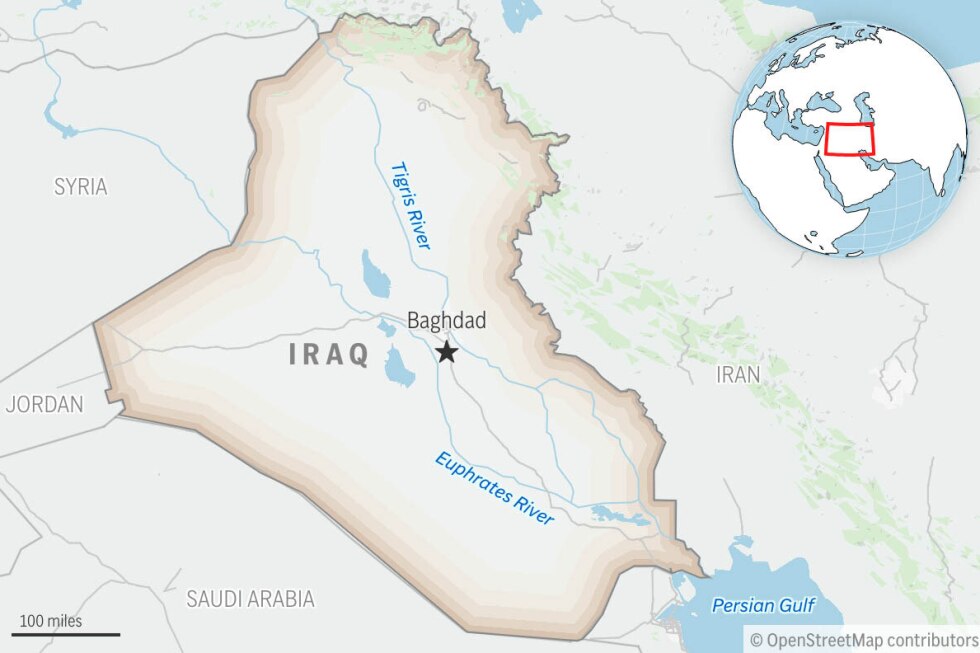
The crossing, known as Rabia on the Iraqi side and Yarubiyah in Syria, had been shuttered since 2011 when the Syrian civil war erupted. Its status worsened in 2014 when Islamic State militants captured the area, though Iraqi Kurdish forces eventually regained control.
At the reopening ceremony, Nadia al-Jubouri, a member of Iraq’s Nineveh provincial council, emphasized the crossing’s importance for “trade exchange and oil transportation toward this great gate.” Syrian officials, according to state-run SANA news agency, discussed how the two countries could improve coordination and facilitate transit and commerce “in line with shared interests.”
Syria’s government is particularly promoting the crossing as a secure overland route for oil exports and a potential alternative to the strategically vital Strait of Hormuz, which has become a focal point in tensions involving Iran and its regional adversaries.
The timing of the reopening carries significant geopolitical weight. The Strait of Hormuz, a narrow waterway between Iran and Oman at the mouth of the Persian Gulf, has become increasingly unstable amid regional conflicts. As the transit route for approximately 20% of global oil supplies, any disruption there can send shockwaves through international energy markets.
For Iraq, developing alternative export routes represents an economic imperative. The country remains heavily dependent on oil revenues, which account for roughly 90% of its national budget. Most Iraqi oil currently passes through the Strait of Hormuz, making the country vulnerable to regional instability.
However, analysts note important limitations to the land route’s potential. Transporting oil overland is significantly less efficient in terms of volume capacity compared to maritime shipping or pipeline infrastructure. While the crossing may provide a strategic alternative, it cannot match the capacity of oil tankers traversing maritime routes.
The reopening also signals broader geopolitical shifts in the region. After years of isolation due to the civil war, Syria’s government under Bashar al-Assad has been steadily rebuilding diplomatic and economic ties with neighboring countries. For Damascus, the crossing represents another step toward economic recovery and reintegration into regional trade networks.
For local communities on both sides of the border, the reopening could bring economic benefits after years of conflict-related hardship. Border towns often thrive on cross-border commerce, and the resumption of official trade could help revitalize economies devastated by years of war.
The crossing sits in a complex political landscape. The Iraqi side is in an area where Kurdish forces maintain significant influence, while Syrian government forces control their side after recapturing much of eastern Syria from various opposition groups and Islamic State militants.
Regional observers will be watching closely to see how trade volumes develop and whether the crossing can indeed serve as a meaningful alternative for oil transportation. The initiative comes as many Middle Eastern countries are seeking to diversify their economic dependencies and create more resilient trade networks.
While symbolic of improving Iraqi-Syrian relations, the crossing’s reopening also reflects the broader regional realignment taking place as countries adapt to changing security dynamics and seek new economic partnerships in an increasingly uncertain geopolitical environment.
Fact Checker
Verify the accuracy of this article using The Disinformation Commission analysis and real-time sources.

8 Comments
The reopening of this border crossing is an encouraging sign of progress in the region. It will be important to monitor how it impacts the flow of goods, services and energy resources between Iraq and Syria.
This is a positive step towards improved regional connectivity. The potential to use the crossing as an alternative route for oil exports is an interesting development worth watching closely.
Absolutely. Syria’s efforts to promote this crossing as a secure overland route for oil could have broader implications for energy trade and geopolitics in the region.
The reopening of this strategic border crossing is an important step in improving trade and economic ties between Iraq and Syria. It will be interesting to see how this affects regional dynamics and oil exports in the coming months.
You raise a good point. This could provide an alternative route for oil exports from the region, reducing reliance on the Strait of Hormuz which has been a source of geopolitical tensions.
The reopening of this strategic border crossing is an important milestone after years of conflict. It will be fascinating to see how Iraq and Syria coordinate and utilize this new trade route going forward.
This is a significant development after years of conflict. I’m curious to see how the two countries will coordinate and facilitate transit and commerce through the crossing.
Agreed. The timing is also noteworthy given the regional tensions you mentioned. This could potentially offer more stability and security for trade and energy flows.