


Listen to the article
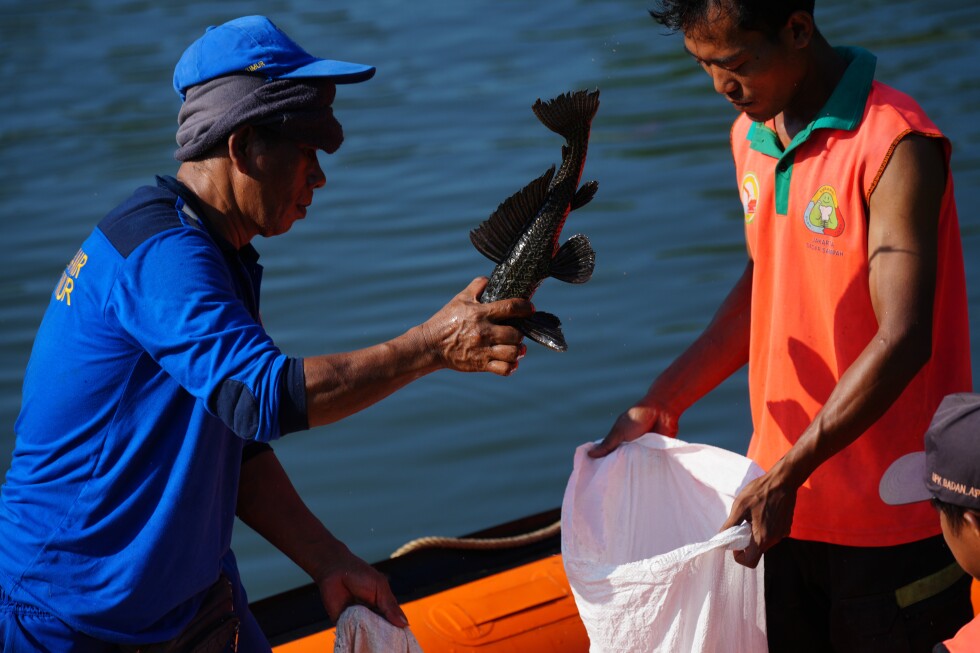
In a bustling scene along Jakarta’s waterways, cheers erupted Friday as residents, city workers, and environmental volunteers pulled heavy nets brimming with invasive “janitor fish” from a reservoir. The operation marks a significant step in Indonesia’s capital city’s ambitious plan to remove at least 10 tons of the non-native species from its waterways.
The initiative aims to restore ecological balance to the Ciliwung River while drawing renewed attention to Jakarta’s long-standing water quality issues. Throughout the city’s waterways—from polluted rivers to concrete canals that wind between skyscrapers—the armored, prehistoric-looking fish can be seen clinging to submerged walls.
These suckermouth catfish, scientifically known as Pterygoplichthys and locally called “sapu-sapu,” were originally imported decades ago for aquariums due to their efficient algae-consuming abilities. Eventually released into local waters, they found ideal conditions in Jakarta’s heavily polluted rivers, where they can grow up to 50 centimeters (nearly 20 inches) and live for 10-15 years.
Dian Rosleine, an ecologist from the Bandung Institute of Technology, explained the concerning adaptability of these fish. “Even in polluted conditions, janitor fish can survive when other species can’t,” she said. “These fish are biological indicators that the water is in poor condition.”
The Ciliwung River tells a story of urban environmental degradation. Once flowing with clear mountain water from West Java into Jakarta, it now serves as a channel for untreated household waste and industrial runoff as it passes through densely populated neighborhoods. Natural riverbanks have been replaced with concrete walls, and during dry months, the warming, slowing water creates ideal conditions for janitor fish to thrive while native species struggle.
Jakarta Governor Pramono Anung ordered the cleanup campaign, which began last week and spans all five administrative areas of the capital. The effort has mobilized hundreds of personnel, including firefighters, disaster officers, and local residents. Within a week, they’ve already removed and buried more than seven tons of janitor fish.
Friday’s operation at a 6-meter-deep reservoir in East Jakarta’s Ciracas neighborhood drew curious onlookers as workers collected approximately 320 kilograms (705 pounds) of the invasive species. Red barrels filled with wriggling janitor fish lined the reservoir’s edge, visible evidence of the city’s environmental intervention.
“The janitor fish populations have reproduced at a notable level while also feeding on native species,” said East Jakarta’s mayor, Munjirin, during Friday’s cleanup. “The impact extends beyond ecosystem destruction, contributing to structural damage to riverbank and embankment walls.”
Munjirin emphasized that this operation is just the beginning of a sustained effort to control the species, with regular monitoring and removal planned to prevent further ecological damage. However, the method of disposal has raised concerns from the Indonesian Ulema Council (MUI), which objected to burying the fish alive as a violation of animal rights under Islamic teaching.
In response, officials have pledged to ensure all fish are dead before burial. The governor noted that the buried fish can serve as natural compost and suggested Indonesia might follow Brazil’s example, where similar invasive fish are converted into charcoal for economic benefit.
The fate of the captured fish remains under consideration. Despite being consumed in some countries, concerns about heavy metal contamination in Jakarta’s janitor fish make them unsuitable for immediate human consumption. Authorities are exploring alternative uses, including processing them into animal feed or fertilizer.
Environmental experts caution that while removing the invasive species is an important step, it addresses only symptoms of Jakarta’s broader water management challenges. Without comprehensive improvements to wastewater management and pollution reduction, the river’s ecosystem could quickly revert to its current state.
“The Ciliwung River requires rehabilitation, our major challenge that must be addressed,” Rosleine emphasized. “Addressing the symptoms without tackling the root causes will not provide a lasting solution.”
As Jakarta continues its battle against these resilient invaders, the cleanup represents both immediate action on an ecological problem and a visible reminder of the complex environmental challenges facing Indonesia’s sprawling capital.
Fact Checker
Verify the accuracy of this article using The Disinformation Commission analysis and real-time sources.

8 Comments
This invasive fish problem in Jakarta’s waterways is a sobering example of how human activities can disrupt natural ecosystems. I hope the removal efforts are successful and lead to long-term improvements in water quality and biodiversity.
Removing tons of invasive ‘janitor fish’ from Jakarta’s waterways is no easy feat. But it’s an important step in restoring the city’s aquatic ecosystems. I’ll be interested to see what other measures they implement to address water quality and biodiversity issues.
The ‘janitor fish’ removal in Jakarta is an important environmental initiative. Tackling invasive species is critical for protecting local aquatic life and habitats. I’m curious to learn more about the city’s long-term plans to maintain a healthy river ecosystem.
Good point. Ongoing monitoring and management will be essential to ensure the problem doesn’t resurface. I hope Jakarta can leverage this effort to drive broader water quality improvements as well.
The ‘janitor fish’ situation in Jakarta highlights the importance of responsible aquarium trade and release policies. These invasive species can wreak havoc on local ecosystems when introduced. Kudos to the city for taking action to restore balance.
Absolutely. Preventing the introduction of non-native species in the first place is key. I’m glad to see Jakarta taking proactive steps, even if it’s a daunting task.
Interesting to see Indonesia tackling the invasive ‘janitor fish’ issue in Jakarta’s waterways. Maintaining ecological balance and water quality is crucial for urban areas. I wonder how they’ll handle the scale of this cleanup effort.
You raise a good point. Removing tons of these fish will be a massive undertaking. I hope they have a comprehensive plan to prevent the problem from recurring.