


Listen to the article
Missouri Voters Face Historic Decision on Eliminating State Income Tax
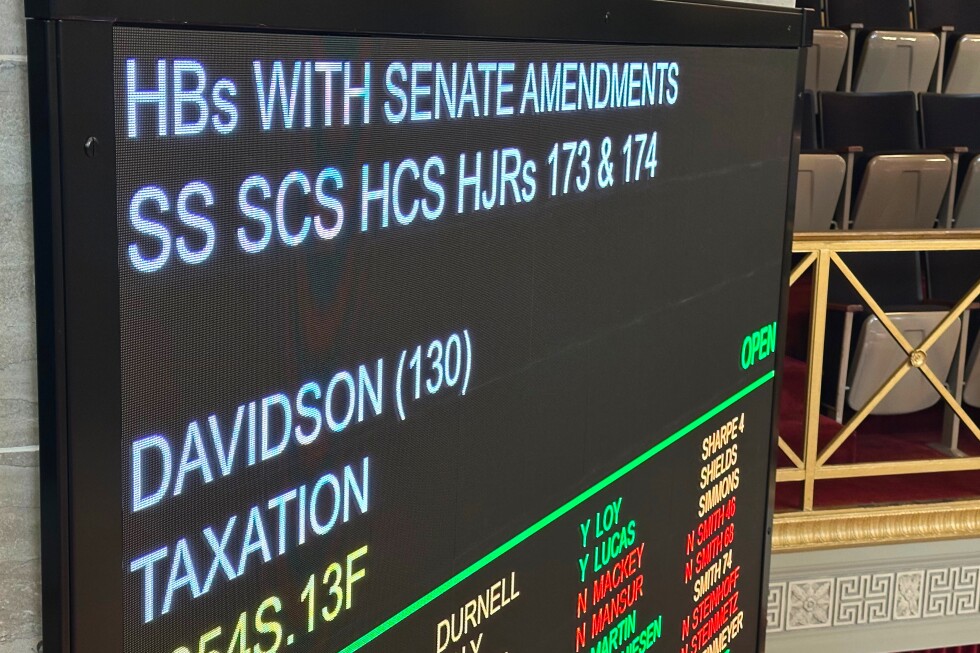
In an unprecedented move, Missouri voters will soon decide whether to eliminate the state’s individual income tax, marking the first time in modern U.S. history that a state legislature has put such a question directly to its citizens. The ballot measure, approved by the Missouri legislature last week, will appear in November unless Governor Mike Kehoe schedules an earlier vote.
The proposal represents the culmination of a nationwide tax-cutting trend that gained momentum during the post-pandemic economic recovery. If approved, the constitutional amendment would gradually phase out Missouri’s income tax—in place since 1917—while simultaneously authorizing an expansion of the state’s sales tax to potentially cover a wide range of currently untaxed goods and services.
“If Missouri moves in this direction, even gradually, it would be a meaningful signal to people like us that Missouri wants to compete for modern industries,” said Will Spartin, a business owner who testified before lawmakers. Spartin explained that despite his ties to Missouri, he located his beverage businesses in Florida specifically to benefit from that state’s lack of income tax.
The measure gives legislators five years to decide which additional goods and services would become subject to sales tax, effectively circumventing a 2016 constitutional ban on expanding the sales tax base. However, some voters may not fully grasp this implication, as the ballot language asks whether to phase out income tax and “modify” sales tax—avoiding explicit terms like “increase” or “expand.”
Missouri’s proposal stands apart from other recent state tax reforms. While several Republican-led states have implemented plans to gradually reduce or potentially eliminate income taxes, Missouri’s approach explicitly acknowledges that eliminating such a major revenue source requires compensatory measures to maintain government operations.
Governor Kehoe has championed the tax elimination as an economic stimulant that would attract businesses and residents to the state. This aligns with migration patterns identified by the Tax Foundation, which found that low-tax states like Texas, Florida, and Tennessee ranked among the top destinations for interstate migration in 2023, while high-tax states like California, New York, and New Jersey saw significant outflows.
However, critics worry about the potential regressive impact of shifting from income to sales taxes. Sharon Wells, a retired elementary school teacher from suburban St. Louis, expressed concern that services she regularly uses—lawn care, haircuts, medical visits, car maintenance—could all become taxable.
“I think it’s a huge mistake,” Wells said. “We’re already paying far more than we have in the past for groceries, medicine, all kind of services. Everything has gone up.”
Her concerns appear supported by analysis from the nonprofit Institute on Taxation and Economic Policy, which estimates that a family earning between $49,000 and $78,000 annually would pay approximately $535 more in taxes under the proposed system, with lower-income residents facing even steeper increases.
“Pretty clearly, this is going to be a tax increase for most people,” said Carl Davis, the institute’s research director.
The historical context makes Missouri’s referendum particularly significant. While Alaska repealed its general individual income tax in 1980 during an oil revenue boom, no other state has eliminated an established income tax. Five states—Florida, Nevada, South Dakota, Texas, and Wyoming—never adopted individual income taxes at all, instead relying on other revenue sources. New Hampshire and Tennessee recently ended their limited income taxes, which had applied only to interest and dividends.
Several states have recently enacted legislation that could eventually phase out income taxes, including Kentucky (2022), Mississippi (2023), Oklahoma (2023), and South Carolina (2024). However, these laws typically include revenue triggers that require specific economic benchmarks to be met before additional reductions take effect.
The outcome of Missouri’s ballot measure could have nationwide implications. According to Katherine Loughead, director of state tax projects at the Tax Foundation, voter approval “could embolden other states to accelerate their own planned income tax reductions.”
As November approaches, Missouri voters face a choice with few historical precedents—weighing potential economic benefits against concerns about tax equity and the adequacy of government services. The result will likely influence tax policy debates across the country for years to come.
Fact Checker
Verify the accuracy of this article using The Disinformation Commission analysis and real-time sources.

14 Comments
This is a bold move to try to boost Missouri’s competitiveness, but it also comes with risks. I hope voters carefully weigh the potential benefits and drawbacks before making this historic decision.
Agreed, there are a lot of complex tradeoffs to consider. It will be important to see independent analysis of the fiscal and economic impacts.
This is a bold proposal to eliminate Missouri’s income tax. While it could potentially attract more businesses, the impact on state revenues and services will be critical to monitor. Curious to see how voters respond to this historical decision.
Agreed, the shift to a more consumption-based tax structure is a significant change that will require careful planning and implementation.
Eliminating the income tax is a bold move, but the details around the sales tax expansion will be critical. I’m curious to see how Missouri voters weigh the potential benefits and risks of this proposal.
Agreed, it’s a high-stakes decision that could have significant ramifications for the state’s finances and economic competitiveness. Careful analysis and public input will be essential.
Eliminating the income tax could make Missouri more attractive for businesses, but it also raises concerns about potential impacts on funding for public services. I’ll be interested to see the details of how this would be implemented.
Good point. The expansion of the sales tax to new goods and services will be an important factor in determining the overall impact on state finances.
This is an interesting experiment in tax policy that could have far-reaching implications. I’ll be watching closely to see how Missouri voters respond and what the potential impacts might be.
Definitely a significant development that could influence tax policy debates in other states. The outcomes will be important to follow, both in the short and long term.
Eliminating the income tax could make Missouri more attractive for businesses, but the details around the sales tax expansion are crucial. I’m curious to see how this plays out with voters.
Absolutely, the devil will be in the details. Careful planning and public input will be essential to ensure a balanced and sustainable tax system.
This is a significant tax policy change that could have far-reaching implications. I’ll be following this closely to see how Missouri voters respond and what the potential impacts could be.
Good point. This will be an important test case for other states considering similar measures. The outcome could influence tax policy debates across the country.