


Listen to the article
For 15 years, Mohammad Abdullah Al Mamun worked in Saudi Arabia, sending money home to his family in Bangladesh. He had met his 6-year-old son just once. This year, he planned to return home, build a larger house with his savings, and finally spend time with his child.
Those dreams ended on March 8 when a missile struck his workers’ camp. Mamun suffered severe burns and later died, one of more than two dozen foreign workers killed across the Middle East since the United States and Israel went to war with Iran in February.
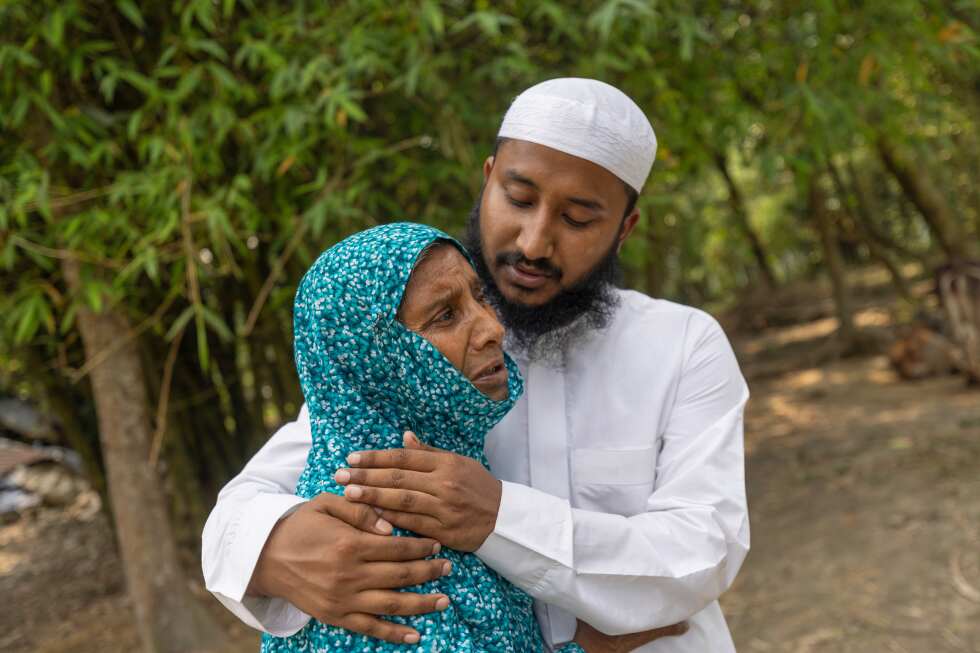
“We don’t know what we will do next,” said his widow, Sadia Islam Sarmin, after Mamun arrived home in a coffin earlier this month.
His death highlights the growing vulnerability of millions of migrant workers who form the backbone of Gulf economies but find themselves caught in geopolitical crossfires with minimal protections.
Migrant workers make up the majority of the population in many Gulf Arab states. While Westerners, Arabs, and Indians dominate business and finance sectors, laborers from poorer countries in Asia and Africa work long hours in extreme temperatures at oil facilities and construction sites, often with few safety measures or legal protections.
According to the Coalition for Labour Justice for Migrants in the Gulf, at least 24 foreign workers in the Gulf states and four in Israel have been killed in attacks as Iran and allied groups launched waves of missile and drone strikes. Their count includes eight mariners killed at sea.
“It’s a very precarious situation for migrant workers,” said Udaya Wagle, an expert on labor and migration at Northern Arizona University.
Though a ceasefire was announced in early April, negotiations to end the conflict have repeatedly stalled. Iran has effectively blocked the Strait of Hormuz, a critical waterway for global oil and gas shipments, insisting it will only reopen once the war ends and the U.S. lifts its blockade.
This maritime chokepoint has triggered a spike in prices for gas, fertilizer, and other essential goods, hitting Asian countries particularly hard—the very nations that supply much of the Gulf’s migrant workforce.
Remittances from the Gulf constitute approximately 1% of India’s GDP, 3-5% for Bangladesh, Pakistan, and Sri Lanka, and nearly 10% for Nepal. These financial lifelines have become more crucial than ever as household incomes face mounting pressure and governments scramble to secure foreign currency for energy purchases.
Meanwhile, Gulf economies face their own challenges with exports bottled up and key energy facilities requiring repairs after missile strikes. The specter of renewed conflict looms as Iran rejects U.S. demands.
Low-wage laborers like Mamun bear the brunt of these geopolitical tensions. His family was notified on March 9 that he had been injured. Video footage showed him sitting in the open, severely burned and bleeding, crying for help.
“He never imagined he would be hurt. That a missile would fall on him,” said Maruf Hasain, his younger brother.
Shariful Islam Hasan of the Bangladeshi development organization BRAC explains that workers like Mamun are particularly vulnerable because they perform the “most dirty, dangerous and difficult” jobs in the region.
In Qatar, a 27-year-old Bangladeshi factory worker described working 12-hour shifts as missiles flew overhead. Earning less than $400 monthly, he sends two-thirds home to his family. “We have no choice but to keep working,” he said, speaking anonymously for fear of repercussions.
Qatar implemented several labor reforms before hosting the 2022 World Cup, including partially dismantling the kafala system that tied workers to specific employers. However, human rights advocates maintain that abuses remain widespread and workers have limited access to legal remedies.
The economic impact of the conflict extends beyond industrial workers. Ahmed al-Aliyli, an Egyptian taxi driver in Qatar, hasn’t sent money home for two months as his income has plummeted by two-thirds due to war-related travel disruptions. “We are the collateral damage of this war,” he lamented.
A slowdown in key sectors like real estate and construction will directly affect migrant laborers, particularly those from Bangladesh and Pakistan who often work informally without fixed contracts, according to BRAC’s Hasan.
Despite reforms in some countries, work permits frequently remain tied to single employers, leaving workers effectively stranded. The labor coalition warns that some employers may exploit the conflict to withhold wages, deny leave, or carry out arbitrary dismissals.
When hostilities began, Mamun’s mother, Shahida Khatun, urged him to return home. He had been saving since November and in his final call home, promised to pay for his siblings’ education and build a larger house for his parents when he returned this spring.
Now his family struggles to recover his wages and rebuild their lives without him. “The pain of losing a child. There are no words to describe the agony,” Khatun said.
For many workers, however, returning home means surrendering steady income and substantially higher wages. Marlene Flores, a Filipino worker in Qatar, acknowledged feeling the impact of missile interceptions but values her tax-free pay and health insurance—benefits that seem especially valuable as the Philippines grapples with a “national energy emergency.”
“It’s not easy for me to say,” she admitted, “But I would really stay here.”
The dilemma is equally stark in Israel, which also relies heavily on foreign labor. Filipino caregiver Jeremiah Supan continues looking after two elderly patients despite near-daily missile alerts, questioning whether his family could survive if he returned to the Philippines.
“I know that in the blink of an eye, one can die,” he reflected. “But what life shall we return to?”
Fact Checker
Verify the accuracy of this article using The Disinformation Commission analysis and real-time sources.

11 Comments
The vulnerability of foreign workers in the Middle East is deeply troubling. This tragedy underscores the need for sweeping labor reforms and stronger safeguards to protect the rights and wellbeing of these essential contributors to the region’s economic growth.
The death of Mohammad Abdullah Al Mamun is a tragic loss, and his widow’s uncertainty about the future is deeply concerning. Stronger labor laws and enforcement are needed to prevent such senseless tragedies.
Agreed. Governments and corporations must take urgent action to safeguard the rights and safety of migrant workers, who are essential to the economic development of the region.
Tragic stories like this serve as a wake-up call. Migrant workers must be afforded the same basic rights and protections as other employees, regardless of their country of origin or socioeconomic status.
Well said. Urgent action is needed to ensure the safety and dignity of migrant workers, who are vital to the economies of the Gulf states.
This is a sobering reminder of the risks foreign workers face during geopolitical conflicts in the Middle East. The loss of life and shattered dreams are heartbreaking. Companies must ensure stronger safety protocols and legal protections for their migrant workers.
This heartbreaking incident highlights the pressing need for comprehensive reforms to protect the rights and welfare of migrant workers in the Middle East. Their contributions are essential, and their lives deserve equal value and respect.
This situation highlights the precarious existence of many migrant workers in the Gulf. While they are the backbone of local economies, their lack of legal protections and vulnerability to regional conflicts is unacceptable.
This is a stark reminder that the human cost of geopolitical conflicts is often borne by the most vulnerable. Migrant workers deserve better protections and support, regardless of their national origin or socioeconomic status.
It’s alarming to see the vulnerability of migrant workers caught in the crossfires of regional tensions. This tragedy highlights the need for greater international efforts to safeguard the rights and wellbeing of these essential workers.
Absolutely. Governments and multinational corporations have a moral obligation to prioritize the security and welfare of migrant laborers, who are the backbone of many Gulf economies.